
In the last year, Invest NZ has hosted 17 such events in cities from Queenstown to Auckland, San Francisco to Frankfurt. They rope in ambassadors and dignitaries from Gabrielle Rush (High Commissioner to Singapore) to Peter Lund (Consul-General to Hong Kong), and have featured Immigration Minister Erica Stanford.
Participants of all stripes quietly agree that they confer a degree of legitimacy – “a little fairy dust”, as one put it – on the companies that attend.
The aim is to “big up” New Zealand, spruik all that it has to offer over canapes and drinks, and introduce the wealthy visa seekers to what officials call the “New Zealand eco-system”: immigration advisers and lawyers, resettlement folk, accountants, and, ostensibly the end point of the whole exercise, the New Zealand businesses and investment funds (or at least some of them) hungry for the capital these foreigners bring in exchange for permanent residency.
Alwyn Poole is chief executive of Education 710+, a company approved for direct AIP investment. He thinks Invest NZ is unfairly “picking and choosing” which companies it invites to its golden visa networking events. Photo / NZME
The AIP visas cover two categories: “balanced”, which requires $10 million to be invested relatively conservatively over five years, and “growth”, which requires $5m to be invested in more risky assets over three years, either sunk directly into companies outside the stock exchange or invested through managed funds.
Those involved in other companies approved for direct AIP investment, in a similar situation to Poole, also wondered on what basis officials extend invitations to their networking events.
“It’s utterly opaque, and given the amount of money flowing in, the stakes are high,” one said.
The Herald spoke to more than half a dozen parties, either approved for direct AIP investment or working with such entities, but has agreed to withhold their names because they fear Invest NZ’s considerable power over the AIP system, including the ability to both confer approval status and to remove it.
To be clear, Poole and the other sources are broadly in favour of the purpose of the visa scheme, which was revised by the coalition Government and relaunched in April 2025, and aims to bring to New Zealand companies more foreign direct investment.
Their objections related to fairness and how and why officials choose to showcase some investment opportunities to prospective investors and not others.
Adding significant potency to their concerns is the wave of money unleashed by the revamped visa scheme.
Total AIP investment reached $1.49 billion in its first year (a further $2.4b is in the pipeline). It’s an enormous prize. But companies like Poole’s, approved by Invest NZ for direct investment by AIP visa holders, have received just $19.6m of that total, a little over 1%.
Managed funds, on the other hand, have attracted over $1.2b of the total, and nearly $1b of that has gone into private credit funds.
Golden visa investment reached $1.49 billion in its first year but companies approved by Invest NZ for direct investment have received just $19.6 million of that total, a little over 1%. The lion’s share is flowing to managed funds for private credit. Photo / John Weekes
Responding to questions, Invest NZ insisted its AIP events are not held to connect New Zealand companies with prospective investors.
“Internationally they are to promote the AIP Visa programme and in New Zealand they are to support existing investors [to] meet their investment requirements and the attendees reflect the purpose. Individual companies seeking to promote their own investments are not the target audience for either event,” Simone Robbers, AIP investments acting director, told the Herald.
“AIP investors seeking to engage with New Zealand companies do so through their own networks and introductions from Invest NZ. The investor drives this engagement based on their investment aims,” she said.
The Herald shared Robbers’ response with several companies approved for direct AIP investment, which have tried and failed to gain an invitation to the Invest NZ events.
Some said officials told them there was insufficient space at the networking events for them to attend, others said they were told companies seeking direct investment were not involved in the networking events.
There is general acknowledgment that investor preference for both liquidity and capital preservation is driving the trend for growth visa investment in private credit funds – views on whether this is as useful to economic growth as direct company investment vary.
However, the companies also insisted that Invest NZ is, de facto, playing a gatekeeper role. The events themselves are publicly funded from Invest NZ’s budget, and paperwork distributed by Invest NZ staff describes the events as “networking events”; from the paperwork the Herald has viewed, the single largest cohort of New Zealand attendees have been representatives of AIP-approved managed funds.
For example, information distributed by Invest NZ for the “New Zealand AIP Investor Visa Networking Event” for San Francisco (September 2025), listed attendees for the “investor visa ecosystem in New Zealand” as follows: six immigration advisories and law firms; three relocation and tax firms; three investment advisories; and 15 representatives of fund management companies.
The fund managers were the single largest cohort by far; attendees listed represented Altered Capital, Previously Unavailable, Icehouse Ventures, Ecliptic VC, NZVC, Pacific Channel, Ryft Zero, 2040 Ventures, Bridgewest Ventures, Motion Capital, Aotea Asset Management, Private Capital Group, Forthco, Pioneer Capital and GreenMount Capital.
No company approved for direct investment from AIP investors was on the attendee list.
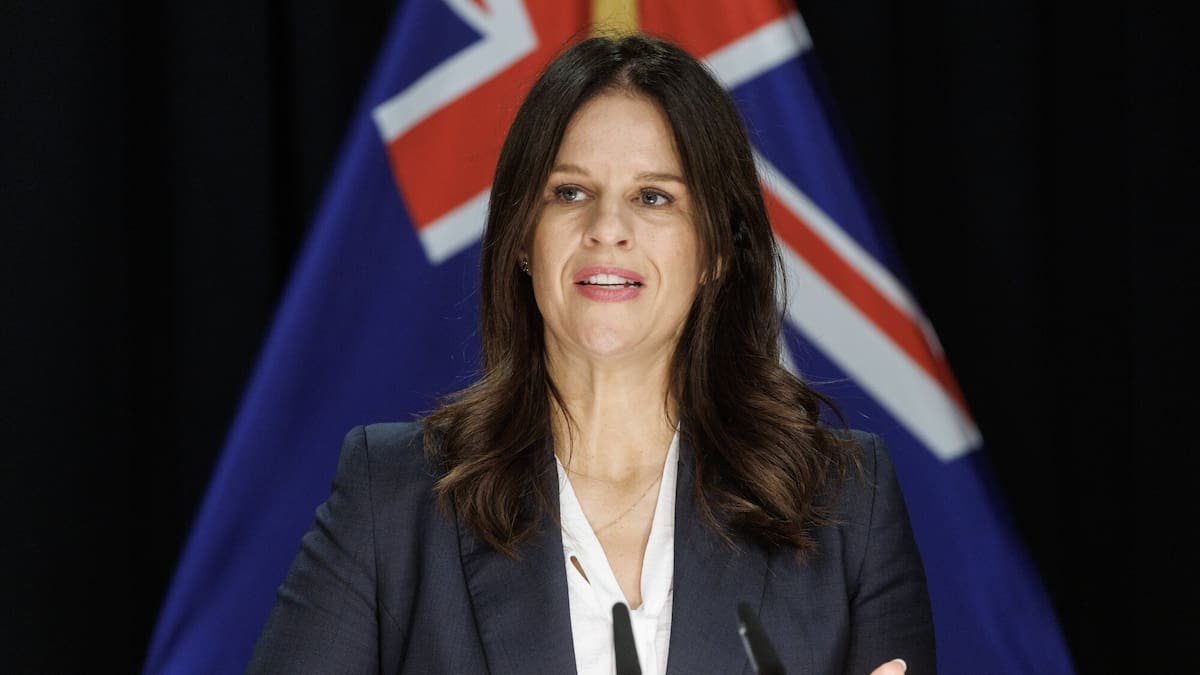
Trade and Investment Minister Todd McClay claimed Invest NZ’s events are not designed as promotional platforms for individual companies; individual companies claim that, de facto, they are. Photo / Mark Mitchell
Invest NZ told the Herald that across its 17 events, 10 companies approved for AIP direct investment have attended. It declined to disclose the companies’ names. It also declined to disclose the total number of managed funds that have attended its events (or how many of the companies and funds have been repeat attendees).
It said it is a small public agency and will consider the Herald’s more detailed questions under the longer timelines of the Official Information Act (OIA).
Invest NZ is a recently created Crown entity that was carved out of New Zealand Trade & Enterprise. In Budget 2025, it received public funding of $85m over four years.
In September, Immigration Minister Erica Stanford led the New Zealand cohort of companies involved in AIP that included the San Francisco event and also stops in New York and Los Angeles.
Stanford has often argued that a key benefit of the AIP visas is that they allow experienced overseas investors to share their knowledge and networks with local New Zealand companies, something that is achieved through direct investment and not typically through managed funds.
In emailed questions, the Herald asked Stanford if she noticed the absence of companies approved for direct investment on the trip, and if she is concerned by the complaints.
A spokesman responded: “Following the US events last year, the minister raised with Invest NZ that she would like to see more showcasing of New Zealand companies approved for direct investment at future events. However, she is not the minister responsible for Invest NZ and, as a Crown entity, it is ultimately a matter for Invest NZ, who is invited to their events. The minister had no involvement in those decisions.”
Simone Robbers, AIP investments acting director at Invest NZ.
Minister for Trade and Investment Todd McClay has responsibility for Invest NZ.
In response to questions, McClay emphasised: that attendance at the events is carefully selected based on relevance to the AIP programme; that numbers are naturally limited by the size and format of each event; that Invest NZ seeks to avoid having the same group attending every time; and that the events are not designed as promotional platforms for individual companies.
He noted that direct investments under AIP require both an approved investor and an approved investment.
“Where investors express interest, Invest NZ may facilitate connections – usually through introductions requested by the investor – but that engagement is investor-led,” he said.
‘Live deals’ platform
Several companies seeking direct investment, including Poole, also pointed out that Invest NZ previously listed all AIP-approved direct company investments on its website, through a “live deals” platform, which included an email function that could connect the companies approved for direct AIP investment and prospective investors, at the investor’s instigation.
Last October, the “live deals” platform was shut down with little explanation.
However, AIP-approved managed funds remain listed (and updated) on the Invest NZ website; there are over 60.
Invest NZ did not directly answer questions about why it shut down the platform, though Robbers confirmed this happened on October 25.
Despite this, much of the agency’s website has not been updated, and continues to refer to the platform.
Six months on from its demise, the site still claims the “live deals” platform is “filling critical capital gaps in the market, connecting investors with exciting investment opportunities, and showcasing our innovation and integrity to the world”.
Kate MacNamara is a South Island-based journalist with a focus on policy, public spending and investigations. She spent a decade at the Canadian Broadcasting Corporation before moving to New Zealand. She joined the Herald in 2020.
The Herald has launched a new feature enabling premium readers to follow their favourite journalists and receive updates whenever they publish a new story. If you’d like to follow Kate, please click on the new button under the author byline at the top of this story.
Stay ahead with the latest market moves, corporate updates, and economic insights by subscribing to our Business newsletter – your essential weekly round-up of all the business news you need.