
The first rows of panels installed at the Te Rahui solar farm. Photo / John Cowpland / Alphapix
Work on stage one will continue into 2027, and the second stage could be completed by 2030.
However, the second stage is still subject to “commercial decisions” to get the official go-ahead.
The entire project will cost an estimated $660 million, making it a larger investment than Meridian Energy’s Harapaki wind farm, which cost about $450m and is located next to the same highway.
Nova Energy chief executive Rob Foster said the golden row event marked a milestone for the project.
Todd chief executive Evan Davies (left) and Nova Energy chief executive Rob Foster at the solar farm inspecting the first rows of solar panels. Photo / John Cowpland
“Every panel installed moves Te Rahui closer to delivering more renewable electricity for New Zealanders, while creating jobs and lasting benefits here in the region.”
Te Rahui is New Zealand’s largest solar farm to have gained consent to date, according to the organisations behind the project.
The project received consent in late 2022, and an appeal in the Environment Court was dismissed in 2024, paving the way for the project to proceed.
Solar panels typically have a lifespan of between 25 and 30 years.
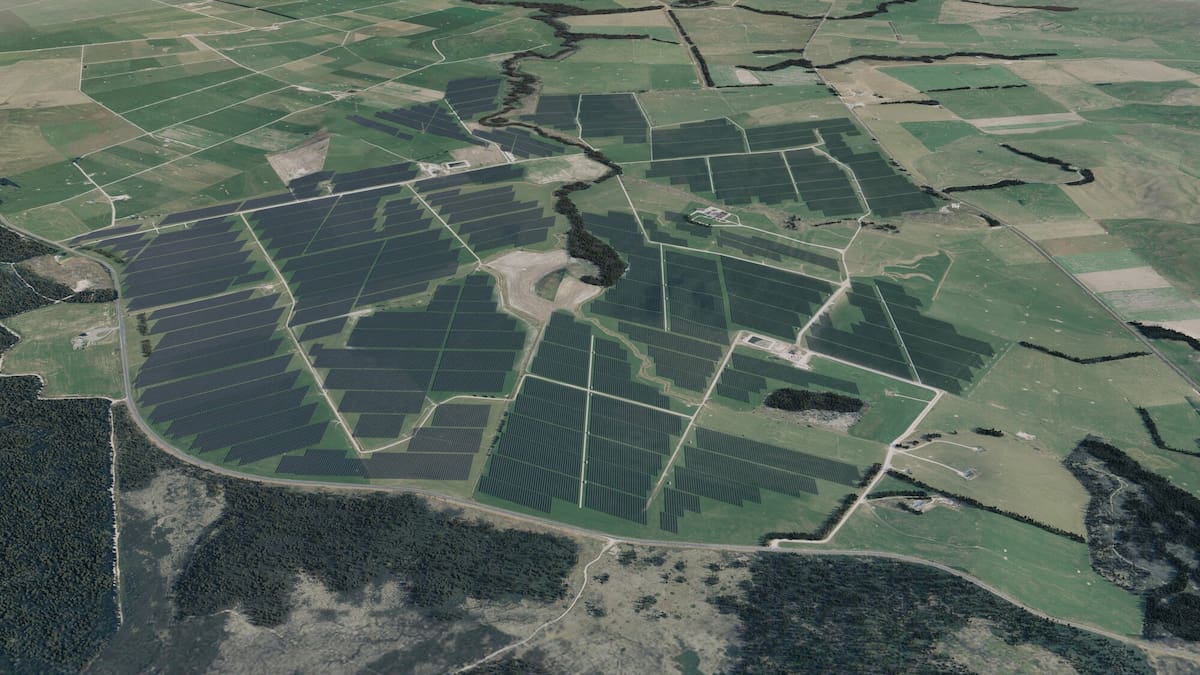
How the completed Te Rahui is expected to look. Photo / Todd Corporation
The project’s consent includes a condition “that the components and infrastructure are disposed of in a way that maximises reuse and recycling”.
“For any parts that cannot be reused or recycled, [the consent holder is to ensure] that they are disposed of in an environmentally responsible way in accordance with industry best practice,” the consent reads.
Construction of a substation, a piece of infrastructure that connects the solar farm to the electrical grid, is also underway at the site.
The site was selected for its good exposure to sunlight, suitable landscape, proximity to existing grid infrastructure, and ability to accommodate a large-scale solar project.