
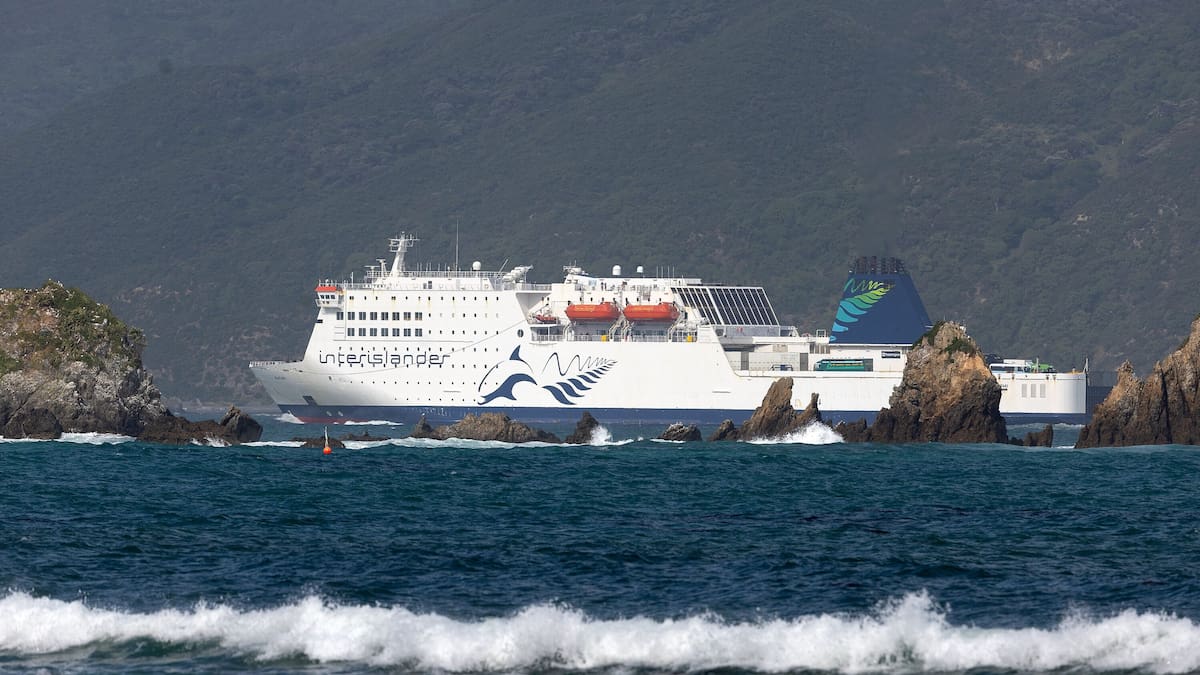
“They published a draft report in May of 2023. Why has it taken three more years to publish a full report?”
He believes there needs to be an overhaul of the body’s reporting process and greater accountability for delays in major investigations.
“When TAIC came out and said that, typically, reports take 18 months, I thought that was beyond belief,” he said.
“There’s got to be a fundamental review of their obligations and timeliness to report, and/or whether the TAIC in its current form is capable of executing its functions.”
Passengers had to don lifejackets after the Kaitiaki made a mayday call in January 2023. Photo / Andrew McDouall
McDouall said some passengers felt they had been excluded from the inquiry.
“Some of us – myself and I know at least one other – were told that we were not stakeholders and would not be kept informed.”
This was despite the three-and-a-half-hour ferry crossing stretching to become a frightening seven-hour journey for passengers.
With 864 people on board at the time of the mayday call, McDouall said the situation could have easily turned catastrophic.
“This was a very, very serious incident. In fact, it had the potential to become one of, if not New Zealand’s most serious maritime incident.”
The Wahine ferry sinking in 1968 remains New Zealand’s most significant maritime disaster, causing the deaths of 51 people.
Lorna Johnson, another passenger on the Kaitiaki, previously told the Herald the events of that night had been a stark reminder of the Wahine tragedy for those on board.
“I would say every single Kiwi on that boat, and myself included, all had the Wahine in our heads because we all knew where we were, we all knew there was a southerly, we could all see the coast quite clearly.”
Although scathing of the inquiry process, McDouall praised the “good messaging and communication” of the Kaitaki’s crew throughout the ordeal.
“I do give appropriate credit to the crew on board on the day, who managed the situation for passengers extremely well.”