
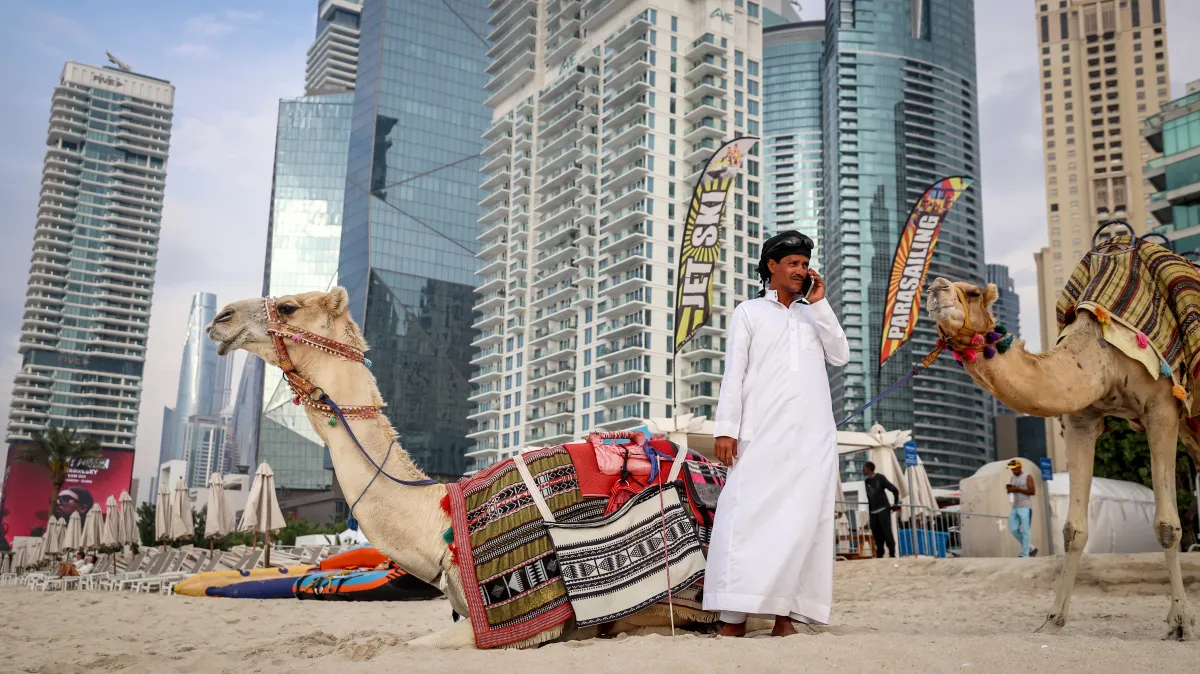
The United Arab Emirates, one of the richest petro-states in the world, has confirmed it wants a permanent emergency dollar swap line from the US government. “It is an elite matter,” the country’s trade minister, Thani al-Zeyoudi, said. “It is not about bailing [us] out.”
The request, which has been confirmed by Scott Bessent, the US Treasury secretary, has been couched as a matter of statecraft and symbolic support for one of Donald Trump’s closest allies in the Gulf. But the request for a swap line — traditionally used during financial panics and currency collapses — has inadvertently raised questions about the fiscal health of the oil-rich emirates, which have been disproportionately targeted by Iranian missiles over the past three months. Last week, missiles targeted the deep sea port of Fujairah, the terminus for an important oil pipeline that carries 1.5 million barrels a day. Is the UAE’s economy in trouble?
Confirmation of the dollar swap line came days after the Emirates shocked oil markets by quitting Opec, the cartel that it had been a member of since the country’s inception. The government said it wanted to raise oil production outside quotas set by Saudi Arabia.
Abu Dhabi, the political and financial capital of the country, also demanded Pakistan immediately repay a $3.5 billion loan — notionally due to tension over Islamabad’s alliance with Saudi Arabia after the war in Iran. Last week Iffco Group, one of Dubai’s largest food conglomerates, was reported in the Financial Times to be heading towards temporary liquidation, partly as a result of supply chain disruption caused by the war in Iran. Hotel occupancy in Dubai, a tourism and financial hub, is on course to collapse to 10 per cent in the second quarter of the year, down from 80 per cent before the outbreak of the conflict, according to Moody’s Analytics. Oil revenues are likely to have fallen by a quarter and the budget surplus of 6 per cent of GDP recorded last year “has been all but wiped out”, according to Farouk Soussa at Goldman Sachs.
Despite the request for the dollar swap line, the UAE’s currency peg with the greenback has been under little pressure since the war started. If the Emirates is under strain, it can tap into its own stockpiles of dollar assets and foreign reserves. The micro-state has amassed the largest war chest of sovereign wealth in the world, at approximately $2.7 trillion, as part of a strategy to diversify away from oil riches.
This money has flowed into western economies, including the UK, to buy up assets such as Manchester City FC, the ExCel London exhibition centre, and, via DP World, the London Gateway port. Last year, AdNoc, the country’s national energy group, completed its largest ever deal, to acquire the German chemicals company Covestro for just under €15 billion.
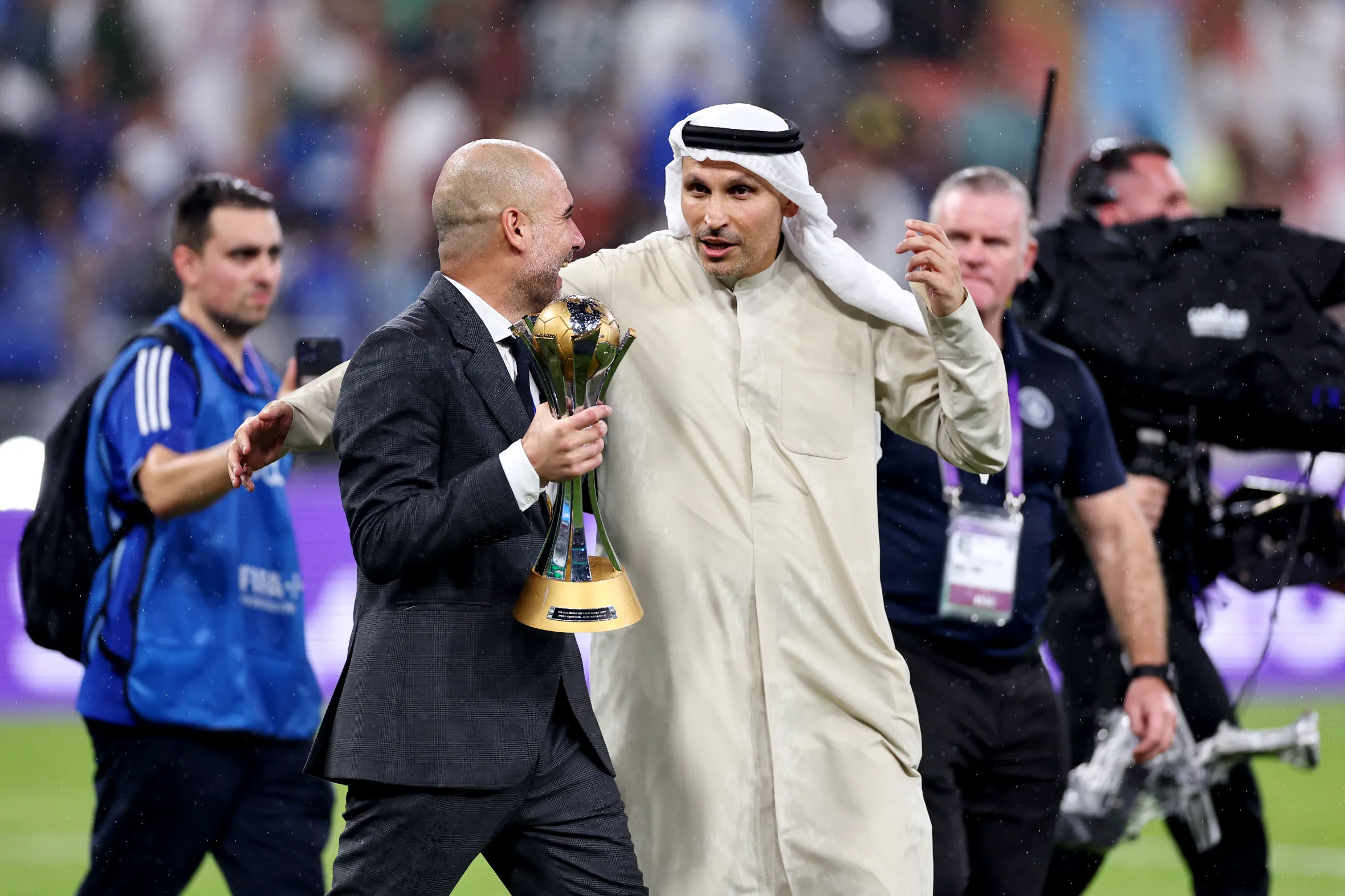 Pep Guardiola, the Manchester City coach, with the club’s chairman, Khaldoon Al Mubarak, in 2023Robbie Jay Barratt/AMA/Getty Images
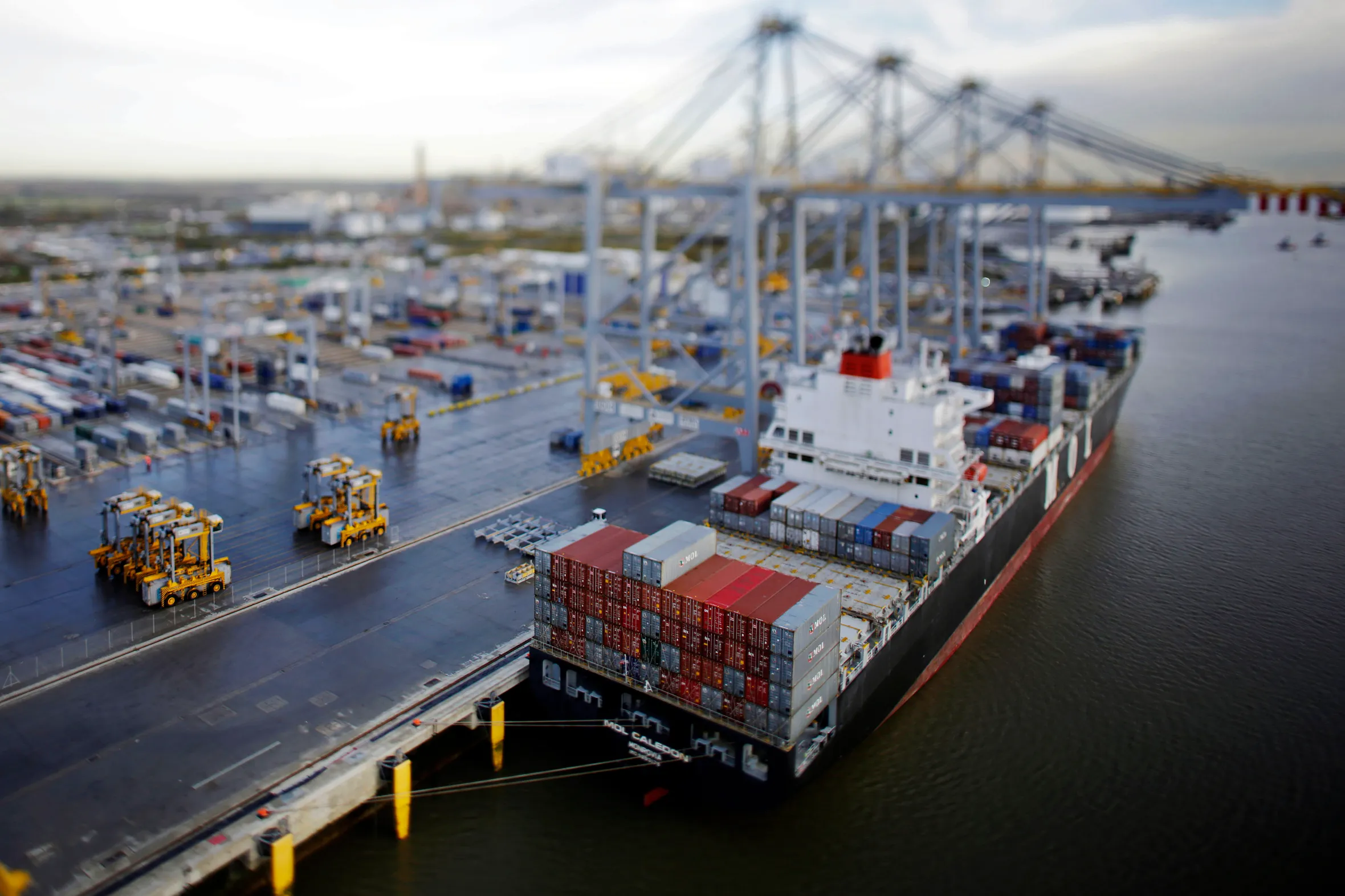 DP World owns the London Gateway portMatthew Lloyd/Bloomberg/Getty IMAGES
While sovereign wealth has flowed into the rest of the world, the UAE’s domestic economy is built on the promise of stability. Where democracies are vulnerable to policy shifts every four to five years, the UAE has made a virtue of having a long-term plan to attract foreign capital, labour and innovation through favourable tax treatment and light-touch regulation. It is a mixture of a “rentier state” — which derives wealth from the extraction of natural resources — with an “authoritarian developmental model” — where elites use the national wealth to create economic prosperity and fund generous social welfare schemes to maintain support for their regimes.
The UAE is a collection of seven emirates, which formed a federation in 1971, under the leadership of Sheikh Zayed bin Sultan al-Nahyan. Abu Dhabi, the birthplace of the founding father, is the political centre and capital, and its main oil exporter. Dubai, a city of four million, is the most outward facing, tourism-reliant commercial hub, and has grown into a global financial centre. The two are the richest of the seven emirates, which in total have a population of 11.5 million, 85 per cent of whom are foreigners — one of the largest share of non-citizens in the world.
The country’s sovereign wealth and economic influence have in the past decade been coupled with an outsized role in geopolitics and regional conflict. The country allied with Saudi Arabia to impose a blockade on Qatar in 2017, and initially provided military support for Riyadh’s war in Yemen before turning against Saudi Arabia and backing its own factions. The Emirates has faced repeated accusations over its relationship with paramilitary forces in Sudan, which it denies. The UAE has been the biggest financial supporter of the Libyan warlord Khalifa Haftar over the past decade.
Analysts say there is a growing tension between the UAE’s geopolitical ambitions and its domestic economic goals, which are premised on open airspace, safety and regional stability that allows foreigners to come and stay in the country. Yousef al-Otaiba, the UAE’s ambassador to Washington, said quitting Opec was part of a “clear-eyed view” of the future of the country, which is no longer an “oil dependent state”.
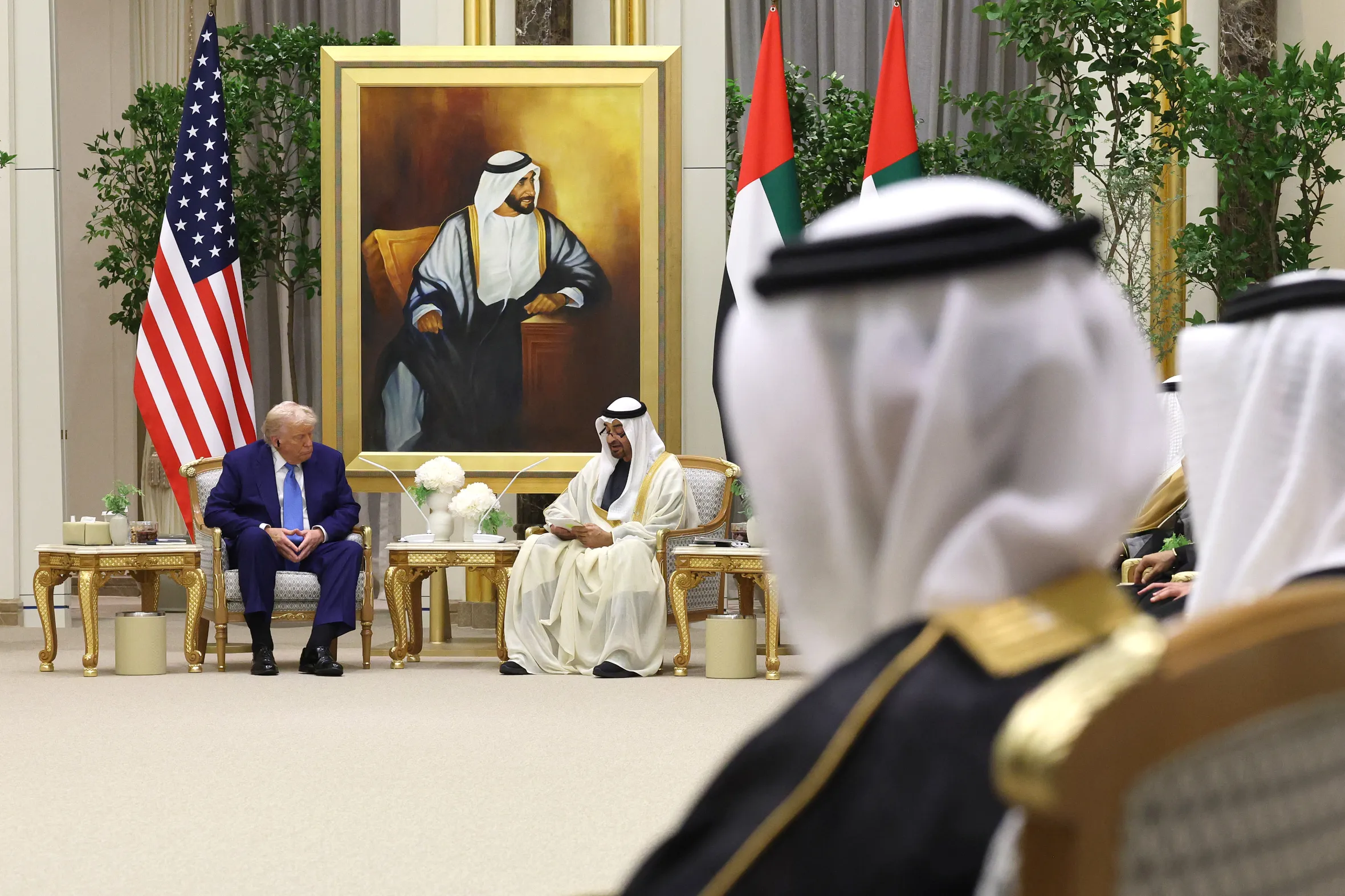 President Trump with the UAE’s president, Sheikh Mohamed bin Zayed Al Nahyan, in 2025Win McNamee/Getty Images
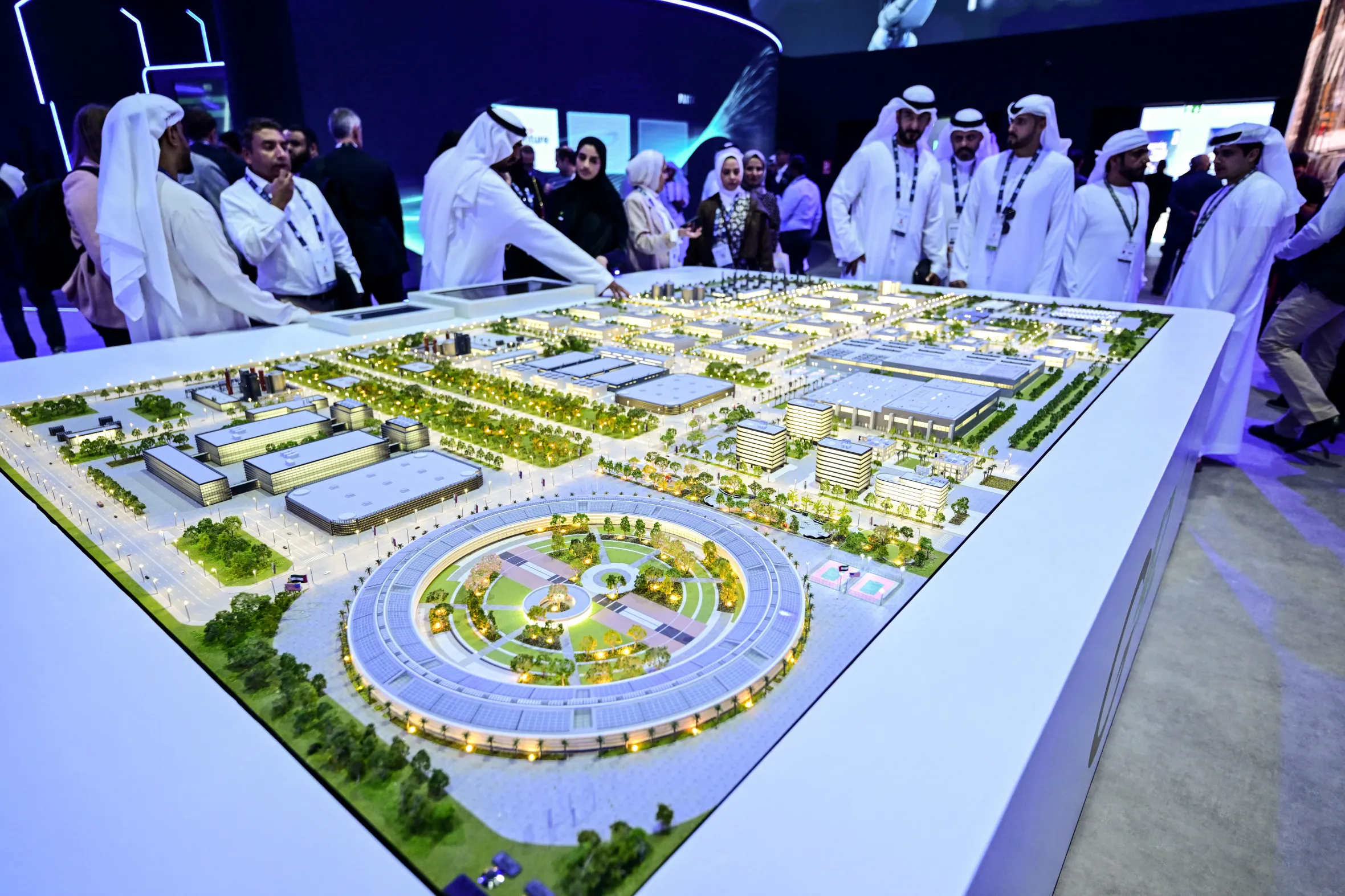 A model of the largest data centre in the UAE under construction in Abu DhabiGiuseppe CACACE/AFP/Getty Images
“Aviation, logistics, advanced manufacturing, artificial intelligence, tourism and life sciences are our fastest-growing sectors,” he wrote in the FT.
Unlike the export of hydrocarbons, the UAE’s effort to build a more diversified economy means its key sectors such as travel and tourism are more exposed in a world without secure supply chains, cheap energy … or capital inflows.
Tourism accounts for about 13 per cent of total GDP. Moody’s warned there is an “effective shutdown of large parts of the hospitality sector … a return to pre-conflict conditions is unlikely before early next year, reflecting traveller hesitancy even after hostilities subside”.
British Airways, Air France, KLM and Lufthansa are among the major carriers that have suspended flights to Dubai since March, when air traffic fell by more than two thirds.
“The UAE is the most exposed,” Jason Tovey at Capital Economics said. He expects the UAE’s economy, like its Gulf partners, to record a growth contraction in the region of 5-10 per cent this year.
In recent years, the Emirates has also pitched itself as an HQ for the world’s biggest hedge funds, which had massively expanded their headcount in the region. One of them, Brevan Howard, set up its largest global office, based on both the number of traders and assets under management, in Abu Dhabi in 2023.
Yet, with the war under way, the firm has now offered staff the option to relocate. “Hedge funds were the latest trend in the UAE, but they can pull out their money as fast as they put it in,” said a portfolio manager at a large fund who moved to the region from London last year.
Abu Dhabi’s economy, which is the most oil reliant, is expected to contract by 1 per cent this year and record a budget deficit — when excluding sovereign wealth income — for the first time since the pandemic hit in 2020, according to Fitch, a ratings agency. “The war has dealt a substantial blow to activity in both hydrocarbon and non-hydrocarbon sectors across the Gulf,” Tovey said.