
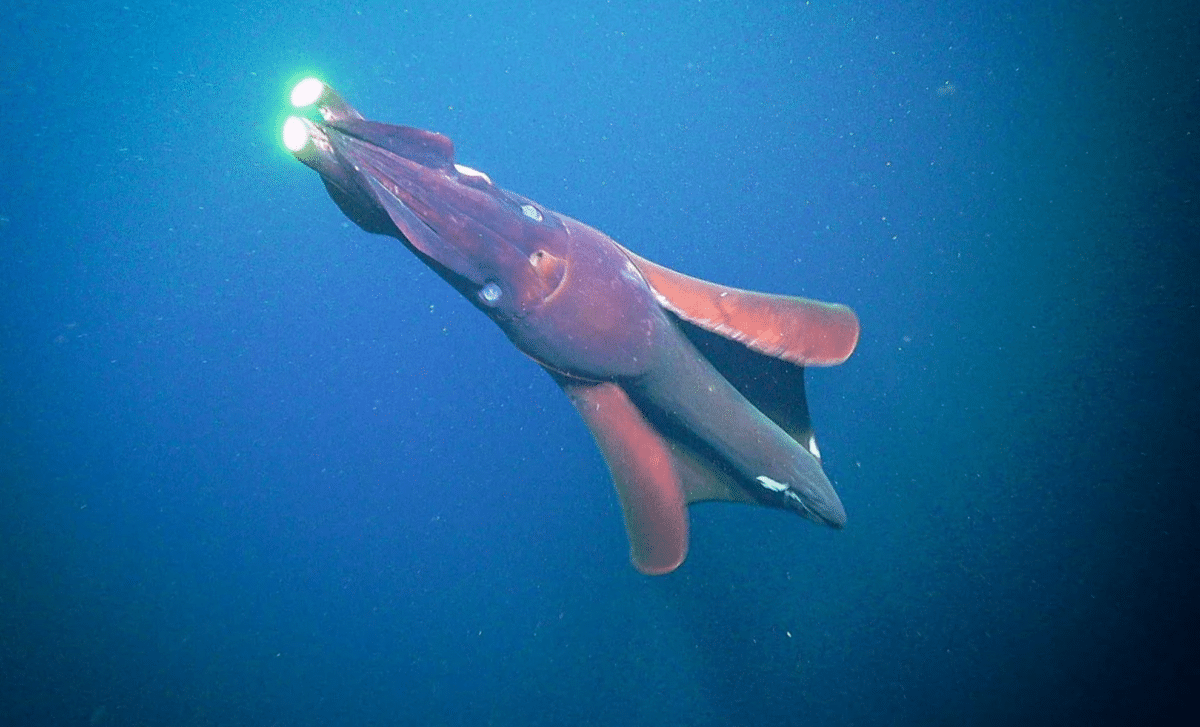
A giant squid has been detected in the remote underwater canyons off Western Australia, marking one of the region’s most extraordinary marine discoveries in decades. Scientists identified the elusive predator not through direct observation, but by analyzing traces of environmental DNA collected from thousands of meters below the ocean surface. The finding, alongside evidence of more than 200 marine species, is offering researchers one of the clearest pictures yet of the hidden ecosystems thriving in Australia’s deep waters.
Scientists Uncover a Hidden Ecosystem Far Below the Surface
The discovery emerged during an ambitious exploration of the Cape Range and Cloates canyons, located roughly 1,200 kilometers north of Perth near Nyinggulu (Ningaloo). Researchers collected seawater samples from multiple depths, including locations reaching an astonishing 4,510 meters beneath the surface. Instead of relying solely on cameras or physical specimens, the team searched the water for microscopic traces of genetic material shed by marine animals through skin cells, mucus, and waste.
The study, published in Environmental DNA, revealed a remarkably diverse ecosystem hidden inside these deep-sea canyons. Scientists identified evidence of at least 226 species, many of which are rarely seen or previously undocumented in Western Australian waters. The canyons appear to function as biodiversity hotspots, sheltering marine life ranging from whales to elusive deep-sea fish and giant cephalopods.
“These canyons are incredibly rich ecosystems and, until now, they’ve been largely unexplored because of the difficulty of working at such extreme depths,” said the study’s lead author Georgia Nester. Nester is now a researcher at the University of Western Australia but was a PhD candidate at Curtin University at the time.
The scale of the findings has surprised even the researchers involved. Deep-ocean environments remain among the least explored places on Earth, largely because traditional surveys are expensive, technically difficult, and often limited in coverage. Environmental DNA is now changing that equation by allowing scientists to detect entire ecosystems from relatively small water samples collected during expeditions.
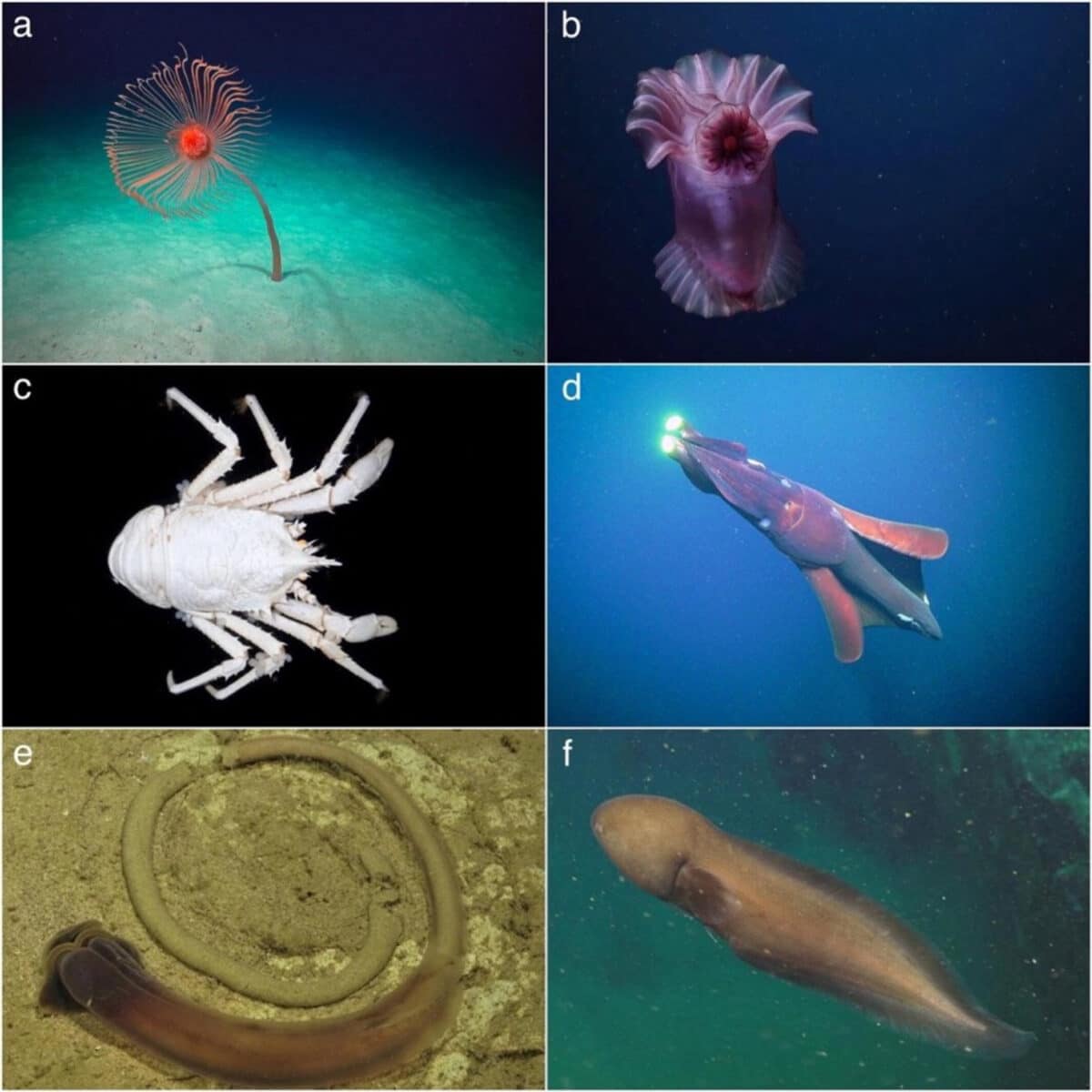 A subset of taxa of interest detected in the Cape Range and Cloates submarine canyons in the Indian Ocean (Western Australia). Taxa were detected using eDNA metabarcoding with the COI Leray and 16S Fish assays. Taxa include (a) giant hydroid Branchiocerianthus sp.; (b) deep-sea cucumber Enypniastes sp.; (c) squat lobster Munidopsis cf. subsquamosa; (d) Dana octopus squid Taningia sp.; (e) acorn worm Tergivelum sp.; and (f) faceless cusk eel Typhlonus nasus.
Credit: Environmental DNA
Giant Squid Detection Marks a Rare Scientific Event
Among the many discoveries, one finding immediately stood out: evidence of the legendary giant squid, Architeuthis dux. The massive deep-sea cephalopod has rarely been documented anywhere in the world and had not been officially recorded in Western Australian waters for more than 25 years.
“This is the first record of a giant squid detected off Western Australia’s coast using eDNA protocols and the northernmost record of [the species] A. dux in the eastern Indian Ocean,” said Dr. Lisa Kirkendale, WA Museum Head of Aquatic Zoology and Curator of Molluscs.
The giant squid has fascinated scientists and the public for generations because of its enormous size and mysterious lifestyle. With tentacles extending beyond 13 meters and eyes capable of reaching the size of dinner plates, the species spends most of its life in deep ocean darkness hundreds of meters below the surface. Encounters are exceptionally rare, making every confirmed detection scientifically valuable.
“Finding evidence of a giant squid really captures people’s imagination, but it’s just one part of a much bigger picture,” said Nester.
The DNA traces suggest that these underwater canyons may support a far more complex ecosystem than previously understood. Researchers believe the region’s steep geological structures and nutrient-rich currents create ideal conditions for deep-sea predators and prey species alike.
Deep-Sea DNA Revealed Whales, Sharks, and Species Never Seen in the Region
The giant squid was only one of many remarkable detections emerging from the expedition. Scientists also identified pygmy sperm whales, known for releasing clouds of intestinal fluid to confuse predators, alongside Cuvier’s beaked whales, recognized as the deepest-diving mammals on Earth. Strange deep-sea fish such as the bony-eared assfish were also recorded in the canyon system.
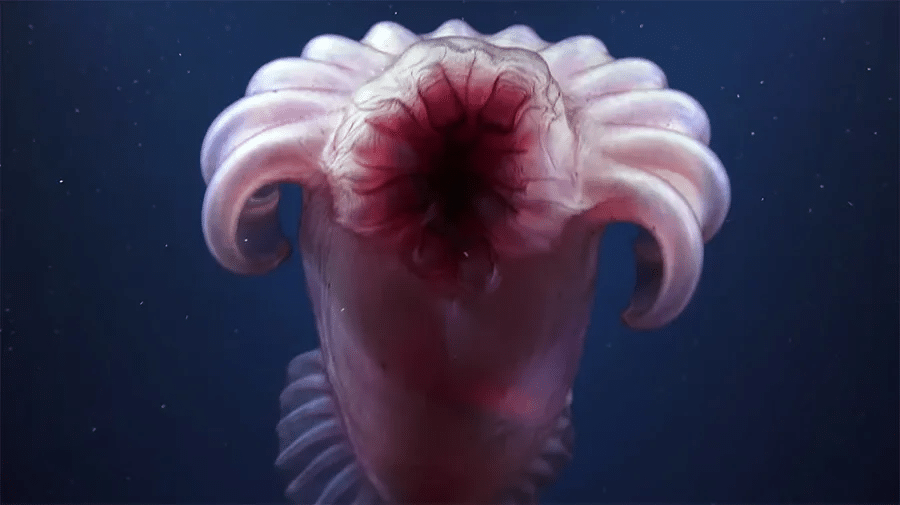 The scientists found evidence of the deep-sea cucumber Enypniastes.
Credit: Schmidt Ocean Institute – Schmidt Ocean Institute
Several species had never before been detected in Western Australian waters, including sleeper sharks, slender snaggletooths, and faceless cusk eels. Researchers say some DNA sequences did not match any known records currently available in scientific databases, hinting at the possibility of undocumented marine species.
“We found a large number of species that don’t neatly match anything currently recorded, which doesn’t automatically mean they’re new to science, but it strongly suggests there is a vast amount of deep-sea biodiversity we’re only just beginning to uncover,” added Nester.
The findings highlight how little scientists still know about the deep ocean. Large portions of the seafloor remain unexplored, while countless species may exist beyond the reach of conventional observation methods. Environmental DNA is increasingly becoming one of the most powerful tools available for uncovering these hidden ecosystems without disturbing them.
“With eDNA, a single water sample can tell us about hundreds of species at once. That means we can dramatically expand our understanding of deep-water environments in a way that simply hasn’t been possible before,” Nester added.
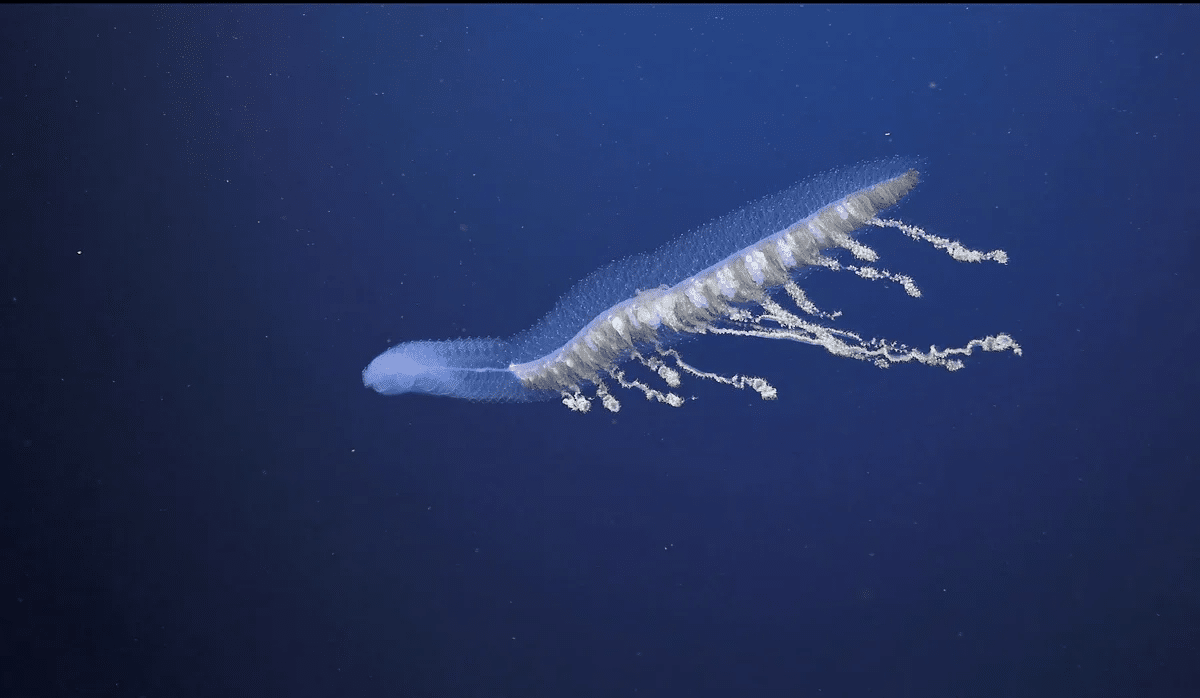 Siphonophore.
Credit: Schmidt Ocean Institute
Why This Discovery Could Change Deep-Sea Conservation
Beyond the excitement surrounding giant squids and mysterious fish, researchers say the study carries major implications for marine conservation. Deep-sea ecosystems are under increasing pressure from climate change, industrial fishing, seabed mining, and resource extraction projects. Yet scientists still lack basic biodiversity data for many remote regions.
“Deep-sea ecosystems are vast, remote and expensive to study, yet they face growing pressure from climate change, fishing and resource extraction,” said senior author Zoe Richards, associate professor at Curtin’s School of Molecular and Life Sciences.
The ability to rapidly identify marine biodiversity through environmental DNA could transform how governments and conservation groups monitor vulnerable ocean habitats. Instead of requiring extensive physical surveys, researchers can now generate detailed biodiversity snapshots using scalable and non-invasive techniques.
“Environmental DNA gives us a scalable, non-invasive way to build baseline knowledge of what lives there, which is essential for informed management and conservation,” Richards added. “You can’t protect what you don’t know exists.”
For scientists studying Earth’s least accessible ecosystems, the discovery beneath Western Australia’s deep-sea canyons may represent only the beginning. Hidden in the darkness of the Indian Ocean, entire communities of marine life are still waiting to be uncovered.