
“He was so fatigued all the time. It was hard for him to go for a walk … everything was hard.
“He genuinely tried because he wasn’t a quitter … even doing the dishes or making himself a sandwich was difficult.”
A third brain tumour was detected in March this year. He died on April 16.
“It’s pretty hard on the kids. They’re pretty strong – we all have our moments … ”
Sara said she wanted to raise more awareness about brain tumours and “to honour Shane” – her husband of 19 years.
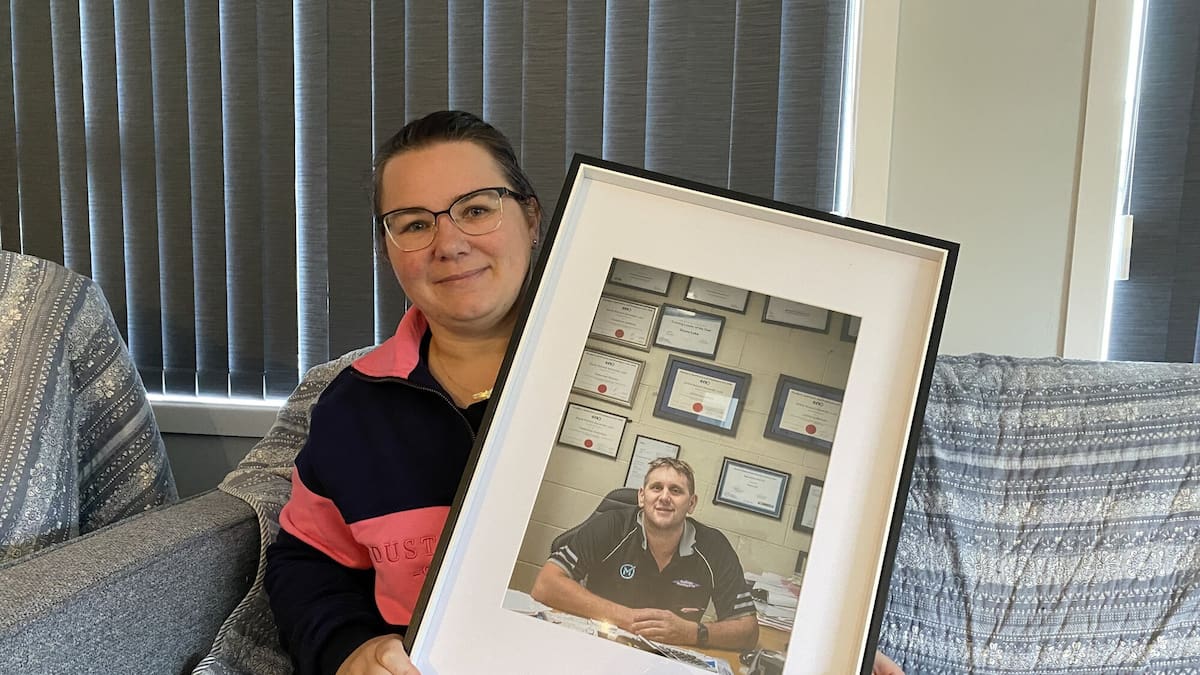
Sara Luke’s husband, Shane Luke, died on April 16 after being diagnosed with three brain tumours. He was 47. Photo / Megan Wilson
Shane’s symptoms started in April 2024 and included balance issues, headaches, dizziness, nausea and a new aversion to some smells.
His GP put it down to stress and vertigo and told him to monitor it.
By November 2024, his symptoms were worsening. His nausea caused him to vomit and his eyesight became affected.
Shane returned to his GP and was referred for MRI and CT scans.
The couple were told at Rotorua Hospital that he had two brain tumours, leaving Sara “bawling my eyes out”.
His results were sent to Waikato Hospital, where Shane had a successful operation to remove one of the tumours. The other tumour was “too risky” to operate on due to its location.
After his operation, the couple were told Shane had a terminal grade 4 glioma.
Shane began radiation and chemotherapy in February 2025 in the hope it would shrink the second tumour.
In mid-2025, a scan revealed the tumour had doubled in size, and the treatment had not worked.
He was told that “he would be lucky to make Christmas”.
Making family memories
In July, the family of six went to the South Island for two weeks after being approved for funding from the White Matter Brain Cancer Trust.
Upon their return, Shane had an operation to relieve some pressure on his brain. He also privately funded an immunotherapy drug for two courses.
Sara said he spent October in hospital and decided not to take more drugs.
“He just wanted to live. And we did … right up until mid-March, he had a really good run.”
Mamaku father Shane Luke and his four children on the family’s South Island trip last year. Photo / Supplied
They spent quality family time together, going on a Disney cruise, out on their boat, and having barbecues.
In March 2026, Shane had a seizure and was diagnosed with a third brain tumour.
Declining treatment, “that’s how he ended up passing … way too quick“.
For brain tumour awareness month this month, Sara is walking 5km daily to raise awareness and money for Brain Tumour Support NZ.
“It forces me to get out and walk outside and do some exercise. Otherwise, you just end up in bed feeling sorry for yourself and grieving.”
Sara praised Brain Tumour Support NZ’s “extremely valuable” resources and encouraged families who were impacted by brain tumours to contact the organisation for support.
Tauranga retiree’s brain tumour diagnosis
Tauranga retiree Jon Moody, 75, said he was diagnosed with a brain tumour in October.
In July, Jon said he was carrying firewood and had a fall. The doctor thought he had a back injury, but an X-ray disproved this.
His wife, Katharine Moody, said he had a CT scan, which found he had a glioblastoma. Its location on the motor cortex meant he suffered from motor paralysis.
Katharine said Jon had radiation therapy in November. This reduced the tumour, but the tumour was “progressive”.
Chemotherapy was not recommended, and surgery was not possible due to the tumour’s location.
“He’s never going to recover from it, and so we just pretty much take every day as a big blessing and get on with life.”
Asked about Jon’s prognosis, Katharine said, “We’ve never asked, and we’ve never been told.”
Tauranga man Jon Moody was diagnosed with a terminal glioblastoma brain tumour in October last year at Tauranga Hospital. Photo / Supplied
Katharine said Jon was “pretty much confined to either bed or wheelchair” and she cared for him full time.
They married in 1978 and have two sons and six grandchildren.
Katharine encouraged impacted families to make the most of the support offered, including from Brain Tumour Support NZ.
In a Brain Tumour Support NZ statement, chief executive Sarah Verran said estimates suggested as many as 7000 New Zealanders may be living with a brain tumour.
“There are over 130 different types of primary brain tumour, and each subtype is considered rare.”
Verran said raising more awareness was important to achieve better care, treatments and outcomes for brain tumour patients.
The charity’s signature fundraiser and awareness campaign “brainy beanies” was underway. Knitters and crafters designed and donated beanies, each one unique, to be sold online, at schools, workplaces and events such as Fieldays.
Funds raised would go towards the charity’s patient and caregiver support programmes.
Megan Wilson is a health and general news reporter for the Bay of Plenty Times and the Rotorua Daily Post. She has been a journalist since 2021.