
May 14 (Reuters) – Bearish pressure on the Indonesian rupiah and the Indian rupee deepened as persistently high crude oil prices continued to batter both currencies, while short positions in most other Asian currencies edged lower, a Reuters poll showed Thursday.
Traders’ positioning against the Indonesian rupiah deteriorated to levels last seen in late October 2022, according to a survey of 10 respondents, while negative wagers on the Indian rupee continued to hold their streak since mid-June 2025.
Currencies in emerging Asia’s oil-importing economies have been among the hardest hit since Brent crude surged nearly 50% after the Iran war began, despite central banks and governments stepping in to limit currency weakness and stabilize markets. [O/R]
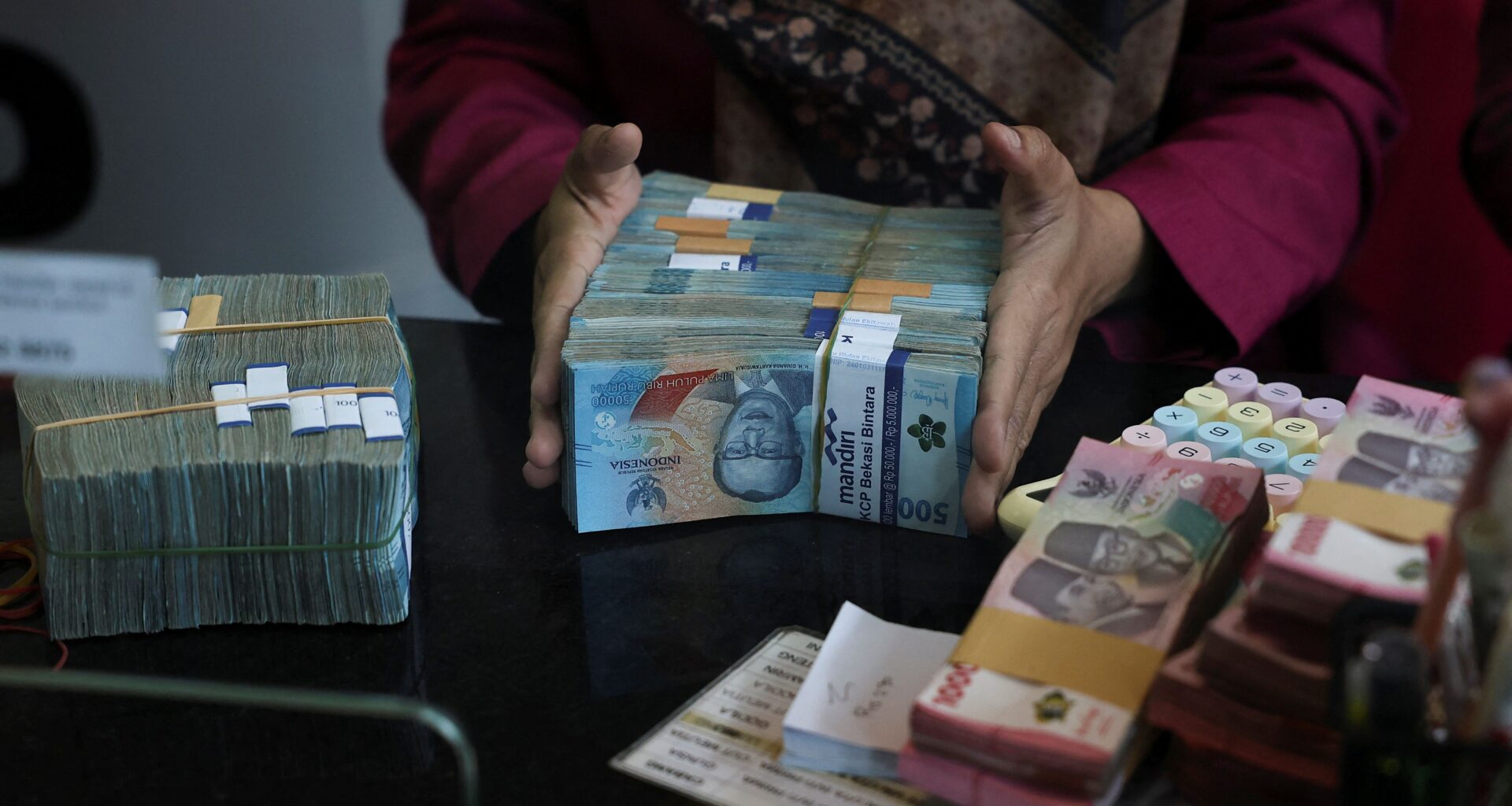
The rupiah slid past the key psychological threshold of 17,500 per dollar for the first time earlier this week, touching a record low of 17,535.
The currency was already under strain as investors were increasingly uneasy about Indonesia’s fiscal and governance issues.
“Investors are demanding compensation for a market where the policy reaction function has become harder to read,” said Billy Leung, investment strategist at Global X ETFs Australia.
“As a net energy importer, the current oil backdrop pressures the current account and limits Bank Indonesia’s (BI) room to defend the rupiah, which has broken above 17,000.”
BI’s deputy governor said on Tuesday the central bank is committed to making “smart interventions” in the market to reduce pressure on the rupiah’s exchange rate versus the dollar.
The Indian rupee, meanwhile, is emerging Asia’s worst-performing currency, down more than 6% so far this year.
Foreign investors have pulled out more than $20 billion from Indian equities since the war began, with year-to-date outflows exceeding last year’s record.
DBS analysts wrote that a sustained recovery in the rupee would likely require either a sharp drop in oil prices or a return of portfolio inflows.
By contrast, bearish positioning in most other Asian currencies softened, with bets against the Taiwan dollar and South Korean won at their lowest since mid-February and Thai baht shorts at their lowest since late March.
The won and Taiwan dollar continue to benefit from equity-led foreign inflows as global funds favour South Korea and Taiwan markets amid an accelerating AI-driven earnings cycle in semiconductors, memory and tech hardware.
The Thai baht has also underperformed in the year so far, down 2.72%, with energy price shock and fiscal worries compounding the pressure.
Elsewhere, bullish views increased on the Singapore dollar and the Malaysian ringgit, given the Singaporean central bank’s safe-haven characteristics and Malaysia’s position as a net energy exporter.
The Asian currency positioning poll is focused on what analysts and fund managers believe are the current market positions in nine Asian emerging market currencies: the Chinese yuan, South Korean won, Singapore dollar, Indonesian rupiah, Taiwan dollar, Indian rupee, Philippine peso, Malaysian ringgit and the Thai baht.
The poll uses estimates of net long or short positions on a scale of minus 3 to plus 3. A score of plus 3 indicates the market is significantly long U.S. dollars.
The figures include positions held through non-deliverable forwards (NDFs).
The survey findings are provided below (positions in U.S. dollar versus each currency):
DATE USD/CNY USD/KRW USD/SGD USD/IDR USD/TWD USD/INR USD/MYR USD/PHP USD/THB
14-May-26 -1.35 0.33 -0.83 1.73 0.15 1.63 -0.80 1.30 0.65
30-Apr-26 -1.08 0.49 -0.69 1.60 0.38 1.43 -0.77 1.53 1.00
16-Apr-26 -1.05 1.19 -0.57 1.49 0.77 1.53 -0.67 1.45 1.02
2-Apr-26 -0.56 1.83 -0.17 1.51 1.3 1.93 -0.53 1.68 1.59
19-Mar-26 -1.02 1.39 -0.18 1.41 0.83 1.25 -1.10 1.04 1.15
5-Mar-26 -1.41 0.58 -0.57 1.32 0.37 1.20 -1.30 0.14 -0.46
19-Feb-26 -1.58 0.16 -1.19 1.21 0.12 0.95 -1.73 0.10 -0.79
5-Feb-26 -1.47 0.22 -1.04 1.09 0.25 1.51 -1.58 0.47 -0.42
22-Jan-26 -1.64 0.72 -0.88 1.35 0.38 1.39 -1.06 1.12 -1.01
8-Jan-26 -1.59 0.06 -0.92 0.97 0.54 1.31 -1.13 1.01 -1.17
(Reporting by Shivangi Lahiri in Bengaluru; Editing by Nivedita Bhattacharjee)
By Shivangi Lahiri