
Because of this, I thought Britain might be closer to being my motherland than India. I thought that if I were there, I would feel like I made sense. And if I felt like I made sense, I would be unstoppable.
When I moved to Britain in 2019, I would excitedly tell Londoners where I was from, as if to exclaim, “We are from the same family!” Not in a proud way. In a you can’t choose your family way.
But it wasn’t common knowledge that Fiji was a former British colony, let alone that Britain shipped more than a million Indians to plantations across five continents, creating a lost diaspora. I felt guilty being in a room full of adoring people and still feeling unseen.
India was made difficult to connect with. Besides the differences in language and customs, I didn’t know my family tree beyond who was in Fiji. That’s only four generations on my father’s side and five generations on my mother’s. Telling me to “go back to India” was always pointless. I don’t know where exactly in India my ancestors came from. Many descendants of Girmitiya – a name stemming from the English word “agreement” given to Indian indentured labourers – didn’t.
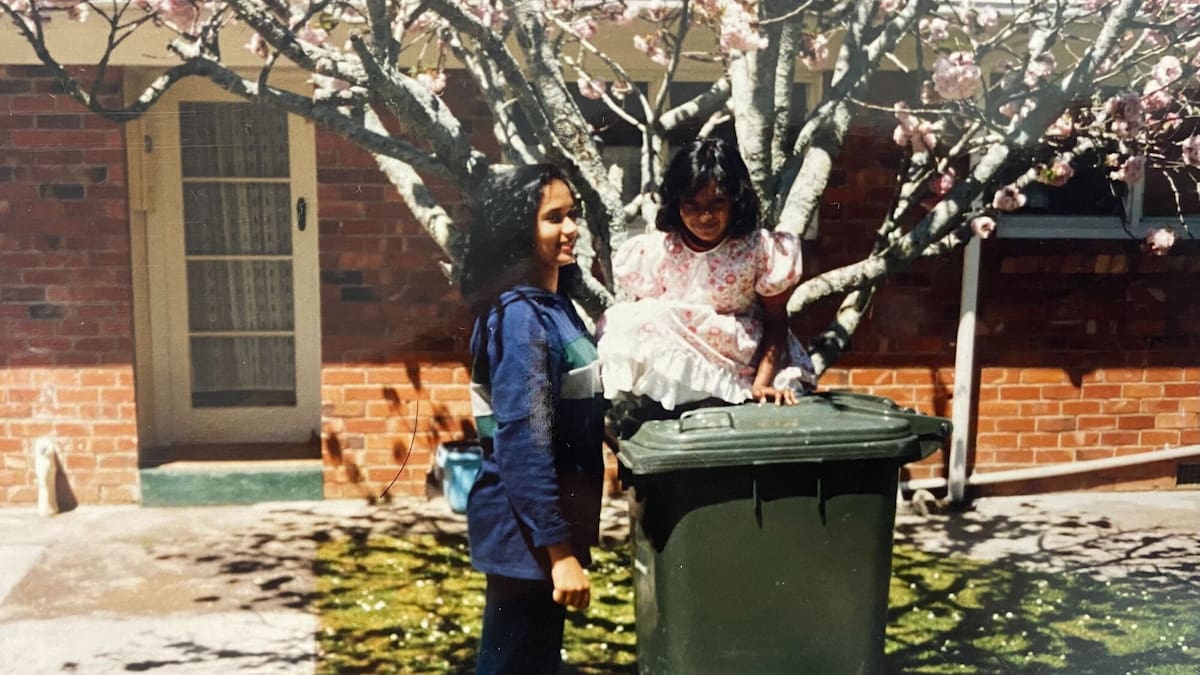
Baby Varsha and her father in Suva, Fiji.
In 1879, 147 years ago today, Girmitiya arrived by boat in Fiji from India. Britain transported my ancestors to work on sugar plantations under the new system of unfree labour: indenture. Many of them died on the way. Some from illness. Some from suicide. My family is descended from the survivors.
Many records were lost or poorly maintained by Britain, which had little, if any, incentive to preserve such history at the time. Much of what we knew was passed down orally through generations. Academic literature and in-depth teaching of Indo-Fijian history in Fiji’s schools were significantly limited.
Fiji’s four military coups haven’t helped. The first one on May 14, 1987, is why my family no longer felt they belonged to the only home they knew.
Then-Lieutenant-Colonel Sitiveni Rabuka’s bloodless, anti-Indo-Fijian coup prompted a mass exodus of Indo-Fijians. His gang of soldiers put a gun to my father’s and other journalists’ heads inside the Fiji Sun office in Suva. Later, as rioters looted the capital, hands holding stones lunged at my father’s Indo-Fijian face. That day was the first time my father saw his father cry.
I still don’t ask Dad about that coup much. He said it marks one forever. He said it was traumatising. He said it is what made him leave everything he knew – his home, family, friends, security – and start again with me, my sister and my mother years later in the unfamiliar lands of Aotearoa.
One night in Auckland, I had a dream that I was a big cat sleeping by the heater. I felt innate comfort and strength. This is what I imagine belonging to look like. This is what I imagine the non-Kiwi white men I dated in New Zealand felt like. They didn’t have to prove their Kiwiness off the bat. But I’d get shop assistants talking slowly, carefully, as though I might not understand.
In Aotearoa, I feel guilty. I love this country. I had a better future because of the brave risks my parents took in moving here. And I am so grateful. This is my home and this is where I will always be. But I still wail for belonging. There are pits of grief running throughout the body. My ancestors’ ghosts are still looking for me.
Māori helped me understand why I keep searching. Knowing your whakapapa means you know who you are. Knowing who you are makes you fearless. It makes you powerful. No one can take that away.
Sometimes when I oil my hair as my ancestors have done for generations, I imagine my mother’s hands on top of mine. On top of her hands are my grandmother’s. On top of my grandmother’s hands are my great-grandmother’s, and so on, until the room is filled with ghosts in saris and bangles, together.
Varsha Anjali is a journalist in the lifestyle team at the Herald. She was born in Fiji and immigrated to Tāmaki Makaurau when she was 5.