
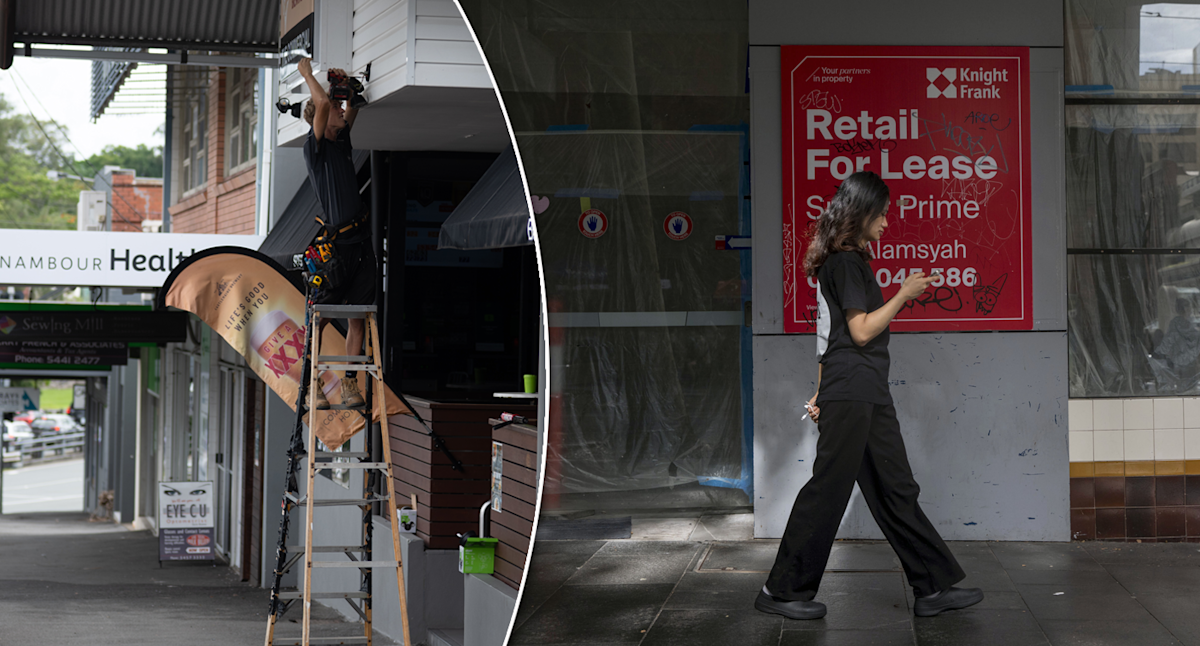
 The issue is the quiet retirement crisis for business owners that no one talks about. · Bloomberg
Michael had built a mid-sized services company, with twenty-two staff, two decades of steady work and loyal clients. He was proud of it, even if it hadn’t become quite everything he’d once imagined. But somewhere around year eighteen, the energy started going.
He’d been telling himself he’d exit for years. Another year or two, when things settle down. That’s when he finally felt done.
Then came the burnout, not dramatic, just gradual. A competitor approached with genuine interest, but Michael wasn’t ready. The financials were messy, the story wasn’t clear, and the buyer moved on. Twelve months later he tried to put the business on the market, but the sector had cooled and the offers that came in felt nothing like the payoff he’d spent two decades building toward.
RELATED
This story opens my book, Exit Like an Expert, and it’s one I encounter over and over. In my role as National Chair of the Australian Institute of Business Brokers (AIBB), I see this pattern repeated across almost every industry in the country. It’s a quiet crisis for the Australian economy.
Between 70 and 80% of businesses listed for sale never complete a transaction. That comes from the Exit Planning Institute’s research, which is consistent with what we see in our own local private market. The businesses that don’t sell are overwhelmingly ones that could have, and should have, given more time and more preparation.
What actually kills a deal
The Exit Planning Institute breaks down the reasons for failed sales precisely: unrealistic valuations account for 35%, poor financial documentation 25%, excessive owner dependency 20%, and general seller unreadiness the remaining 20%.
Poor financial documentation is surprisingly more common than you think. Owners have to substantiate their numbers to a buyer’s standard, not their own, and the two are rarely the same. Undocumented cash, owner drawings mixed with operating expenses and records that raise more questions than they answer. All of it creates doubt, and doubt gets priced in.
I had a wholesaling client approached by a strategic buyer with real interest and strong alignment. But the business’s finances were informal, cash had been taken out without clean records, and when due diligence questions started coming, the team couldn’t respond quickly enough. The buyer reduced their offer to account for what they couldn’t verify. The seller found the reduced number offensive. After twelve months of meetings, the deal collapsed entirely.
 Older business owners often don’t plan until it’s too late. · John Clutterbuck
Owner dependency does similar damage, usually quietly. William Buck’s research on key person risk puts the discount for owner-dependent businesses at 10 to 25%. Businesses that are professionally managed, where the founder has built a team capable of operating without them, achieve median valuation multiples up to 47% higher.
An electrical contractor client came to us and quickly realised their business wasn’t going to achieve what they’d hoped. Too much concentration risk, and too dependent on the two principals being present for everything. Rather than pushing to market, we advised them to pause. They restructured over eighteen months, brought in new management, and reduced their own centrality deliberately. When we returned to market, serious buyers appeared within four months and the final valuation exceeded the original ask with almost no earn-out attached.
RELATED: Selling or exiting your small business: What it means for your tax
Customer concentration sits in the same category. Buyers must think carefully about what happens after they sign. If a single customer represents more than 20% of revenue and decides to leave post-sale, the business they just bought looks very different to the one they paid for. That is why customer concentration above that threshold consistently compresses valuations.
A web development client of ours had over a million dollars in adjusted EBITDA, with more than 90% coming from one client. We advised them to diversify before going to market. They didn’t act. Four years later they came back and two buyers were interested, but every offer reflected the concentration risk that was still sitting there.
The retirement problem hiding in plain sight
Australia’s superannuation system covers roughly 90% of the workforce. The approximately 2.2 million self-employed Australians with no compulsory super obligations largely sit outside it, many of them reinvesting everything back into the business on the assumption that the sale will take care of retirement.
AMP Bank’s July 2025 research, which surveyed 2,000 Australian sole traders and small business owners, found that close to half were not making regular superannuation contributions. Among solopreneurs the figure was 50%. Among micro-businesses with four or fewer employees, 55%. In my experience, this is a reinvestment trap, where the business becomes the only piggy bank, and the exit becomes the only plan.
A majority of small businesses fail at sucession planning. · Supplied
KPMG’s Super Insights 2025 report estimates 2.5 million Australians will move into retirement over the next decade. A significant proportion of those will be business owners whose entire retirement position depends on one negotiation going to plan. According to the ABS, around 800,000 Australians intend to retire within five years. And 59% of Australian business owners have never considered the tax implications of a future sale, let alone whether the business is ready to attract a credible buyer.
When the sale doesn’t happen, or settles for significantly less than expected, there is often no cushion. No super balance to fall back on. Just the proceeds, or the absence of them.
What the current environment means for timing
I speak regularly with Warren Hogan, Chief Economic Adviser to Judo Bank and one of Australia’s most closely watched independent economists. His read on the current environment is pointed.
“Australia went into this global shock with an inflation problem that was already building underneath. The energy cost increases and supply chain pressures have compounded a pre-existing condition. If you’re thinking about selling in the next two to three years, you really don’t want to find yourself having to transact when the whole thing goes pear-shaped. Preparation is what gives you the choice of timing.”
His distinction between different types of economic downturns is worth sitting with, particularly for owners inclined to freeze entirely when conditions feel uncertain. A technical recession is uncomfortable but manageable for a well-run business. A garden-variety recession is harder but survivable. It is only a genuine financial crisis that causes lasting structural damage to businesses with real futures.
What the current environment has done is make buyers more precise. They are running deeper due diligence and pricing every identifiable risk, including customer concentration, supplier dependency, owner reliance, and margin fragility under cost pressure. Two businesses with identical revenue can be worth two to three times different amounts depending on how those risks stack up. That spread widens when conditions are uncertain.
What owners should be doing now
Get a valuation before you think you need one. You cannot address what you haven’t measured, and most owners are surprised by what a proper valuation surfaces about where their risks actually sit.
Clean up the financials now. Separate personal and business expenses. Build a track record that can answer due diligence questions in days, not weeks.
Reduce your own centrality to the business over time. Build the management layer. Document the processes. A useful test is to take four weeks away from the business and observe what happens. Buyers will conduct their own version of that assessment during due diligence.
Diversify your customer base. If one account represents more than 20% of revenue, that is the first thing to address. Every month it continues is another month of valuation exposure.
Start contributing to superannuation separately from the business. The sale should improve your retirement position, not constitute the whole of it.
Michael, who I mentioned at the start, eventually sold. It took longer than he wanted, at a price that reflected the years of not being ready rather than the years of building. He told me afterwards that he wished he’d started the conversation five years earlier, not five months before he burned out. Most owners say something similar, once it’s done.
Simon Bedard is the Founder and CEO of Exit Advisory Group, National Chair of the Australian Institute of Business Brokers, host of the Buy Grow Sell Podcast, and author of Exit Like an Expert. He has advised hundreds of Australian business owners through exit planning, valuation, and sale.
Get the latest Yahoo Finance news – follow us on Facebook, LinkedIn and Instagram.