
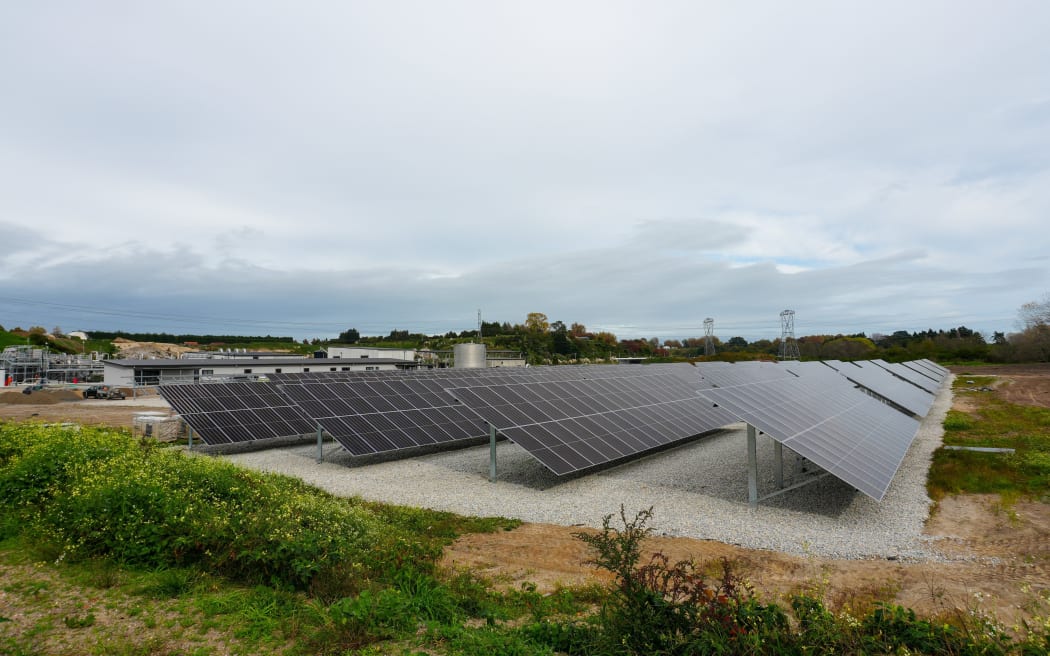
There is ample room for the panels to expand towards.
Photo: Waipa District Council
Cambridge’s wastewater treatment plant will soon be able to boast clean and green credentials.
Nearly 2000 solar panels will come online in December to help create the 1.2 megawatts of energy required at a cost of $3 million.
The investment will slash operating costs by $500,000 a year, project lead Martin Mould said, meaning it will pay for itself in only six years.
“The demand of the solar can generate 1.2 megawatts, which matches the demand for the site, so if the plant’s running full noise and the solar’s produced 1.2 [megawatts], it will power the plant,” Martin said.

He added that the plant will still need to pay for electricity at night but said there is an opportunity for the solar panels to expand.
“If you wanted 24/7 supply from solar, you need twice the amount plus batteries.”
“That took the payout period to 30+ years but as things get more cheaper … there will be a tipping point where you could add more solar, add batteries and power the plant.”
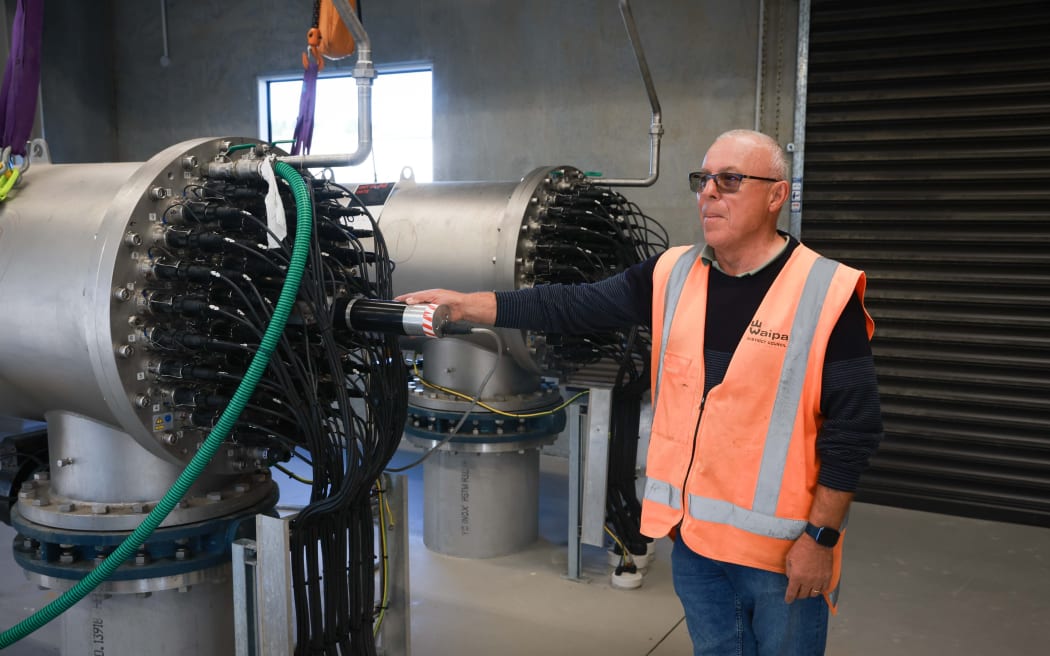
Mould said there’s a realistic future for the plant to be powered 24/7 by solar.
Photo: Mark Taylor / Waikato Times
When including the plant itself, which was over a $100 million investment and currently operational, it will produce 10 percent of the carbon emissions compared to its predecessor, water services manager Karl Pavlovich said.
“Solar panels became a natural solution that came out of that search for an efficient, whole of life cost asset for the community,” he said.
The plant was “unique” in regards to the role mana whenua played, Pavlovich noted, labelling the process as a co-design as feedback from the community as well as the Cambridge liaison group was received.
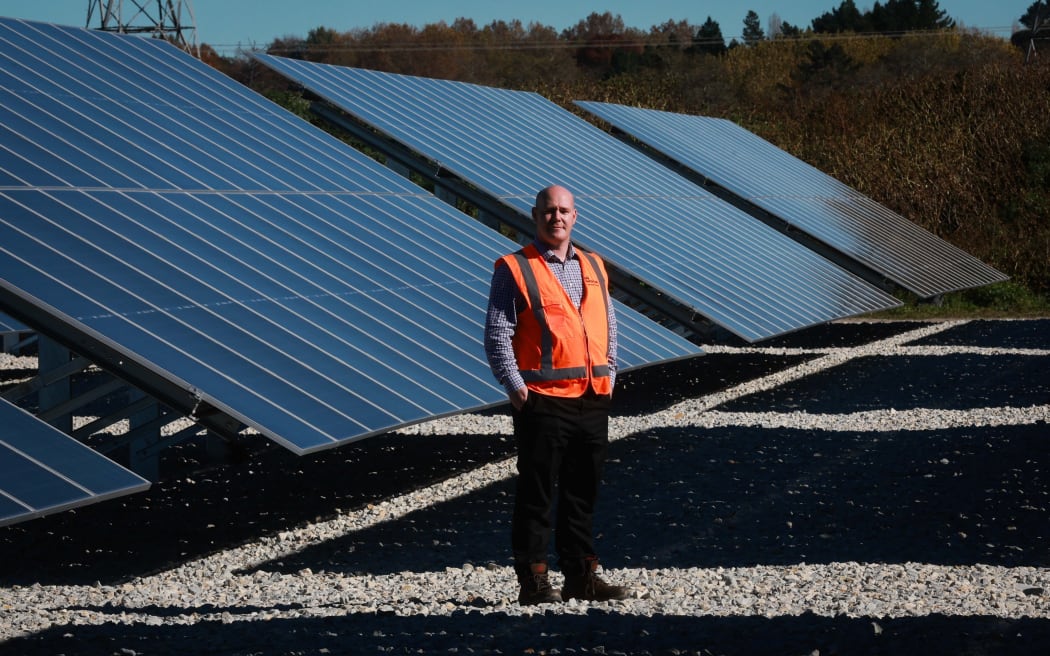
Water services manager Karl Pavlovich has overseen the panel’s ongoing installation.
Photo: Mark Taylor / Waikato Times
He added another unique feature rests in the limestone foundation stones for the panels, as the sunlight reflection creates an extra 7 percent of power per cell.
“Probably a sign everyone was on board is the plant here got its consent with no objections [and] with full support.”
The plant itself reflects the immense growth in the area, with Cambridge, Leamington, Hautapu, and Karāpiro (all places the plant serves) anticipated to go from a 20,000 to 50,000 population by 2060.
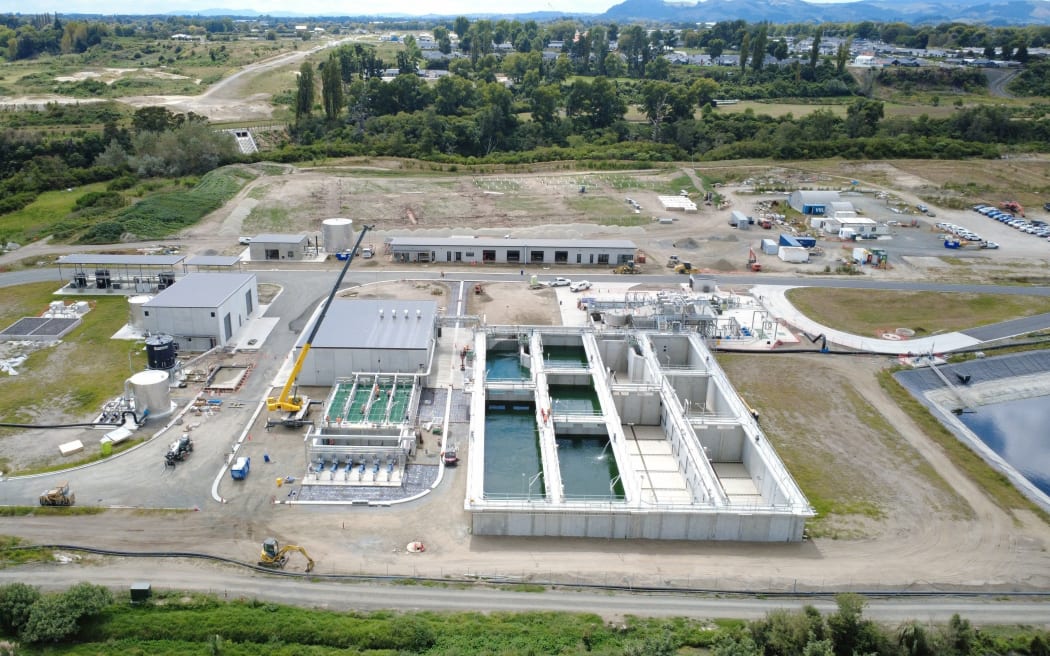
The wastewater plant in its entirety.
Photo: Waipa District Council
Pavlovich said all parties involved “looked into the crystal ball” and committed to the delivery, highlighting how the 35 year consents for both the plant and the solar panels is “designed to meet the needs in 35 year’s time”.
“This is not a now plant. It’s a future plant,” he added.
“This plant is a really good example of forward thinking being actually delivered … I think we’ve got a really good result at the end of it.”
The plant currently produces 20 tonnes of sludge, which is transported off site to composts.
LDR is local body journalism co-funded by RNZ and NZ On Air.