
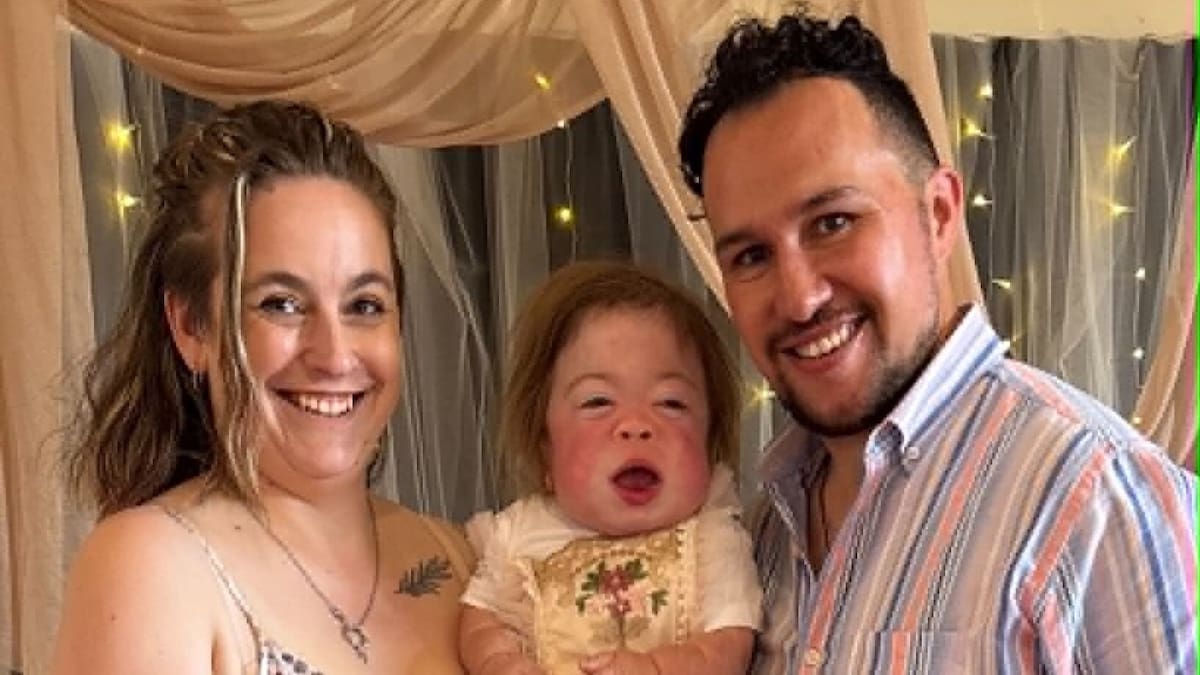
“Outside of that, it is just constant maintenance of her health: physical therapy, occupational therapy, speech therapy, cardiologist – you name it, we have one.”
Chase said that because there were so few cases of mucolipidosis type 2 worldwide, it was hard to know how long Willow would survive.
“It’s rare to come by babies with the condition, let alone to see the outcome and do medical research,” he said.
“So it’s kind of like trial and error and see what time comes.”
The pair said that, based on a medical article from around 1998, Willow’s life expectancy was “10 and under”.
“Thankfully, with the perks of modern medicine, there are kids exceeding that,” Eden said.
“But even two kids with this exact same condition type, it completely varies child to child. So no doctor can definitively say what we’re looking at.”
Willow Dargaville was born with a rare genetic condition. Photo / Chase Dargaville
With the unknown hanging over the family’s head, they decided to focus on the positives in life – not count the days but make the days count.
“We’re not going to focus on the life expectancy part. We are just going to give her the absolute best life, full of everything that we can offer until we can’t any more.”
But Eden said being a carer for a disabled child can be financially limiting.
However, a Givealittle page set up by the family entitled “Making the Days Count for Willow” would help them give Willow the best life possible.
The funds raised would go towards giving her experiences she otherwise wouldn’t be able to have, like getting to try new foods, people-watching, and visiting whānau and zoos around the country – all things she loves.
Chase said these things help Willow get so much joy out of life.
“So we’re going to enjoy it with her.”
Jack Riddell is a multimedia journalist with Hawke’s Bay Today and has worked in radio and media in Britain, Germany, and New Zealand.