
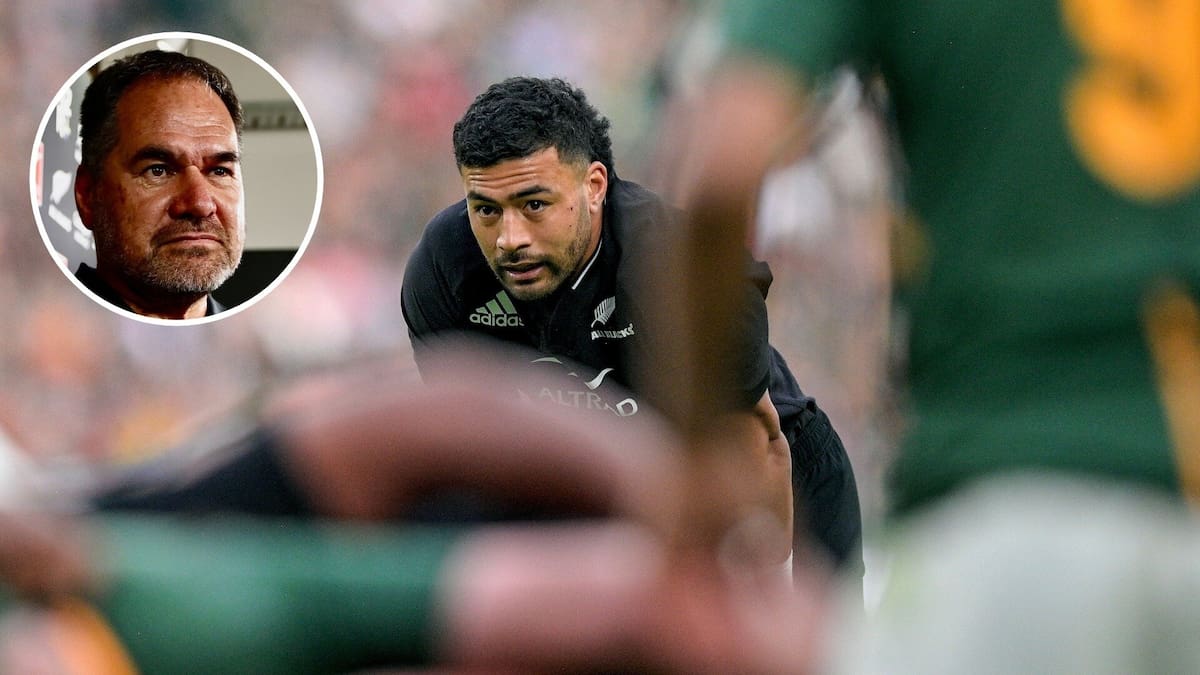
It is effectively a customer loyalty scheme and Mo’unga, who has signed for 18 months, has not been deemed to have enough points to win a trip to South Africa, whereas he would have had he committed to a three-year deal.
Richie Mo’unga will not be eligible for selection by the time the All Blacks face South Africa. Photo / Photosport
The basis for not granting him an exemption was NZR’s fear that it would set a dangerous precedent and potentially encourage an exodus of elite talent to believe they can spend three years banking foreign loot and then waltz back into the national team for the World Cup.
NZR also cited a need to protect the loyal playing cohort who had made long-term commitments to stay in New Zealand, career decisions that were partly influenced by the current eligibility settings.
The argument, while at least cohesive, is, however, spurious as it seems unlikely top players would gamble they can disappear for three years and instantly resume their test careers. It’s also riddled in pedantry and technocratic nuance because why make Mo’unga wait three months when he has already demonstrated his commitment by giving up a $2.2 million pay annual pay packet at Toshiba to come home to play for the Crusaders.
And the claim that blocking Mo’unga’s All Blacks availability until October somehow protects the incumbent cohort from seeing their career dreams stolen by a carpetbagger is as misplaced as Neville Chamberlain waving the Munich Agreement and declaring peace in our time.
One of Beauden Barrett, Damian McKenzie and Ruben Love – all of whom have been in New Zealand for the entire cycle to date – could yet be ousted from Dave Rennie’s World Cup plans by Mo’unga, hence the deterrent of delaying a returning player’s eligibility will serve as no deterrent at all.
Beauden Barrett (left) celebrates scoring a try with All Blacks teammate Damian McKenzie. Photo / Photosport
But the real problem with the current eligibility settings is that they have been built with the wrong beneficiaries in mind.
They may make sense to an NZR executive steeped in the technocratic development of the eligibility architecture, and to the domestic playing cohort, but the question is whether these two groups are the right ones to prioritise.
The priority stakeholders on this issue need to be the fans. The premise of NZR’s entire commercial plan – sponsorship, broadcast and gate revenue – is based on the All Blacks winning and people paying to watch them, and there is zero alignment between these two critical objectives and the Mo’unga decision.
Fans want to see the best players playing, not being stopped from playing by what feels like a complicated piece of bureaucracy.
Most fans can understand NZR’s key eligibility principle of not picking players plying their trade outside of New Zealand. But they lose interest with the nuance and almost pettiness of saying that some returning players have to first play in a semi-amateur competition before they are eligible for the All Blacks.
It feels like an unnecessary muddying of the waters – a complicated solution to a problem that should not exist. A victory for the small print.
Last week, NZR chairman David Kirk said the All Blacks were competing with the likes of Arsenal. But there is no universe in which the English Premier League leaders would fork out $100m for a star player and then tell him he couldn’t play in the Champions League until he had done a stint with Hackney United in North London Division Two.
The All Blacks are brand-building in the entertainment world, not box-ticking in the administrative hubs, and rugby executives can’t be blasé about this, because Super Rugby Pacific’s audience has dropped sharply in 2026, engagement is down and with Moana Pasifika on the brink of collapse, rugby is struggling.
All this while the NRL is expanding and booming, with New Zealand’s one team in the competition playing to packed stadiums in Auckland and around the country.
Dave Rennie (left) has called in Sir Graham Henry for input on selection. Photo / Photosport
Rugby in New Zealand is in a fight for relevancy and market share and as former All Blacks coach Sir Graham Henry said after announcing he has taken a role with Rennie’s team as an independent selector: “We can’t continue doing what we’re doing, we need to widen our horizons, I think, and make some decisions for the future.
“Maybe I’ll be lucky enough to be in those discussions because times change and you need to change with the times and keep up with the times and do what’s right for our game in this country, and we haven’t changed much at all over the last 30 years.”
Gregor Paul is one of New Zealand’s most respected rugby writers and columnists. He has won multiple awards for journalism and written several books about sport.