
Her departure follows that of chair Alex Howieson, who resigned abruptly last month – two days after 14 of the country’s 20 water polo clubs wrote to the sport’s board, outlining their loss of trust and confidence in the governance and management of the sport.
The moves follow revelations of bullying allegations within the senior women’s team and other concerns.
Neither Howieson nor Thomson has been replaced on the board, leaving interim chair Richard Shine and five other board members to pick up the pieces.
In an email to the Herald, Shine said there was a “universal acceptance that conduct and behaviour across the sport (players, parents, coaches, managers, administrators, etc) is not at the level it needs to be”.
“Change is required at all levels – with everyone having a role to play. This is our immediate focus.”
New Zealand players in action against China at last year’s World Aquatic Championships in Singapore. Photo / Getty Images
As clubs start to wield more power, the sport is at a delicate moment in its history, as it awaits the findings of a Sport Integrity Commission (SIC) investigation.
At the same time, it needs to continue to plan its senior women’s campaign – the White Caps are on the verge of a historic appearance at the Los Angeles Olympics in just over two years.
Big dilemmas and questions loom for Shine, his board and the WPNZ leadership team as to whether any of those involved in the commission investigation should be stood down until the agency produces its findings, or whether it’s okay for them to be on proposed senior women’s team trips to China and Australia in the coming months.
The commission says its investigation, launched last year after several players said they were bullied on a tour of Europe and Singapore, is “ongoing and well advanced”.
“We do not give more specific information about stages of an investigation to protect the integrity of the process and give all interested parties the opportunity to participate,” said a spokeswoman in a statement.
The Herald understands the inquiry could be complete by the end of June, although there are questions about whether all parties have agreed to be interviewed.
“We have engaged with the key people we identified as being likely to have information relevant to this investigation,” the commission spokeswoman said.
“We have either already spoken to them or are in the process of providing them with an opportunity to speak with us.”
Asked whether the terms of reference or scope of the SIC investigation had widened since the initial complaint from several players, the commission said in a written response: “We can confirm that additional complaints have been received by the commission since the investigation commenced.”
‘Significantly more serious’
High-performance sport officials, meanwhile, questioned water polo administrators about allegations that were “significantly more serious” than they had previously been aware, according to new documents.
The Herald sought, under the Official Information Act, correspondence between High Performance Sport (HPSNZ) and Water Polo NZ (WPNZ) following Herald inquiries into bullying allegations and other concerns within the sport in February and March.
At one stage, in March, Howieson informed HPSNZ that the Herald had written to each of the country’s clubs, seeking their respective position on the allegations of bullying and other concerns.
She told HPSNZ that 12 clubs had reached out to WPNZ to say they wanted nothing to do with the Herald’s questions, “however, we are respectful of our community being in a terrible situation with this level of relentless harassment of our sport as a whole”.
Taxpayer-funded HPSNZ would not release five emails between its performance and partnerships general manager Eddie Kohlhase and WPNZ chief executive Jan Shearer, but it did provide a summary.
“In the first email, HPSNZ noted that you [the Herald] had raised allegations that were significantly more serious than anything HPSNZ had been aware of to that point (ie, bullying, selection favouritism…),” according to the summary provided by HPSNZ.
“HPSNZ was seeking clarity regarding the extent to which WPNZ was aware of these allegations, as well as the steps WPNZ was taking to mitigate risk in the environment while it worked to resolve the current issues.
“This included questions regarding what interim measures were in place to safeguard people in the environment, and the extent to which WPNZ was considering whether there was any merit in the claims regarding selection favouritism and, if so, what could be done to enhance processes.”
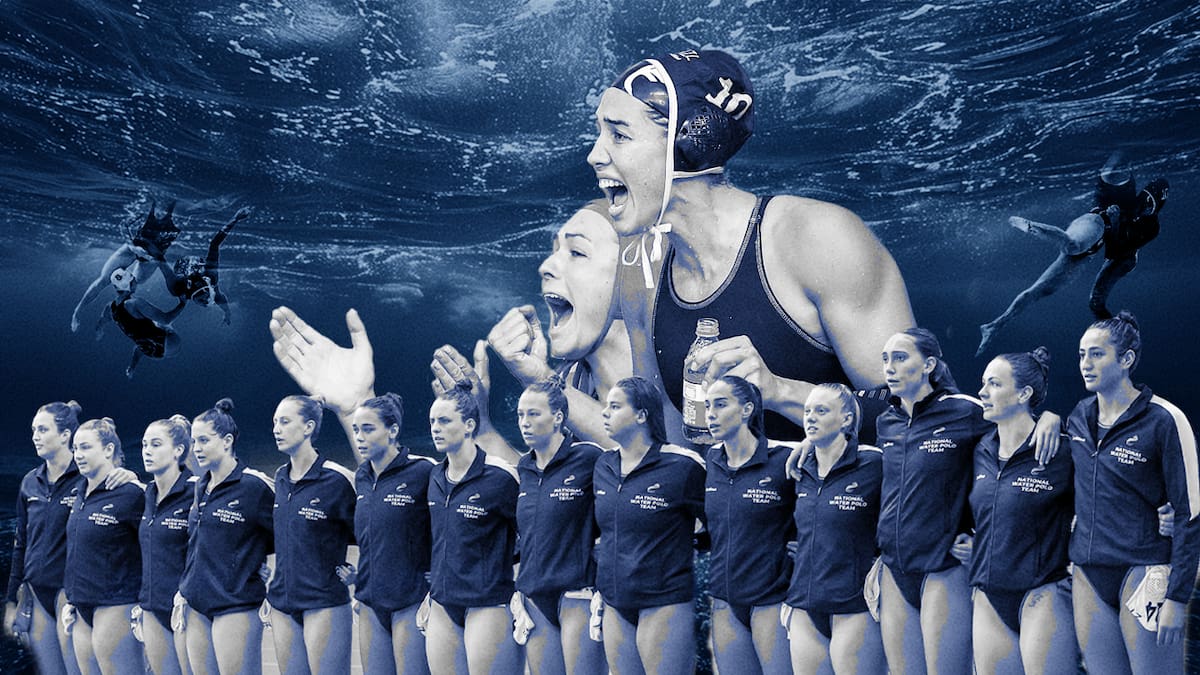
The 2025 senior New Zealand women’s water polo team and former WPNZ chair Alex Howieson (inset left) and Jan Shearer (inset right). Illustration / Oliver Rusden; Main picture / Getty
HPSNZ said WPNZ sent a response, detailing “various steps taken to provide care and support, dating back to July 2023″.
“It outlined issues that arose in 2025 and the fact that WPNZ proactively sought support from the Sport Integrity Commission to address concerns when they were raised with WPNZ’s chair.
“WPNZ informed HPSNZ that it was waiting for confirmation and feedback from the Sport Integrity Commission regarding a complaint.
“It also raised concerns regarding funding challenges faced by the sport, which had been exacerbated by the decision to put additional measures in place to support people.”
HPSNZ said it, in turn, “acknowledged the efforts being made by the sport and the complexities of the context it operates in (eg, with some athletes based overseas) but also reinforced the importance of not underestimating the impact that complaint processes can have on individuals”.
“HPSNZ encouraged WPNZ to remind athletes of the support that is available to them and directed WPNZ to wellbeing resources that are available.
“HPSNZ again sought clarification regarding the allegations made by athletes to WPNZ or the Sport Integrity Commission (as opposed to allegations made by media or in news reporting).
“WPNZ confirmed that it was cooperating with the Sport Integrity Commission but that it had no details regarding any complaint lodged with the commission.
“Noting the information that had been provided to date, WPNZ sought clarity on what further information was required by HPSNZ.”
HPSNZ said that WPNZ then sought a meeting to provide an update about its interactions with the commission.
“At that meeting, WPNZ’s CEO and chair met with HPSNZ’s general manager – performance and partnerships, and performance team leader. WPNZ reiterated that it was seeking clarity from the Sport Integrity Commission and had requested a copy of the formal complaint, noting that you apparently had a copy of this.
“At the time, WPNZ had again asked the commission to facilitate mediation with the athletes and was waiting for a response from the commission as to next steps.”
Shining a light
Interim WPNZ chairman Richard Shine oversaw the sport’s AGM on Saturday. The Herald was allowed into the meeting after a vote by members.
Thomson, the deputy chair, was not at the meeting; her decision to withdraw her reappointment was noted. Shine thanked her and Howieson for their “hours and hours” of work as water polo board members.
Former Water Polo NZ chair Alex Howieson.
“My position, and that of my fellow board members and management, remains to do our best to deliver for the sport of water polo,” Shine told the Herald in an email before the meeting and following a telephone conversation in which he made similar comments.
“We are not infallible and undoubtedly will make mistakes.”
On the commission investigation, he said there was an “underlying information asymmetry”.
“Put simply, the board does not have the same information as SIC, nor are we conducting the inquiry. It appears you hold a different set of information again.
“Insofar as any of your questions relate or touch on this matter – neither the board nor management have any comment to add.
“We will await the SIC process to conclude, noting it has its own issues in terms of process and speed, not unique to water polo.
“I appreciate this is frustrating for all concerned, but rightly or wrongly, this was the agreed process to address the matters raised.
“As a board, we are open to whatever the findings are – but we do not wish to prejudge the outcome.”
A ‘quite remarkable effort lost’
The NZ women’s water polo squad that competed in the world aquatic championships in Singapore last year.
Shine said there had been some “outstanding results and developments” within water polo in recent years.
“Somewhere along the story, this quite remarkable effort has been lost.
“WPNZ remains committed to ensuring that our White Caps team are given every opportunity to qualify for the Olympics, notwithstanding the SIC inquiry.
“This means making some decisions which will not be universally popular.
“We will be pressing forwards with a schedule of games/ training camps and so forth – but no final decisions have been made at this point as to the exact programme.
“There will be a greater focus on conduct and expectations of all players, management and staff. In terms of staffing decisions, we can only work from the information we have, noting that allegations of wrongdoing are not the same as proven.
“I appreciate that the complainants and their families’ feelings on the matter may starkly contrast.”
‘Change is required at all levels’
Shine said there was a “universal acceptance that conduct and behaviour across the sport (players, parents, coaches, managers, administrators, etc) is not at the level it needs to be”.
“Change is required at all levels – with everyone having a role to play. This is our immediate focus.”
He said the matters giving rise to the SIC inquiry had “galvanised our membership to raise a series of challenges into the national body’s performance”.
“A period of criticism and instability has followed. In turn, this has led to positive discussions on how we might improve as a collective.”
Clubs aligned – for now
Shine also issued the Herald with a statement on behalf of the country’s 20 water polo clubs (including the Auckland Water Polo umbrella organisation), and WPNZ.
“WPNZ and clubs want to acknowledge the constructive discussions recently held with the WPNZ board following concerns raised about the future of our sport,” the statement reads.
“All parties appreciate the willingness to engage openly and work collaboratively on the issues identified.
“We are proud of our sport and what it has achieved, but recognise the need to lift performance.
“While there is work ahead, we are optimistic about moving forward together to continue strengthening and growing the sport for everyone involved.”
Sources spoken to by the Herald, however, have indicated this might be somewhat of an uneasy truce, with all eyes on the SIC and where WPNZ lands in terms of the senior women’s programme in the next few weeks and months.
Editor-at-Large Shayne Currie is one of New Zealand’s most experienced senior journalists and media leaders. He has held executive and senior editorial roles at NZME including Managing Editor, NZ Herald Editor and Herald on Sunday Editor and has a small shareholding in NZME.