
Mountfort said his mother took Buster, an older dog, to the clinic on April 29.
He said Buster’s breathing had been slightly laboured “like an excited pant” earlier that day. The dog also had a small accident the day before, when his back leg became stuck next to the grill of his mother’s car as she parked.
“There was no obvious limp, but Mum wanted reassurance and also wanted to discuss treatment options for laryngeal paralysis, a condition we believed Buster was developing.”
Laryngeal paralysis is a progressive condition common in older dogs, in which the cartilage in the throat fails to open properly during inhalation, causing breathing difficulties.
Mountfort said Buster’s condition was progressing slowly, but he was otherwise a “very happy” dog who could walk, eat and sleep without difficulty.
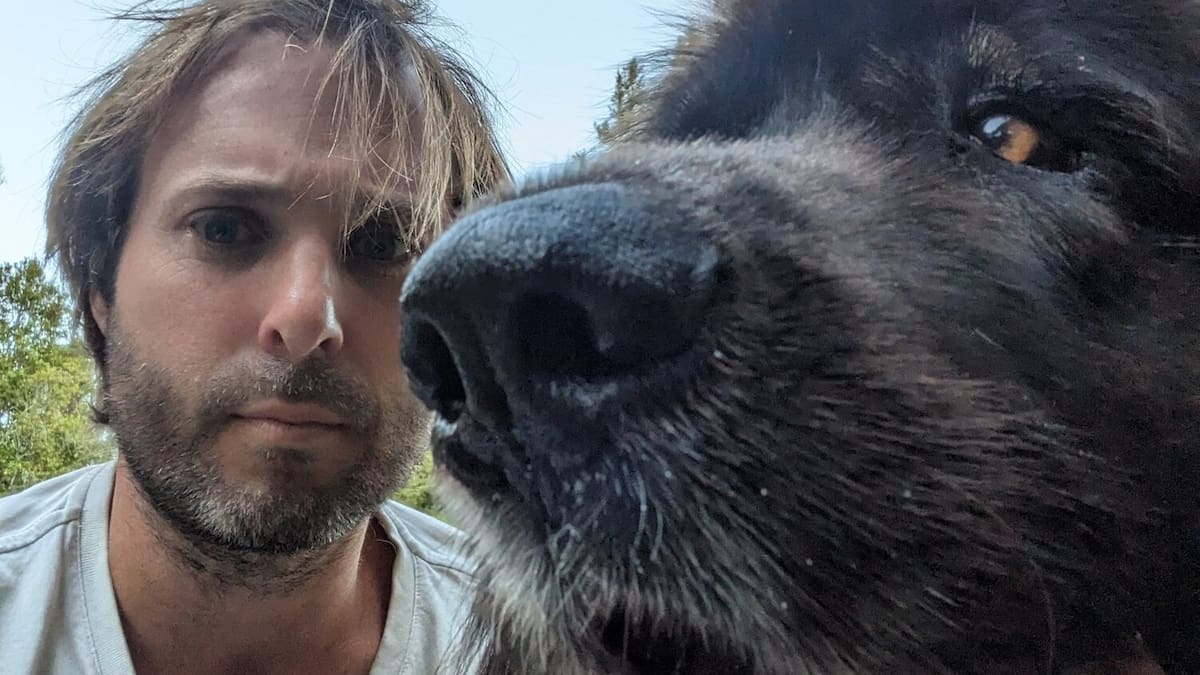
Jonathan Mountfort with Buster.
“About 30 minutes later, my mum phoned saying the vet thought my dog should be put down.”
He claimed that was “despite [the vet] earlier telling my mother there was no obvious sign of leg injury and Buster was oxygenating okay”.
Mountfort said his mother told him the vet was uncomfortable with Buster leaving the clinic when his panting increased, and he claimed that, after a discussion, the dog was given a small dose of an opioid and pain relief.
“After the injection, Buster became more distressed.”
Mountfort rushed to the clinic.
He found the dog visibly distressed and unable to stand properly on the slippery concrete floor.
He said in the tense discussion with the vet, he objected to the plan to put Buster down.
He claimed he tried “several times” to explain that Buster’s elevated breathing was triggered by his anxiety, and he would calm down if taken home.
Mountfort claimed the vet said it was “an SPCA matter”, which he took to mean he had no choice.
“I felt helpless.”
He said when the tensions in the room became too high, he said, “there is obviously nothing I can say that will change your mind, go and do what you are going to do”. Buster was euthanised.
An email to Mountfort from Omokoroa Pet Vets on May 5, seen by the Bay of Plenty Times, stated the accident the night before “triggered a pain and stress response that exacerbated the laryngeal paralysis to a point that the dog declined into respiratory distress”.
The email stated Buster would have had seizures, brain and organ damage, and a suffocating death and “it wasn’t fair to Buster” to continue with treatment.
Buster was a “very happy” dog. Photo / Jonathan Mountfort
Mountfort said the bill sent the same day made no mention of opioids.
He said he believed her approach did not adequately respect the rights of animal owners.
“This has been a devastating experience.”
Omokoroa Pet Vets owners Nick and Raewyn Sygrove said in a joint statement they were unable to comment on the specifics of the case but stressed decisions about euthanasia were “not made lightly”.
The Sygroves said the clinic was committed to the health, dignity and welfare of every animal in its care and understood end-of-life decisions were “emotional and difficult” for pet owners.
“There are times, however, when an animal is suffering to a degree it cannot be relieved, and continuing life would result in ongoing pain or distress.
“In these situations, we are guided not only by our professional judgment, but also by our legal and ethical responsibilities under New Zealand’s animal welfare legislation …
“In rare but serious circumstances, this may mean strongly recommending – or insisting upon – humane euthanasia as the most compassionate course of action. We do not make these decisions lightly.
“Our goal is to always act with kindness, integrity and in the best interest of the animal, while supporting owners through what we know can be an incredibly painful and difficult time for all of us.”
Veterinary Council of NZ deputy registrar Lynley Shields said the council could not comment on individual complaints for confidentiality reasons.
Generally speaking, she said veterinarians were expected to provide sufficient information so owners could make informed decisions on their animal’s treatment in partnership with the vet.
She said if a vet is presented with a sick or injured animal suffering unreasonable or unnecessary pain or distress, that, in their view, will not respond to treatment, the Animal Welfare Act allowed for euthanasia after following a process set out in the act.
“Veterinarians are trained and trusted to make these decisions in the best interests of animals.”
Sandra Conchie is a senior journalist at the Bay of Plenty Times and Rotorua Daily Post who has been a journalist for 25 years. She mainly covers police, court and other justice stories, as well as general news. She has been a Canon Media Awards regional/community reporter of the year.