
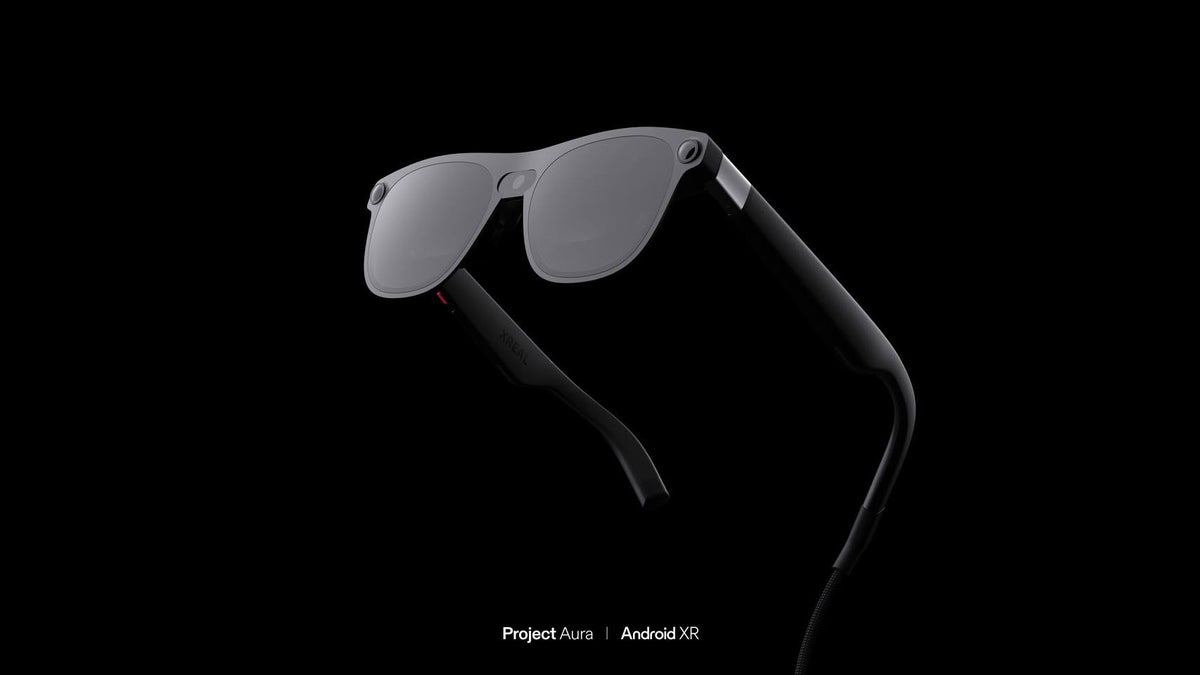
Xreal is one of Google’s partners for the Android XR operating system developed for extended reality devices. The company has been talking about its Project Aura glasses for quite some time, but Google I/O was the first time the device got a true hands-on demonstration.Xreal debuts its Project Aura glasses at Google I/O
Attendees of Google’s developer conference could experience several Android XR demos running on the Xreal Aura smart glasses. The demos included some of the key experiences that lightweight XR hardware will enable.
One of the demos was based on Google Maps, allowing users to explore new places and navigate through the world in a new way. Another experience included dynamic video content that combined massive screen viewing and a mini-screen experience, which Xreal says is “fit for multitasking across Project Aura’s extended reality canvas.”
A highlight experience was the 180- and 360-degree VR videos on YouTube. Those included 2D and 3D videos available through the Project Aura’s OLED displays and the 70-degree field of view, which Xreal claims is “class-leading.”
Extra abilities
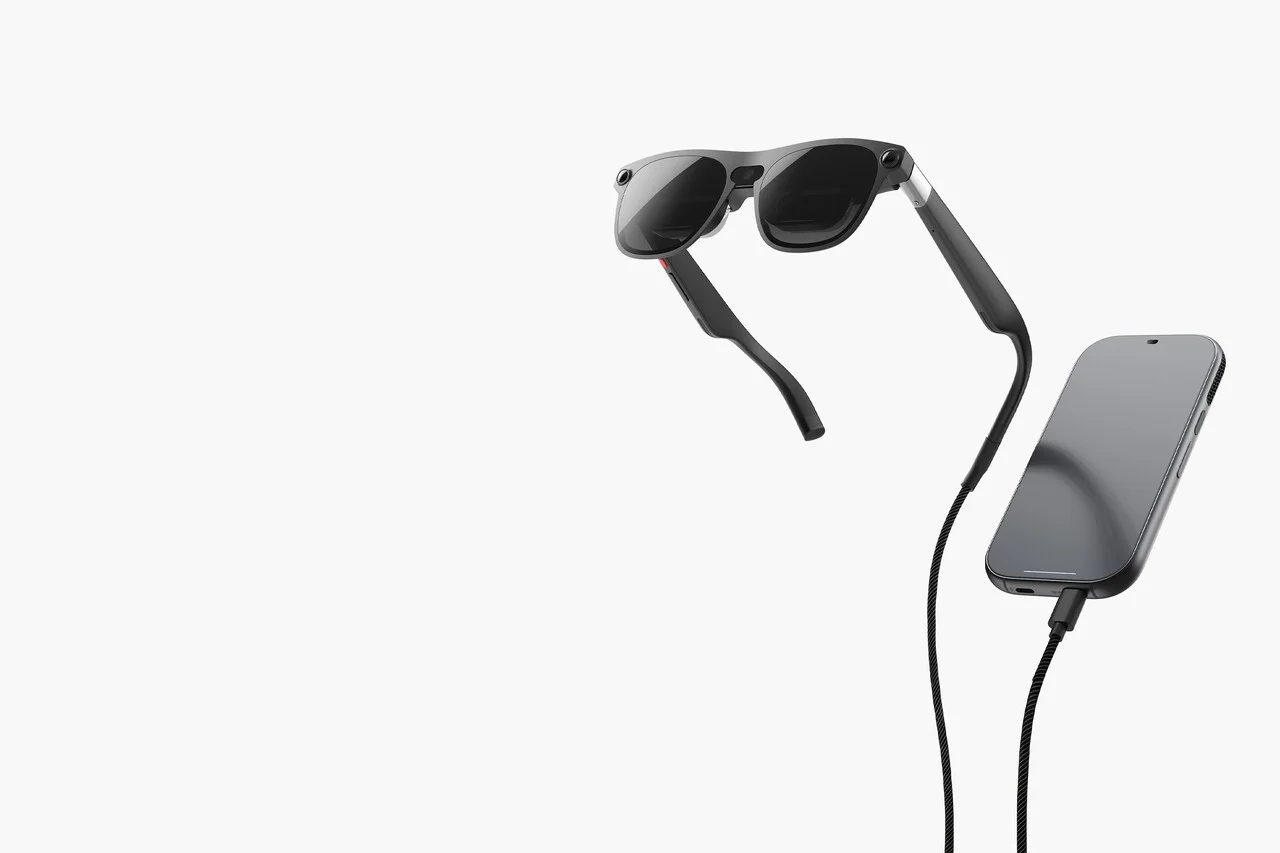
The Xreal Project Aura can connect with other devices. | Image by Xreal
One of the more interesting demos included connecting Project Aura with a laptop through a DisplayPort-in, allowing to extend the glasses’ multimodal AI capabilities to the laptop in 3D AR space. That included integrated Gemini support and what Xreal calls autospatialization.
Of course, there were the classic Android XR games and interactions, as well as a demo experience with a three-dimensional painting app. The latter was vibe coded with Gemini.
Coming later this year
Xreal says the Project Aura is built in close collaboration with Google and Qualcomm, combining its hardware with the Android XR platform and Snapdragon chipsets. While we still don’t have a specific release date for the Project Aura glasses, the company has confirmed they will launch globally in 2026.However, developers will be able to get their hands on a Project Aura developer kit in the coming weeks through the Android XR Developer Catalyst Program. Launched by Xreal and Google, the program aims to empower developers to start building XR apps and experiences.More than intriguing
Considering everything Google demonstrated during its I/O keynote today, I am more excited about Android XR than ever. If Xreal could pack all those features into truly good hardware, I can imagine many people trying it out and even using it in their daily lives.

Get Visible as low as $20/mo for 1 year. Limited time offer with code: FRESHSTART
Offer Ends 6.1.2026 at 11.59pm ET. New members get $5/mo off the $25/mg Visible plan, $35/mo Visible+ plan, or $45/mo Visible+ Pro plan for the first 12 months. Promo code FRESHSTART required at checkout.
Buy at Visible
View Full Bio
Ilia, a tech journalist at PhoneArena, has been covering the mobile industry since 2011, with experience at outlets like Forbes Bulgaria. Passionate about smartphones, tablets, and consumer tech, he blends deep industry knowledge with a personal fascination that began with his first Nokia and Sony Ericsson devices. Originally from Bulgaria and now based in Lima, Peru, Ilia balances his tech obsessions with walking his dog, training at the gym, and slowly mastering Spanish.
Read the latest from Ilia Temelkov