
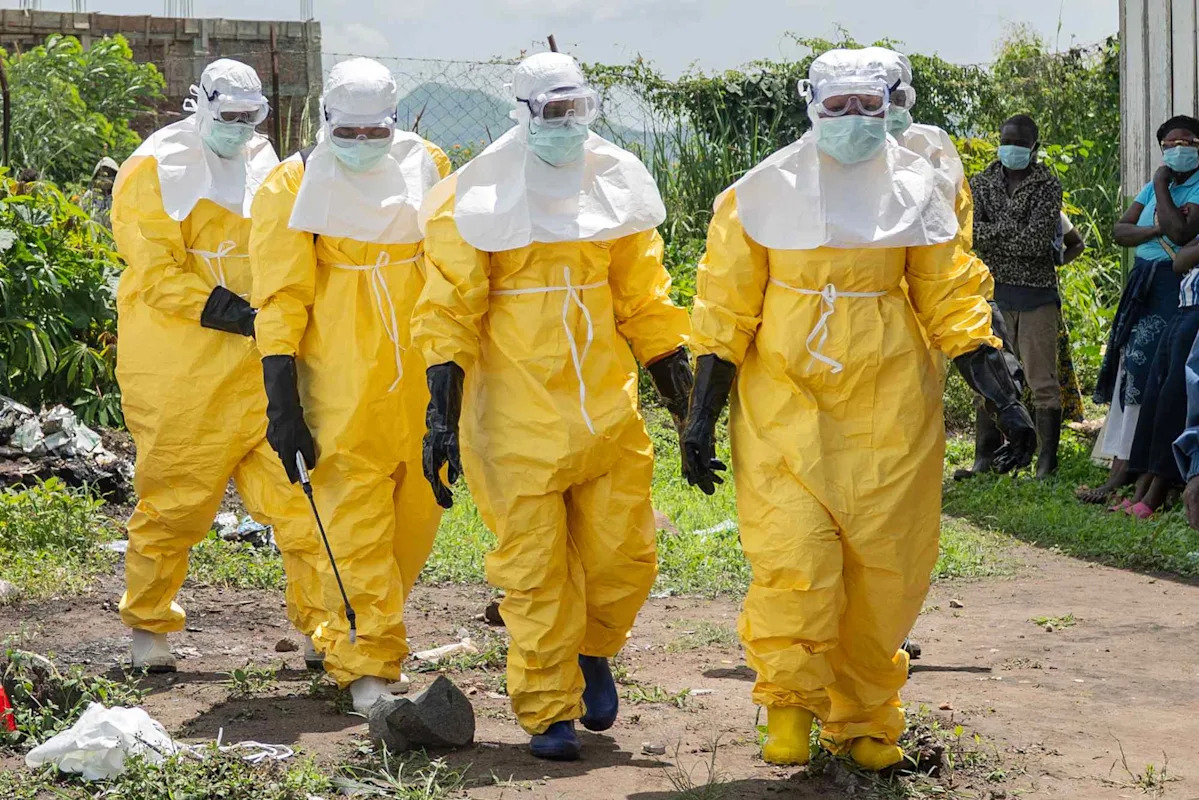
NEED TO KNOW
Officials said a vaccine to treat the Bundibugyo strain of Ebola is months away
The strain of Ebola is rare and not always included in standard testing, delaying early case identification
The outbreak in the Democratic Republic of Congo and Uganda is spreading faster than officials initially expected
A vaccine to combat Bundibugyo, the strain of Ebola that’s behind the current fatal outbreak that’s so far sickened at least 600 and killed 139, could take up to nine months to develop.
There are two potential “candidate vaccines” in development, World Health Organization advisor Dr. Vasee Moorthy said at a May 20 press conference, per the BBC. However, none of the potential vaccines have gone through clinical trials yet.
Although one of the vaccines is “promising,” Dr. Moorthy said it is “likely to take six to nine months” before the vaccine is ready.

Stock image of a scientist working in a lab
Credit: Getty
The current Ebola outbreak in the Democratic Republic of Congo and Uganda is spreading faster than officials originally expected, as experts race to contain the fatal disease that has, as of May 20, killed at least 139 people and infected at least 600.
“We expect those numbers to keep increasing, given the amount of time the virus was circulating before the outbreak was detected,” WHO Director-General Dr. Tedros Adhanom Ghebreyesus said at the press conference. Officials said this current outbreak may have started “a couple of months ago,” pushed along by a “super-spreader event” like a funeral in early May, per the The Guardian.
Ebola is caused by a collection of viruses called orthoebolaviruses. The Bundibugyo strain is a relatively rare strain of the virus, as NPR reports, and isn’t always included in standard testing for Ebola. This may have led to delays in identifying early Ebola cases in this outbreak.
Symptoms can appear as late as 21 days after contact with an infected person, and begin with what are called “dry” symptoms of Ebola, like fever, joint and muscle pain, headaches and fatigue. The disease then progresses to the “wet” symptoms, which, along with vomiting and diarrhea, include bleeding from the eyes, mouth, nose and rectum.
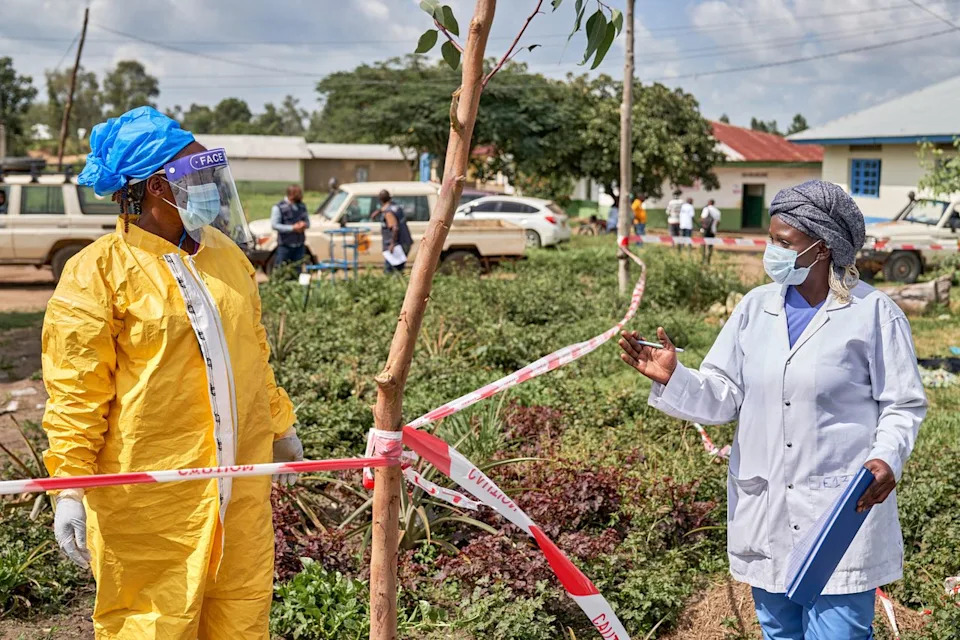
Health workers at an Ebola center in Congo on May 19, 2026
Credit: AP Photo/Dirole Lotsima Dieudonne
The virus spreads through contact with the bodily fluids of an infected person — alive or dead. But as Johns Hopkins Medicine explains, it can also spread by touching items, like clothing or bedsheets, that have been in contact with body fluids. In response, the World Health Organization has outlined stringent guidelines for disinfecting and disposing of anything that’s been in contact with an infected person.
WHO declared the outbreak a “public health emergency of international concern” on May 17, when the human toll was 80 suspected deaths and 246 suspected cases. In three days, the number of infected people more than doubled.
“Our absolute priority now is to identify all the existing chains of transmission,” Chikwe Ihekweazu, WHO emergencies lead, said, per The Guardian. “That will then enable us to really define the scale of the outbreak and be able to provide care.”
Read the original article on People