
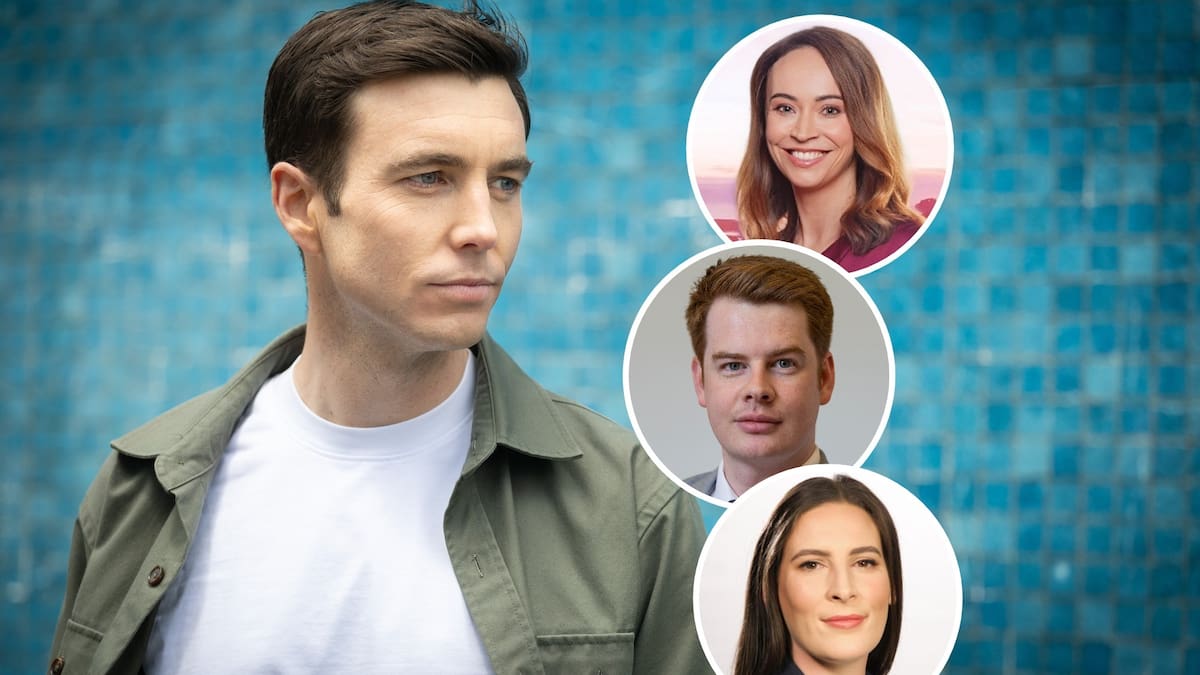
But it’s also a major problem that the state broadcaster has no immediately obvious internal candidate to permanently replace Sherman so close to the general election. (As Paddy Gower might say, there are just 169 days to go).
For that reason, say sources, TVNZ is not in a rush to fill the role – after all of the political heat it’s faced in recent weeks, the broadcaster will be far more comfortable with a great vacancy rather than a bad hire.
A TVNZ spokeswoman confirmed to Media Insider yesterday the broadcaster did not have an announcement of a new political editor, but the company is bringing in extra support for its parliamentary team of Benedict Collins, Sophie Trigger and Tom Day.
“Yes,” said the spokeswoman. “We’re appointing a senior producer to our gallery. This is to support our election coverage.”
The most obvious external candidate for the editorship, for both her broadcast experience and parliamentary knowledge, is Stuff senior political correspondent Jenna Lynch, the former TV3/Newshub political editor, who continues to feature strongly on Stuff’s ThreeNews bulletin.
Former Newshub political editor Jenna Lynch is now at Stuff.
But the biggest hurdle there is Lynch’s likely three-month restraint of trade – it would be a decent wait.
Other equally respected external candidates that TVNZ might consider include RNZ political editor Jo Moir – although she, too, is likely to be locked in for the election campaign – and former TVNZ business correspondent Katie Bradford, who has just started at the NZ Herald.
Former TVNZ business correspondent Katie Bradford is now at the NZ Herald.
Complicating the considerations is the fact that TVNZ is also looking for a new executive editor of news, essentially the head of the newsroom and a role that reports to Tolich.
In an era when all newsrooms, and the public broadcasters especially, are under extreme scrutiny from politicians, TVNZ needs a respected head of news, one who can authoritatively represent and stand up for the newsroom while at the same time clearly laying out the editorial expectations of reporters.
Whoever fills that role will want to have a say on who should be the permanent new political editor. But an announcement on a new news boss till seems some time off – the job is still being advertised.
Which then boils down to TVNZ likely needing to parachute someone into Parliament in the short term, at least. The state broadcaster simply can’t afford to leave the political editorship role empty, especially as the election campaign heat intensifies and critical issues need analysing.
The TVNZ spokeswoman said the broadcaster did not have “an announcement to make around a new political editor – interim or permanent”.
“We’re lucky to have exceptional journalists and presenters – many with deep political knowledge and experience. As we do in the lead-up to every general election, we’ll be using the full might of our newsroom to deliver our coverage.”
On that front, there are four internal names that could do the job until a more permanent arrangement is sorted – Tova O’Brien, Mei Heron, Jack Tame and Jason Walls.
Breakfast host Tova O’Brien interviews Prime Minister Christopher Luxon. Photo / TVNZ
All have relatively new jobs within TVNZ, although some might be easier to move around than others.
TVNZ arguably needs O’Brien as the new Breakfast co-host and Heron as the new Business Breakfast host to stay focused on their fledgling morning television roles.
Walls seems to be, logistically at least, the easiest person to move in – while he’s still relatively young, he is politically astute, having served time as Newstalk ZB political editor. He’s also started strongly as TVNZ’s business editor, but he also needs more time in front of the camera.
TVNZ business editor and former Newstalk ZB political editor Jason Walls. Photo / Mark Mitchell
Which makes, in Media Insider’s eyes, Q+A host Jack Tame the best option. He’s the country’s best TV interviewer, and he has mana and genuine respect in political, public and media circles.
Daniel Faitaua can backfill Tame’s Friday/Saturday 6pm newsreading shifts; the most gnarly conversation might be if TVNZ wanted Tame to relinquish his Saturday morning Newstalk ZB show for a few months.
Tame possesses a blend of intellect, forensic interviewing skills, and political neutrality required to immediately steady the ship for TVNZ at Parliament.
TVNZ Q+A host Jack Tame. Photo / Michael Craig
His reputation for holding politicians of all stripes to account would guarantee instant authority in the press gallery during a volatile period.
By pulling double duty with his Q+A role, Tame would also be able to integrate TVNZ political coverage across the week. He’s credible and commanding and would not need any on-the-job training.
He’s also up for two media awards tonight for his Q+A interview with former Police Commissioner Andrew Coster – best scoop and best current affairs (long)/documentary.
Could we see both Sherman and Tame take out top awards?
TVNZ+ app bugs
Pesky tech bugs are continuing to disrupt the new TVNZ+ app – especially for Apple TV users and those with older television sets.
The state broadcaster has confirmed that several thousand people are still having issues, despite hopes that most bugs would be exterminated by now.
“We’re still working with the small cohort of users experiencing issues, mainly connected to older TVs and Apple TV,” said a TVNZ spokeswoman.
“We’ve delivered a number of updates since launch, but a major release across endpoints is currently rolling out to support many of these viewers.
“Our advice is to make sure you are running the most up-to-date version of the app (uninstall and reinstall) and if you are still experiencing issues, to get in touch so we can investigate the root cause and get you back up and running.”
The spokeswoman said that since launching the new platform last month, more than one million users were streaming each week “as expected”.
Spinoff founder’s new digital venture
With big-name investors such as Lorde, Substack’s Hamish McKenzie, Letterboxd’s Karl von Randow and media boss John Fellet, Spinoff founder Duncan Greive and his partners have raised $1.3m for a new digital music venture.
A stream of Spinoff journalists stride, stroll and ride past Duncan Greive’s window as we sit down for a filtered, black coffee – they form a medley of some of New Zealand’s top writers and editors.
As founder of The Spinoff, now 12 years old, Greive has been responsible for one of the most successful media start-ups in recent decades, even as it faces a new challenge to find more members.
And while Greive still produces his weekly media podcast The Fold for The Spinoff, his main focus over the past year has been firmly on a new business venture, which he is officially unveiling today – Lume.
Launching in June, it’s a sparkling new app that confronts several major issues in the local music industry: the lack of financial return for Kiwi musicians from streaming services (Spotify, especially, and YouTube), and a richer, digital album experience for those, like Greive, who have a deep love of music.
Lume starts with a launch roster of up to 25 albums (or “lumes” as they’ll be dubbed) – the likes of Tiki Taane (who famously removed his music from Spotify), Fur Patrol and Shapeshifter are already on board.
Tiki Taane’s album Past, Present, Future will be one of 25 available on Lume when it launches in June.
Unlike the streams and singles that drive Spotify’s model, Lume showcases a full album experience – and not just the music. Alongside that will be exclusive creative material, such as handwritten lyrics, photography, videos, or different iterations of a song and album as they came to life.
Lume contains a number of features, from nesting multiple versions – live, demo or acoustic – of a song, to the ability to add music as an album cycle progresses.
Greive and his team are drawing on these full album experiences and exclusive material as Lume’s unique selling points in a sea of streams.
But there’s also a drawcard for the artists themselves.
For a one-off price of $25, the consumer receives the artist’s album and they keep it forever. There are no subscription fees.
The artist and their partners, in turn, receive 80% of that revenue – a complete turnaround from the Spotify model. Greive estimates a musician would need to attract 3000 streams on Spotify just to match the 80% return from one Lume purchase.
“People don’t have to leave Spotify, we anticipate 99% of people won’t,” says Greive.
Lume founders and shareholders: Tim Harper (left), Justin Warren, Sacha Judd and Duncan Greive. Photo / Todd Karehana
But Lume will be of immense interest to those he describes as “music people”, those who want that deeper, richer experience.
“The ambition is to get a better return for artists and rights holders and to give fans access to things which would normally stay hidden,” he says.
“And to create what we consider a new format, like a successor digital version of the CD and the LP. It’s something that takes advantage of the possibilities of the internet in a way that we haven’t seen done before.”
Greive further says in a media release: “Streaming services have been a great deal for consumers, but for many artists and serious music fans, they have distorted listening and made music into just another form of social content.”
Lume co-CEO Tim Harper adds: “Our aim is to put the album back at the heart of music, where it belongs.”
The business of Lume
Greive started out as a part-time music critic for Real Groove in his early 20s and eventually, after studying journalism, became its editor.
Over more than two decades, Greive has accumulated friendships and a bulging contact book, and he and his partners have successfully pitched the idea of Lume to a number of big-name investors.
Lorde performs at Glastonbury in 2025.
About $1.3 million has been raised to help launch Lume – investors include Ella Yelich-O’Connor (Lorde), Substack co-founder Hamish McKenzie, Letterboxd co-founder Karl von Randow, former Sky TV chief executive and now TVNZ board member John Fellet, Previously Unavailable’s James Hurman and Greive himself.
“We were drawn to Lume because we are music fans. We have a vinyl collection,” von Randow told Media Insider.
Matthew Buchanan, left, and Karl von Randow, co-founders of Letterboxd. Photo / New York Times
“We go to gigs and concerts. Our experience of music is heightened by understanding more about it; why was it created, what’s it about? Lume provides that context in a digital form, directly from the artist. Feeling closer to the artist is basically the dream of every music fan.
“We’re really excited to be investing in this space; Lume is something we’d love to see come into the world. It feels like the time is right for albums to take back the limelight and stop feeling like nostalgia!”
READ THE FULL LUME STORY AND MORE FROM GREIVE AND HAMISH MCKENZIE HERE
High-flyer’s new journalism career
A former high-flying legal partner and chairman of the Financial Markets Authority is embarking on what many might consider a surprising new career – journalism.
Mark Todd has enrolled in Massey University’s journalism course and was recently one of seven journalism students seconded to the Wairarapa Times-Age for four days’ work experience.
Todd was a board member of the FMA for nine years, between 2015 and 2024 – he was appointed the chair of the organisation in 2019.
He is also a former legal partner of top law firm Bell Gully.
Former Financial Markets Authority chairman Mark Todd is training for a new career.
When he was appointed as FMA chair in 2019, then Commerce and Consumer Affairs Minister Kris Faafoi (himself a former journalist) noted: “Mr Todd was one of New Zealand’s leading funds management lawyers, with particular emphasis on regulatory matters.”
And when Todd departed, then Commerce and Consumer Minister Andrew Bayly said: “I would … like to take this opportunity to thank outgoing chair, Mark Todd. During Mr Todd’s term over nearly nine years, including five as chair, he provided clear leadership and commitment to strengthening the board’s governance capabilities to support the FMA’s transformation programme. He also oversaw the appointment of Samantha Barrass as chief executive.”
Todd is overseas and has not returned LinkedIn messages this week – an indication he’d perhaps prefer to stay on the journalist’s side of the notepad.
Todd was recently photographed in the Wairarapa Times-Age, as part of the cohort of work experience journalism students from Massey University.
Massey journalism senior tutor Teresa Housel told the Times-Age that she had “really appreciated the students’ curiosity”.
“The students got experience being on beat, taking story assignments and doing them on deadline in a real newsroom environment.
“They’ve done everything from arts, Booktown, local democracy reporting, lifestyle pieces and features.”
While a starting salary in journalism might not compare with what he’s been used to in the legal and financial industries, Todd’s at least in for an interesting and thrilling ride, if he does pursue a career in journalism.
With his own background in the financial and legal industries, I’ve no doubt respective business editors at the NZ Herald, BusinessDesk, NBR, Stuff, TVNZ and RNZ will be looking at Todd’s progress with much interest.
Jamie Beaton graduates from Columbia journalism school
Kiwi entrepreneur Jamie Beaton has also been studying journalism – at the world-renowned Columbia School of Journalism in New York.
The Crimson Education founder graduated this week, but came away from Columbia with far more than a prestigious certificate – he also met his future wife, Priscilla, there.
Jamie Beaton and his wife Priscilla graduated from Columbia this week.
Beaton – whose net worth was valued at $225 million in the 2025 NBR Rich List – said he’d always loved writing, debating and research.
“Journalists are on the forefront of truth-telling, discovering breakthrough trends and helping people figure out what they need to pay attention to,” Beaton told Media Insider.
He said he was fascinated by the digital disruption sweeping through the industry and the social disruption of political cycles.
“I attribute the rapid declines in popularity of many leaders in countries like the United Kingdom, at least partially, to changes in how people get their news. It creates more volatility in democracy and changes the characteristics of leaders.
“As I studied at Columbia Journalism School, I witnessed the rapid rise of Zohran Mandani, an outspoken socialist, becoming the New York Mayor through savvy use of social media. The rules of the industry are being rewritten faster in this era than ever before.”
His class heard from Pulitzer Prize-winning journalists and renowned TV anchors.
“I learned how to conduct investigative reporting, which reminds me of short-selling research at a hedge fund from my Tiger days.
“I learned how to interview, how to build sources and the classic code of ethics and professionalism that traditional journalists generally abide by.
“I learned that some of the systematic bias in the Western media is more of a function of who chooses to work in the media industry in the first place, as opposed to any particular malicious editors.
“I learned that talented reporters have some of the most AI-proof jobs in the world because they are essentially creating new data. In saying this, only the most well-resourced newspapers can truly support the kind of investigative style reporting or deep feature pieces that are genuinely AI-proof.”
Beaton has his hands full with Crimson, so he’s not looking for a fulltime journalism gig, but he says the skills he’s learned at Columbia have put him in good standing.
“I recently became a contributing writer at Forbes and am working on a second book, following ACCEPTED! so I will continue writing regularly.”
Most importantly, he met Priscilla Putzer at Columbia. The pair married in Los Angeles in April.
“My students often ask me which university is my favourite – it is hard to top Columbia now!”
Radio audiences soar
As reported by Media Insider yesterday, breakfast host Mike Hosking and Newstalk ZB have thrown down the gauntlet to RNZ, with a sizeable jump in audience numbers, according to the latest commercial radio ratings.
ZB has recorded its highest cumulative audience in almost three years: an increase of 53,800 listeners since the last survey at the end of 2025, to a total audience today of 657,400.
At breakfast, Hosking’s audience has similarly jumped to its highest number since mid-2023: from 424,300 at the end of 2025 to 458,500 today.
RNZ’s radio numbers are set to be released next week.
Media Awards – four things to watch
The Media Awards, once known as the Voyagers (and before that the Canons and the Qantases), take place in Auckland tonight.
Maiki Sherman has been embroiled in controversy of late but is up for a prestigious media award tonight. Photo / NZ Herald
Here are four watch-outs:
After a turbulent month, in which she was at the centre of media headlines for an incident a year ago and, more recently, her doorstopping of a National MP, former TVNZ political editor Maiki Sherman is up for political journalist of the year for a portfolio of work last year. She’s vying for the award with RNZ’s Guyon Espiner and the Herald’s Thomas Coughlan. This category has had a colourful and eventful history – last year’s winner was another of this country’s best journalists, Andrea Vance, who won it just as she came through the controversy of a c-bomb column.RNZ’s Sam Sherwood is the equivalent of a Lord of the Rings blockbuster at the Oscars. He’s a finalist in five categories – reporter of the year, news journalist of the year, feature writer of the year, best investigation and best specialist reporting. Of much interest is the battle in the best investigation category between Sherwood and the Herald’s Jared Savage for their exclusive stories on Jevon McSkimming. The third finalist is TVNZ’s Jessica Roden – her work on her Nelson Hospital investigation was also incredible. It’s one of the night’s best head-to-head-to-heads.It has perhaps the clunkiest name for an award, but it’s the big digital one for newsrooms – the Herald versus Stuff versus TVNZ’s 1 News for “Digital news provider of the year”.
Good luck to all the finalists!
Editor-at-Large Shayne Currie is one of New Zealand’s most experienced senior journalists and media leaders. He has held executive and senior editorial roles at NZME including Managing Editor, NZ Herald Editor and Herald on Sunday Editor and has a small shareholding in NZME.
Tags:
- additional
- Analysis
- behind
- biggest
- bugs
- comments
- confirms
- digital
- duncan
- editor
- financial
- founder
- Founders
- gallery
- greives
- hamish
- have
- Headlines
- highflyers
- in
- insider
- into
- journalism
- kiwi
- line
- Lorde
- maiki
- mckenzie
- media
- move
- moved
- names
- needs
- new
- News
- other
- pesky
- Political
- poll
- press
- replace
- role
- section
- sherman
- spinoff
- startup
- studies
- substacks
- support
- the
- to
- Top News
- Top Stories
- TopNews
- TopStories
- turn
- tvnz
- tvnzs
- whos
- your