
That contrasts with investment last year of US$4.2b at the profitable Connectivity unit and US$1.3b in the first quarter. This is a brewing misallocation of capital and a budding conglomerate trap.
The filing discusses how xAI “is now an integral pillar of our vertically integrated company”, echoing the synergy argument that industry captains often made to defend their industrial groups before finally relenting and breaking them up. SpaceX even officially rolled out an operating model that’s referred to as “The Algorithm” and is summed up as: make less dumb, delete, optimise, accelerate and automate.
And make no mistake, SpaceX is an industrial conglomerate. It makes hardware that’s technologically advanced. It’s not a tech conglomerate like Alphabet that’s based mostly on software with a smattering of hardware such as the Waymo robotaxis or the latest attempt to sell a phone. “At our core, we are builders,” SpaceX said in the filing.
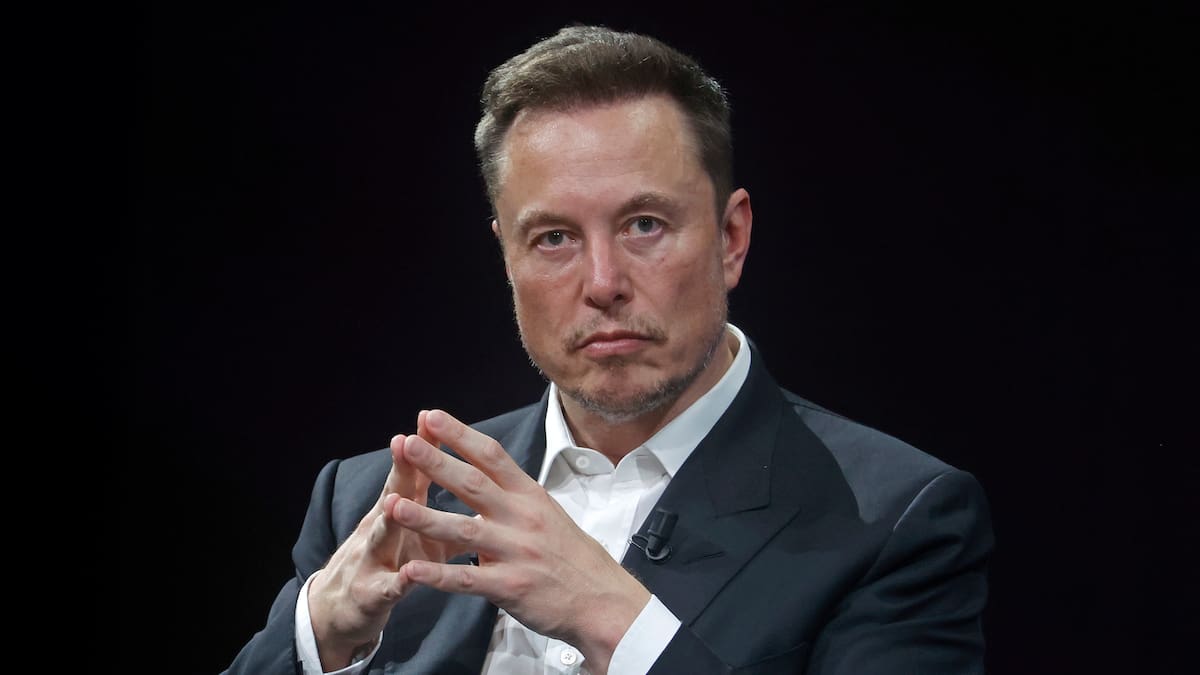
SpaceX’s IPO prospectus reveals concerns about becoming an unwieldy conglomerate with its diverse ventures. Photo / Patrick T. Fallon, AFP
The risk is that Musk’s determination to become a big AI player will drag on SpaceX’s efforts to extend its lead in space by offering direct-to-device technology and building orbital data centres. This diversion of investment away from the core space business isn’t just a danger for investors.
SpaceX is the only reason the United States is ahead of China in this second space race. The company will be one of the main builders of the Golden Dome, a space-based defence system that was only dreamed about in the 1980s but is now technologically feasible.
SpaceX said in the filing that it’s “the only company with a commercially viable path to building orbital AI compute at scale”. That’s not just bluster. SpaceX already dominates space launches with its partially reusable Falcon 9 rocket, which has driven down launch costs drastically. That cost will drop even further when the company begins commercial operations of its latest version of Starship, a fully reusable rocket that’s much bigger than Falcon 9.
SpaceX is poised to hold a crucial launch test of Starship soon. If SpaceX deserves a market value of US$2 trillion with its IPO, it will be on the back of the company’s ability to monetise space with low-cost launches, with unique services from its unmatched satellite network in low-Earth orbit and now with the potential to dominate data centres in space.
Several companies are pursuing reusable rockets, including Jeff Bezos’ Blue Origin and Rocket Lab, but SpaceX’s head start is huge and perhaps insurmountable.
That’s not the case with the AI unit. It offers the AI model Grok, which the filing refers to as a “truth-seeking frontier model”. Other startups and deep-pocketed established tech companies, such as Microsoft and Alphabet, have a head start on Musk’s AI effort and are sinking billions of dollars into this technology. Even though the filing discusses the AI unit as an integral part of SpaceX, it states that “the core monetisation channel” for this business is advertising.
“We aim to grow advertising revenue per user by strengthening performance advertising, expanding AI‑driven targeting and measurement, and introducing richer ad formats and creative tools,” the filing said of Grok. Given the track record of X (formerly Twitter) to capture advertisers, this ranks high among the more improbable statements in the filing.
And the filing is rife with outlandish statements. There was talk of discovering “the true nature of the universe” and poetic overreach with discussion of extending “the light of consciousness to the stars”.
There’s language on Musk’s pay package tied partly to establishing a permanent colony on Mars with at least 1 million inhabitants. Really? With no oxygen, little atmosphere, and low gravity on Mars, it would be much easier to populate Antarctica.
The heavy spending on AI isn’t likely to let up. That’s because SpaceX has identified the AI opportunity as a US$26.5t market, with most of that coming from somewhat vague “enterprise applications”. The company calculates the addressable market for the combined space and connectivity businesses at only US$3.6t.
“We expect to allocate substantial capital to expand our compute infrastructure, and we expect a multi-year investment horizon before these deployments translate into sustained positive” cash flow, the prospectus said.
That’s a recipe for siphoning resources away from SpaceX’s leading businesses into a riskier one with an uncertain and expensive future. It’s a trap that investors should see, even if Musk has chosen to ignore it.
Sign up to Herald Premium Editor’s Picks, delivered straight to your inbox every Friday. Editor-in-Chief Murray Kirkness picks the week’s best features, interviews and investigations. Sign up for Herald Premium here.