
The project attracted controversy, with residents concerned it would hold up SH1 traffic, questioning the price, raising worries about flooding and wondering how up to 3000 houses could be built in the area.
Other residents have said the work, particularly a new supermarket at Springs Flat, couldn’t come soon enough.
The council’s infrastructure committee chairman, Brad Flower, said the roadwork would enhance access and support future residential growth in the area.
“The Springs Flat roundabout is a cornerstone project for Whangārei’s future growth.
“It’s not just about easing congestion today; it’s about building a safer, more connected network for generations to come.”
Whangārei Mayor Ken Couper (left) and councillor Brad Flower say the Springs Flat roundabout will connect Alcoba St with SH1 and Springs Flat Rd. Photo / Denise Piper
Project manager Mark Seakins from Seakins Engineering Solutions thought the roundabout would make “not a lot” of difference to the SH1 traffic flow when finished.
The 40m-wide roundabout was designed for an 80km/h speed limit and would include two lanes heading south.
The pedestrian crossing signals, about 40m south of the roundabout, were placed where vehicles would be slowing down for the roundabout, Seakins said.
The pedestrian crossing was required by the NZ Transport Agency (NZTA) because it recognised people would want to get across the highway, he said.
An underpass was not possible because the site was on a floodplain, while an overpass would cost $5m to $7m because the soils were difficult to build on, Seakins said.
The 110m-long box culvert enables fish passage while ensuring the area doesn’t flood. Photo / Denise Piper
The site’s floodplain meant drainage work and a 110m-long box culvert, to replace a stream, were needed, he said.
Fish and freshwater crabs were successfully moved from the stream and monitoring showed the culvert was working well, with reeds already naturally growing in it, Seakins said.
Local hapū Ngāti Kahu o Torongare did cultural monitoring of the site while work was being done, he said.
Seakins acknowledged it would be up to 30 years before all of the housing planned for the Gillingham Rd area was built.
The roundabout was planned to open in February 2027, with roadworks set to move to the western side of the highway in the next two to three weeks.
When open, signs would direct motorists coming from Te Kamo to use Springs Flat Rd and the roundabout to access SH1, although the intersection between Great North Rd and SH1 would remain, he said.
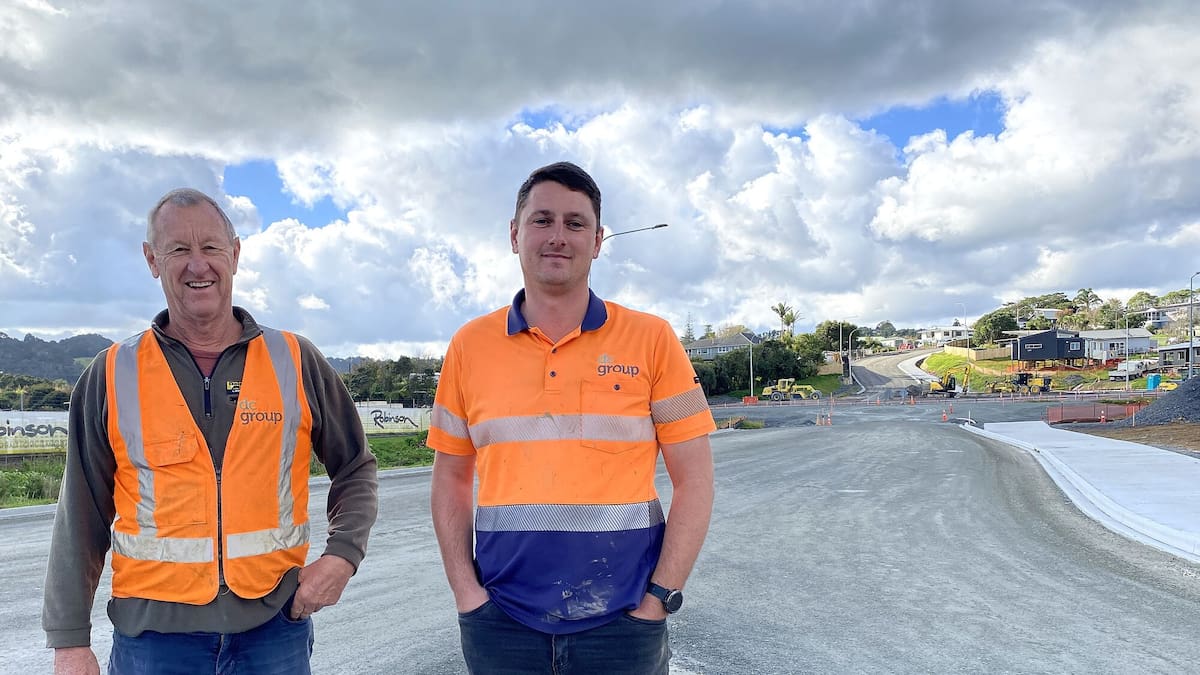
Tony (left) and Scott Davies-Colley from DC Group and Springs Flat Limited hope the resource consent for the Springs Flat commercial site doesn’t take too long. Photo / Denise Piper
Meanwhile, the timing of the Springs Flat commercial development was up in the air while the developer waited for resource consent.
The development was being done by Whangārei business stalwarts Tony and Clare Davies-Colley from DC Group.
While the 3ha site was zoned light industrial, a resource consent was required to enable the whole development.
Tenants would not sign up to the site until the resource consent was approved, so no businesses were confirmed for the development, said project manager Scott Davies-Colley.
Tony Davies-Colley said the community was generally in support of the project, which would be a highway service centre, instead of competition with existing Te Kamo shops.
Denise Piper is a news reporter for the Northern Advocate, focusing on health and business. She has more than 20 years in journalism and is passionate about covering stories that make a difference.