
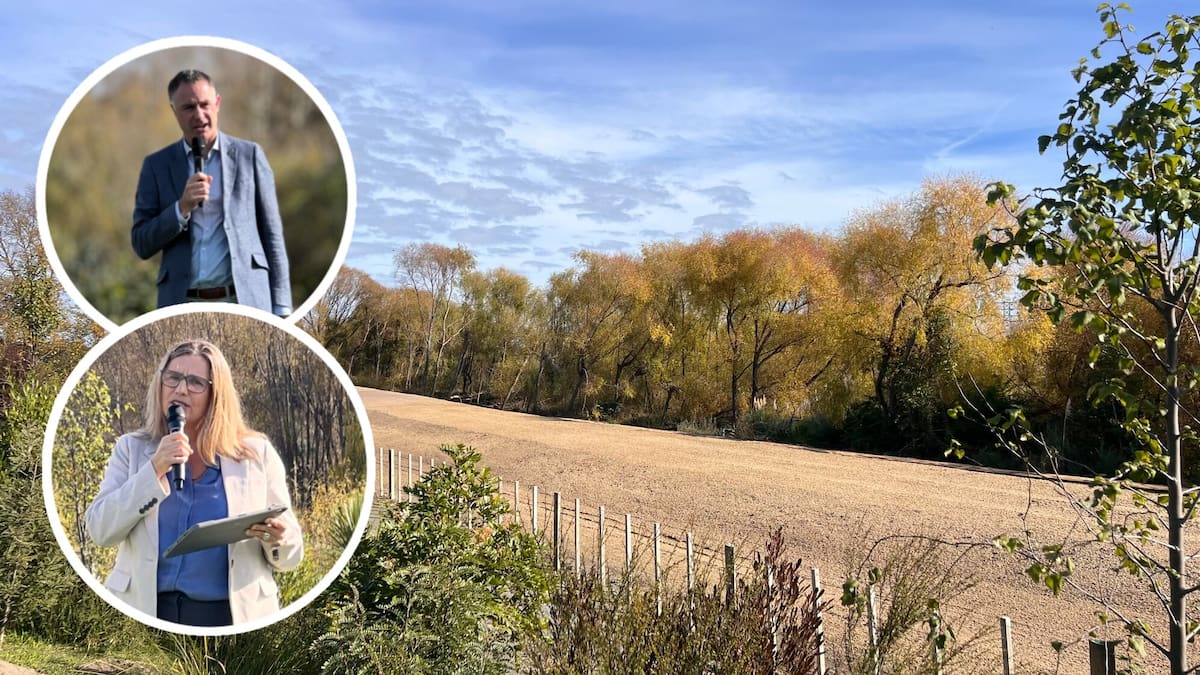
Local Government Minister Simon Watts, who also holds the climate change portfolio, said the project represented more than infrastructure.
“It is a community protection project. It’s a resilience project,” he said.
“This investment, supported by central government, will make a massive difference for our community and the community based here.
“People live locally, they live here. This is their home, and it has been for a very long time, and we want that to be the case in the future,” he said.
“The infrastructure that we’ve built here will protect those communities, households and this marae … and that’s important not only today, but it’s important for future generations, and that’s a priority of this Government.”
The opening ceremony at Waiohiki Marae included speeches, native tree planting and acknowledgments of the recovery journey the community has faced since Gabrielle.
Among those attending were Napier MP Katie Nimon, Tukituki MP Catherine Wedd, Napier Mayor Richard McGrath, Hastings Mayor Wendy Schollum and Hawke’s Bay Regional Council chairwoman Sophie Siers.
Siers said the stopbank represented an important emotional milestone for the region.
“I actually see something that restores what Cyclone Gabrielle took away from us.
“Because we didn’t just lose lives, lands, homes and infrastructure – as if that wasn’t enough – we lost something much less visible, and that was our sense of safety in this community,” she said.
She said all 11 flood resilience projects should be completed by June 2027.
Nimon said the floods had led to changes in infrastructure planning and emergency management.
“One of those things is the reform in the Emergency Management Act, which is going through at the moment, and we have learned so much,” she said.
“We are adapting to what we’re seeing happen within the climate. We are adding height to stopbanks … New bridges being rebuilt are going to be higher than the ones that were before.”
Nimon said while projects such as the stopbank could not erase the trauma caused by Gabrielle, they could help rebuild confidence.
“It’s never going to take away the fear of the rain falling, and we’ve got to work to make people feel safer in the environment that they’re in.”
Mana Ahuriri Trust chairman Te Kaha Hawaikirangi, who lives across the road from Waiohiki Marae, said about 160 people sheltered at the marae during the disaster.
“This was one of the very few areas that didn’t get flooded,” he said.
Mana Ahuriri Trust chairman Te Kaha Hawaikirangi at Waiohiki Marae, which became a hub for the community during Cyclone Gabrielle flooding in 2023. Photo / Rafaella Melo
Hawaikirangi said about 90% of homes in the village were impacted, including his own household.
“We ended up with maybe one rubbish bag of things when we were evacuated … and that was for me, my wife and our five kids,” he said.
“Most of the housing in Waiohiki is all whānau lands, so we have lived here for 600 years, and to be displaced, even for a year or two, it’s hard.”
Now back home, Hawaikirangi said the new stopbank brought reassurance to the community.
“It gives us peace of mind,” he said.
“It helps us sleep a little bit better at night if it’s heavy rain.”