
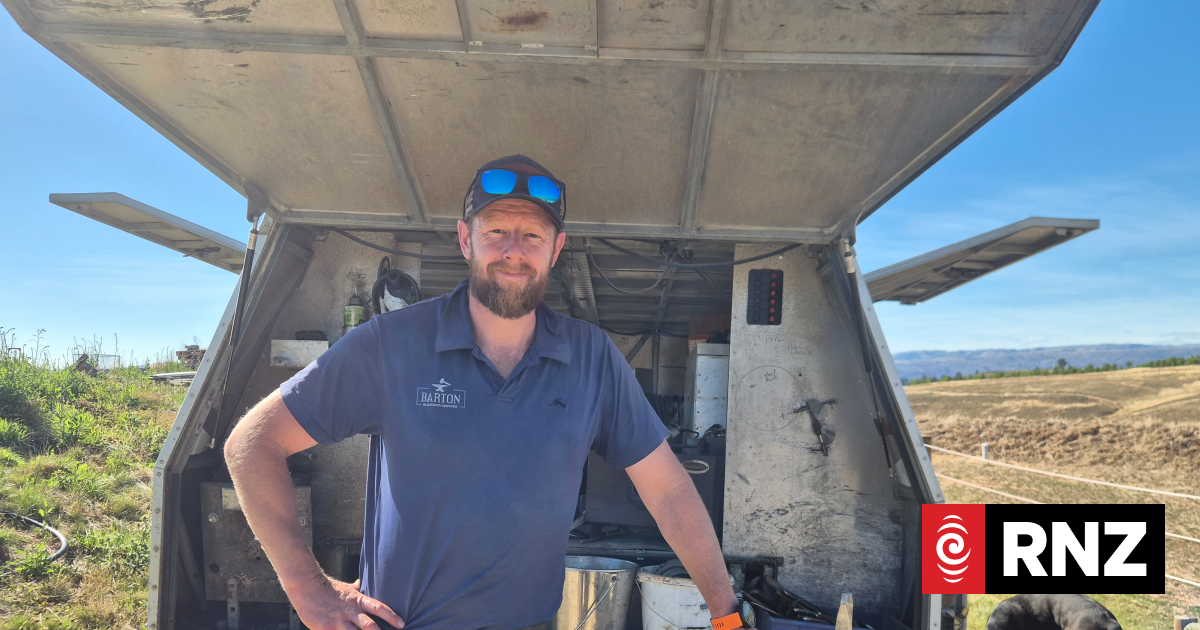
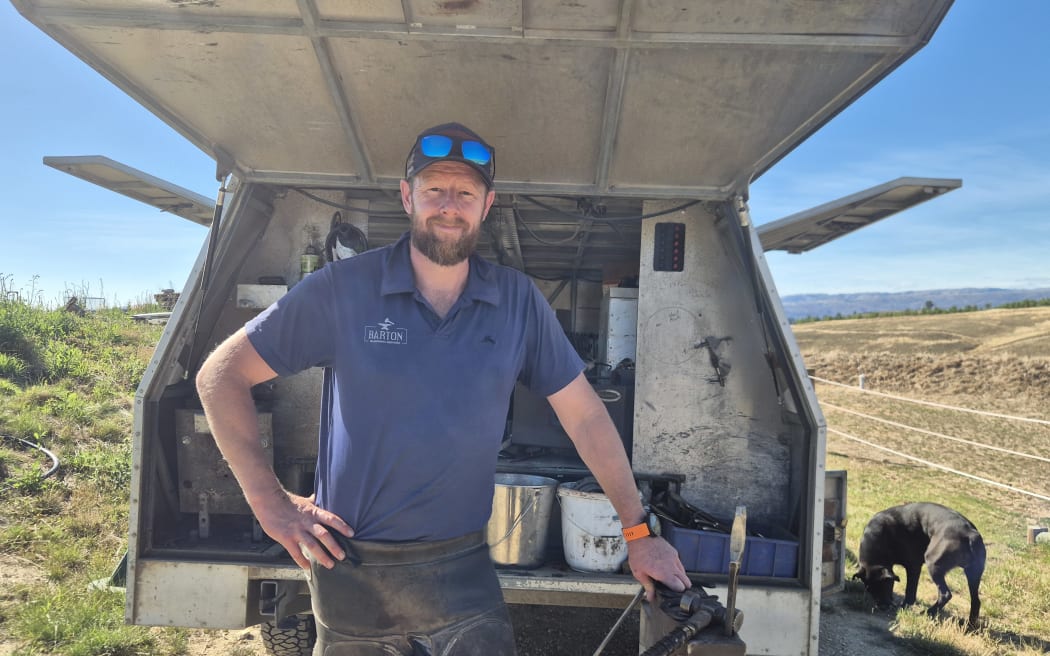
Bruce Barton became a farrier through his own love of riding, completing a 4-year practical apprenticeship before qualifying.
Photo: RNZ / Gianina Schwanecke
The hard dry ground of the hills surrounding the Central Otago settlement of Alexandra are especially tough on horses hooves.
It’s one of the reasons Twix – a beautiful seven year old paint mare, and her paddock companion Rip (short for Ripples) – a six year old Appaloosa thoroughbred – are having new shoes fitted by farrier and blacksmith Bruce Barton.
“She does a bit of everything so what we are doing for Twix is to equip her for this all-rounded work,” he told Country Life.
“Horses are a bit like you or I really. If we’re just mooching around the paddock or around our lounge, we probably don’t need a pair of shoes on, but as soon as we’re going out to work, we need a bit of protection on our feet.”
Follow Country Life on Apple Podcasts, Spotify, iHeart or wherever you get your podcasts.
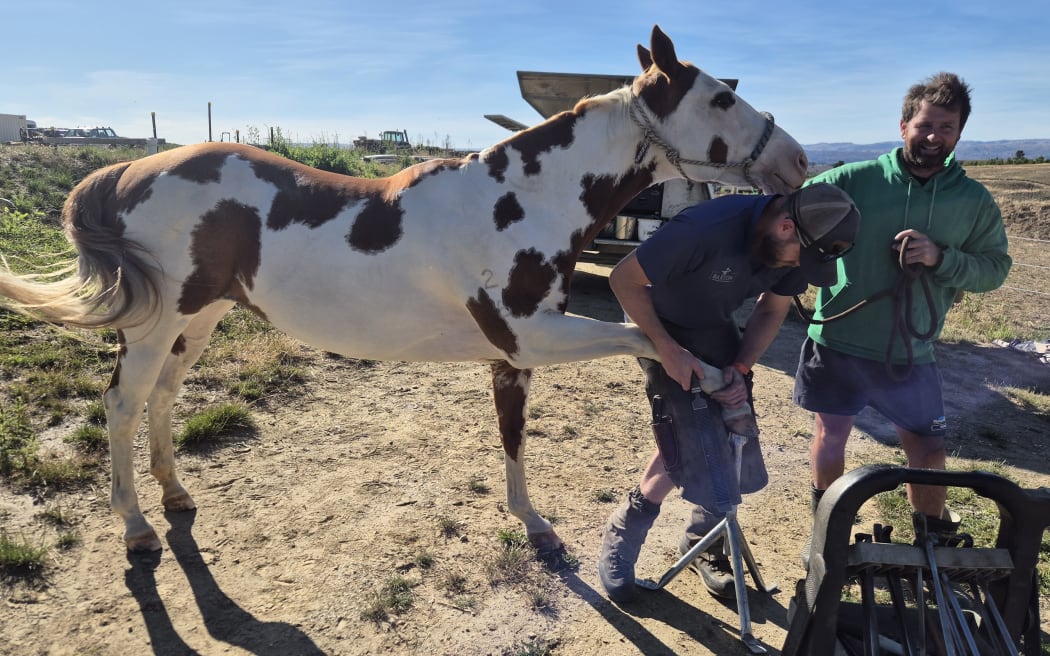
Today he’s working with Twix, a beautiful seven year old paint mare, and her paddock companion Rip, short for Ripples, a six year old Appalooza thoroughbred.
Photo: RNZ / Gianina Schwanecke
Fitting all four feet is a complex process that requires a lot of careful handling. It’s not quite your regular pedicure at the nail salon.
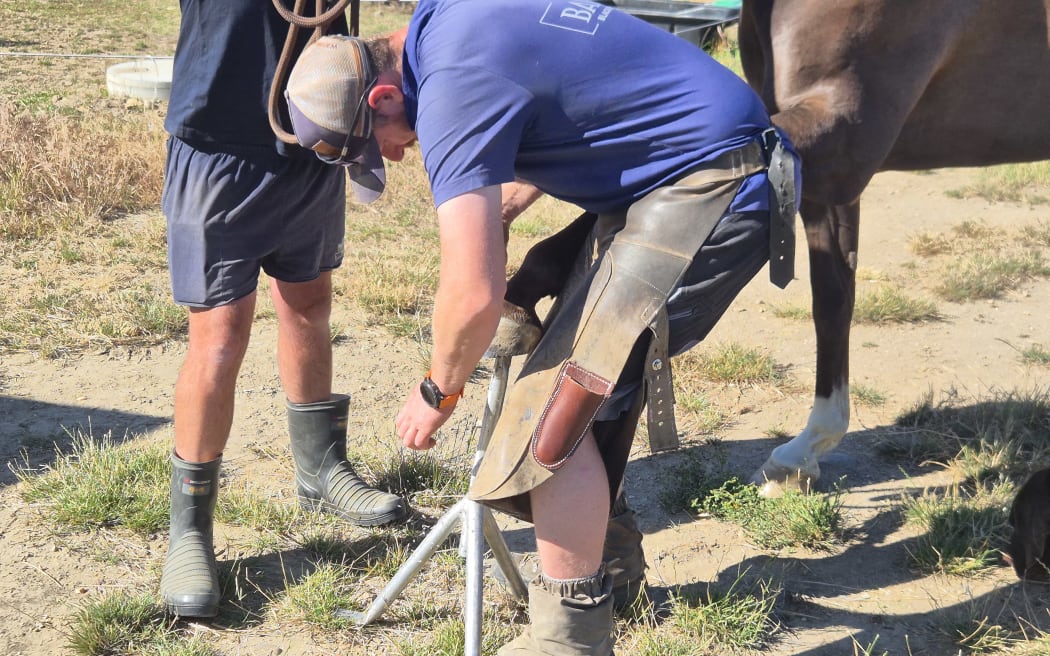
Bruce starts by sharpening his knives and taking off Twix’s old shoes.
“[The] knives are so sharp that eventually they’ll wear through your pocket.”
He refits her shoes every six or so weeks.
“The feet grow under the steel shoe and you need to take that off and trim away the excess hoof and then replace them. So that’s what we’re doing today.
“This particular mare has sort of got something a little bit special going on with her back feet when she gets a bit low on her heels there, so she’s got some pads on there that help that act as a bit of an arch support.”
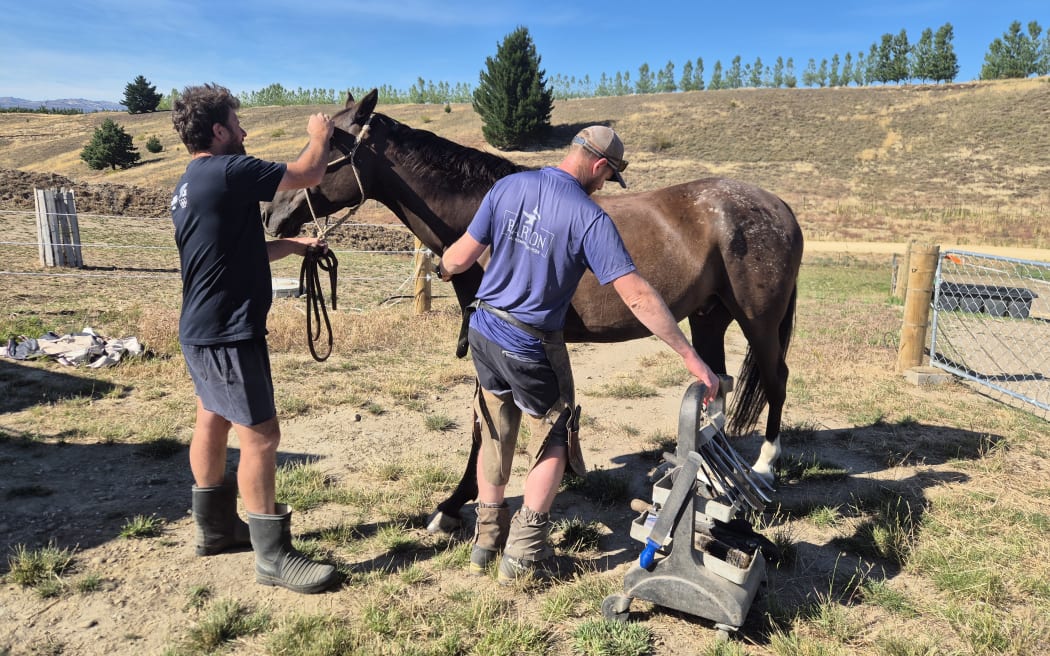
Every horse and every hoof is different.
Photo: RNZ / Gianina Schwanecke
Every horse and every hoof is different.
“With every animal, I suppose it’s different and so you learn a lot from just that experience and working with different horses’ feet.”
Shoes are fitted to help horses with grip – especially showjumpers – and to provide protection against the ground which can cause them to become footsore. They can also be used to address conformational issues.
A rasp is used to file away excess hoof growth and shape it.
Photo: RNZ / Gianina Schwanecke
“It’s quite important with horses to have the foot balance in kind of relation to the rest of the limb. Otherwise, the biomechanics aren’t right and they often cause the lameness.”
Horse shoes which can’t be reused are given to a local artist.
Photo: RNZ / Gianina Schwanecke
Being a farrier requires a good understanding of such conformation and foot issues. It also requires a good understanding of horse behaviour and how to work with their individual personalities.
It’s also an incredibly physical job.
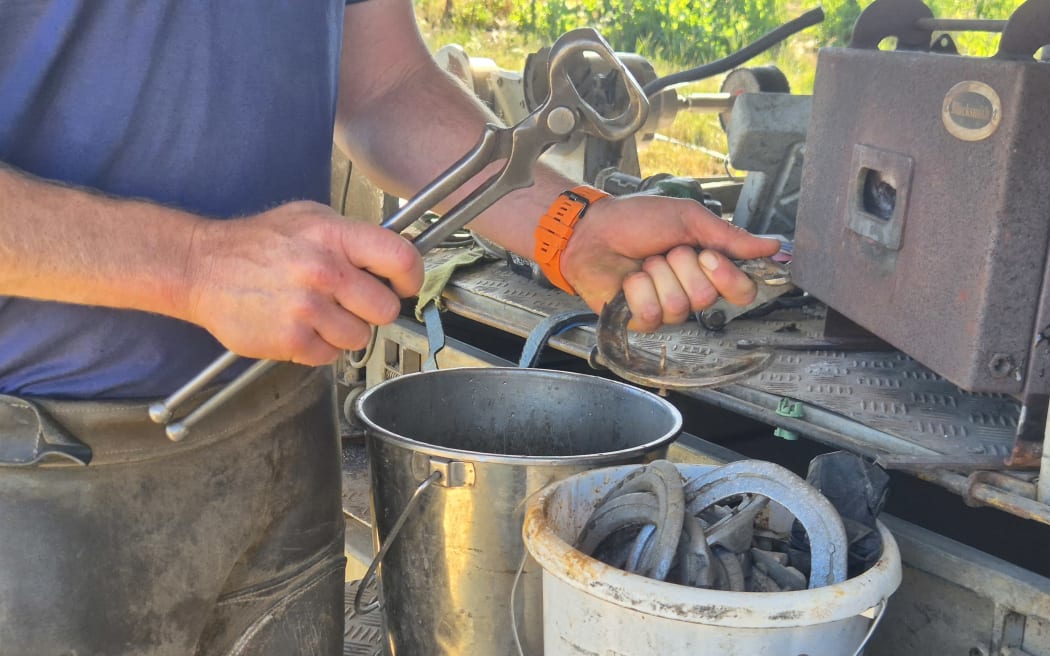
Horse shoes which can’t be reused are given to a local artist.
Photo: RNZ / Gianina Schwanecke
It was Bruce’s own passion for riding which saw him complete the four-year apprenticeship before starting in the industry.
The old worn shoes now removed, Bruce clips the excess hoof off before filing it down further with a rasp.
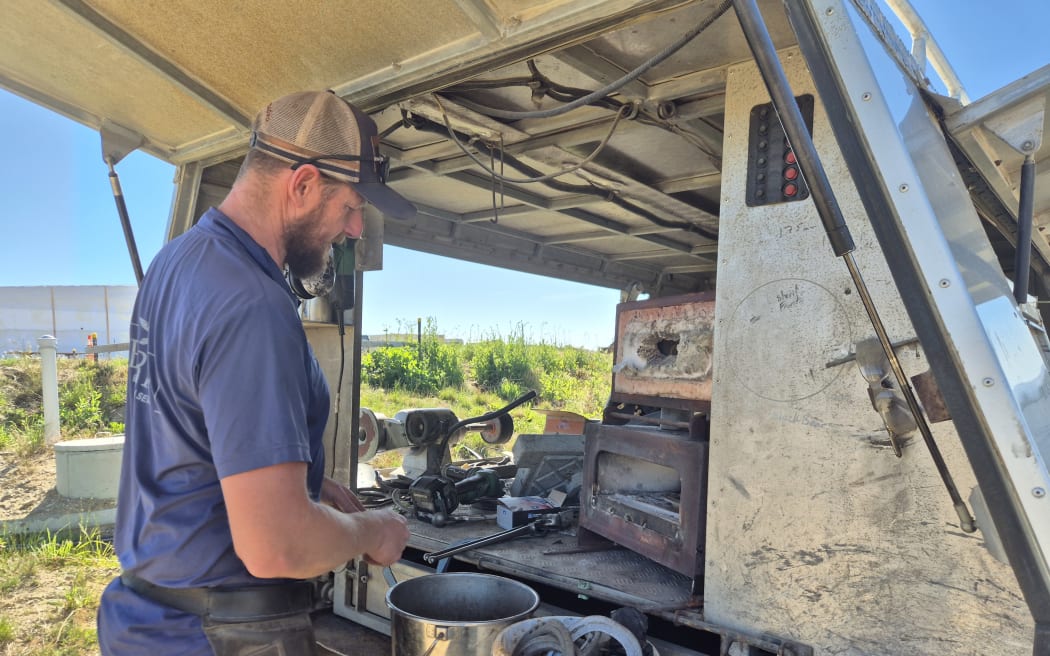
With the shoes off, it’s time to denail them, and reuse what’s not too worn by reheating it in the mobile forge attached to the back of his ute – where temperatures near 2000C.
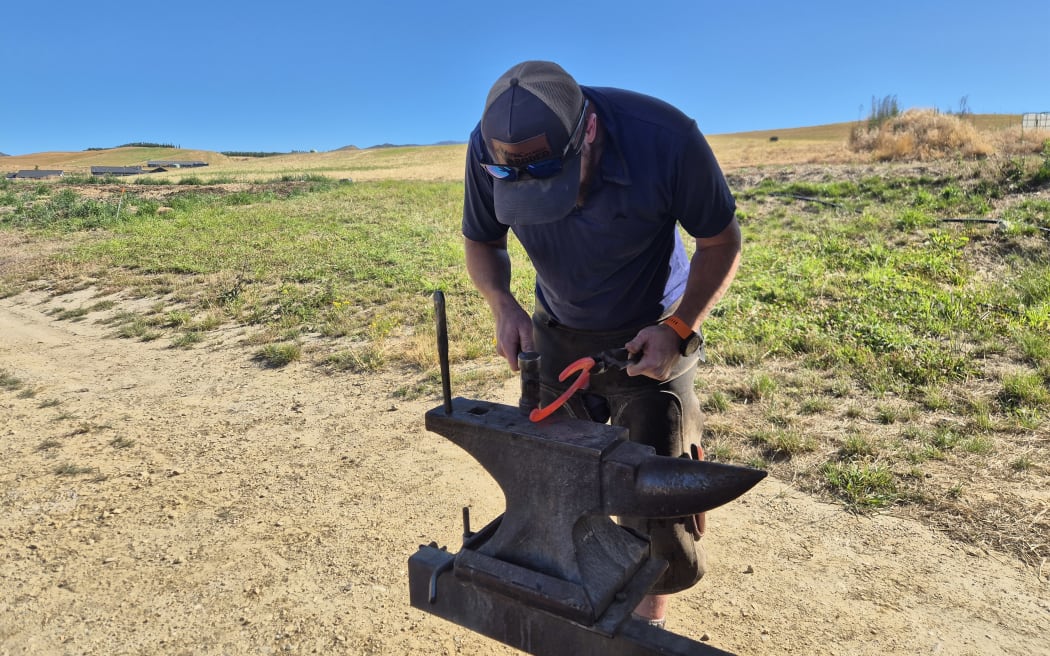
Bruce shapes the hot horse shoe against a portable anvil attached to his ute.
Photo: RNZ / Gianina Schwanecke
It turns the u-shaped shoe a vibrant bright orange, the heat making it more malleable for when it’s checked against the hoof, resulting in a puff of white smoke.
“When we burn it on the foot, it’s not a painful process as long as we’re doing our job right – you do have to be careful. You’re just giving a little touch on the foot
“So now that we’ve got that touching pretty much perfectly everywhere – and you can see that it’s touching perfectly everywhere because our burn marks are nice and even – that one’s done and ready to go in some cold water.”
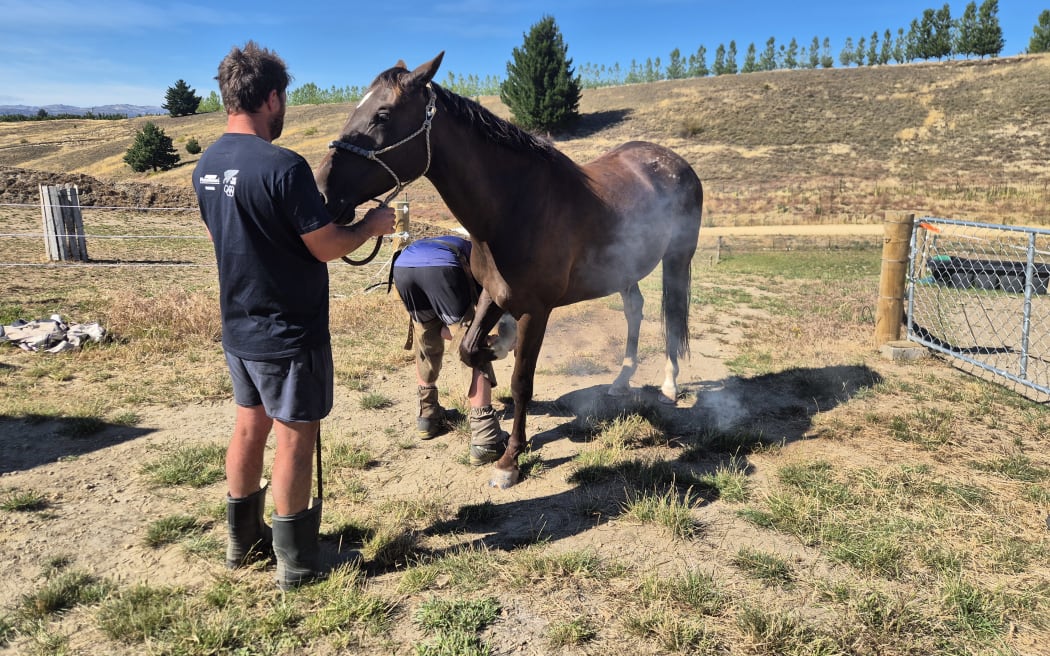
It’s paddock mate Rip’s turn to be fitted.
Photo: RNZ / Gianina Schwanecke
Shoes that can’t be salvaged are dropped off at a local artist’s studio to use in his sculptures.
Fitting the shoes properly is perhaps Twix’ least favourite part and is where Bruce’s experience working with horses really shines.
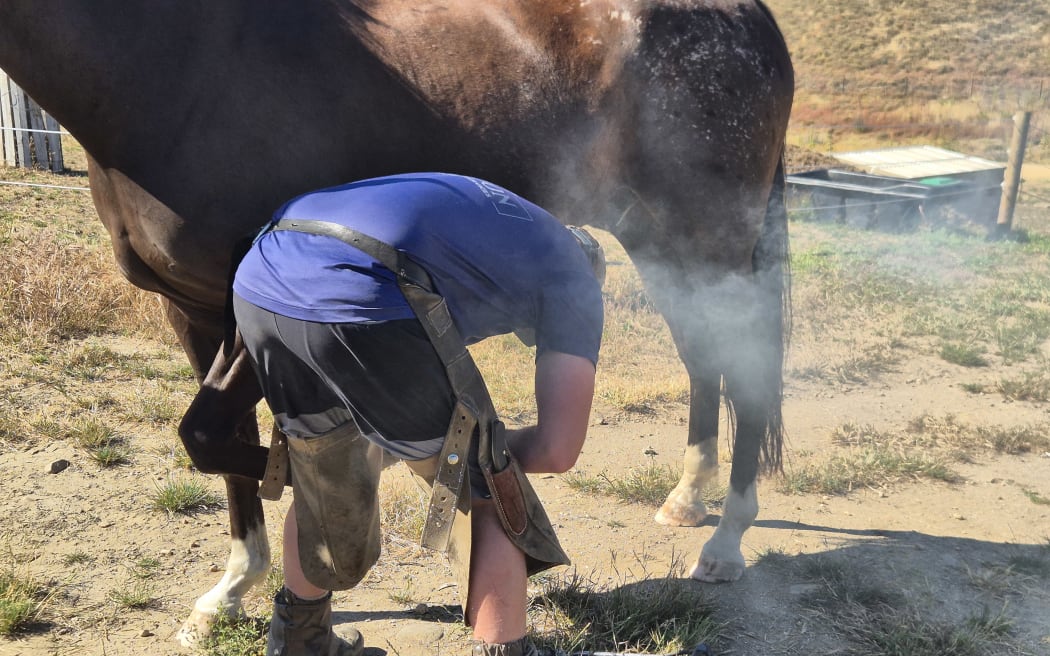
While the hot shoe placed against the hoof emits a puff of smoke that smells like burnt hair, it does not harm the horse.
Photo: RNZ / Gianina Schwanecke
Learn more:
You can find out more about Bruce’s blacksmithing here.
Sign up for Ngā Pitopito Kōrero, a daily newsletter curated by our editors and delivered straight to your inbox every weekday.