
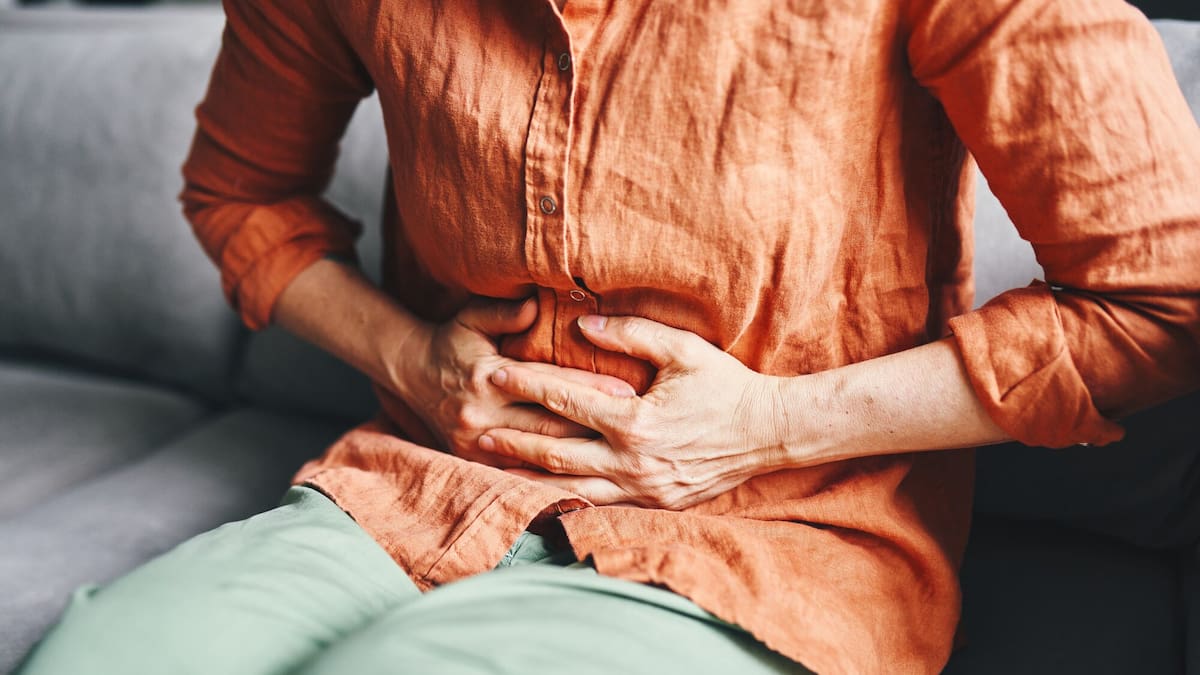
“The gut is a major interface between the environment around us and the human body,” Gearry says.
“It’s home to some pretty amazing stuff going on with regards to digestion and absorption and then also the microbiome, which has become pretty interesting in the last few years.”
Your microbiome is the collection of bacteria, viruses and fungi that live in your gut. There are as many microbial cells as there are human cells in your body, Gearry says – and these influence your health in different ways.
What are the signs of good – and bad – gut health?
Signs of good gut health include the absence of symptoms.
“People who don’t have gut symptoms, that would mean that their food gets digested normally from an upper gastrointestinal perspective, they don’t get reflux or dyspepsia [indigestion] or pain, they don’t get bloating.
“And then from the lower end, there’s no signs of diarrhoea or constipation, bleeding.”
If you do get those symptoms, it’s important not to ignore them, he says.
“The alarm symptoms from my perspective are if anyone loses weight unintentionally. Unintentional weight loss is potentially something that we’re concerned about.”
Any symptoms that keep you up at night can be concerning.
“Things like irritable bowel syndrome are common, but those things tend to go to sleep when you do and they wake up when you do in the morning.
“But if you’re having diarrhoea or abdominal pain that keeps you awake at night, that’s not normal and that needs to be looked at quite differently.”
Any kind of bleeding from the bowel is a warning sign, he adds.
“[It] may well be what we call outlet bleeding, which is from haemorrhoids or from fissures. But if there’s bleeding coming from higher up, that’s obviously something we’re concerned about.”
Another red flag is if you’re getting those symptoms and you have a family history of colorectal cancer at an early age, inflammatory bowel disease such as Crohn’s or ulcerative colitis, or a family member with coeliac disease.
“There are clues that there could be other things going on that we need to take seriously.”
Gut symptoms may be signs of bowel cancer, which is second most common cause of death by cancer in New Zealand.
The biggest risk factor is age, Gearry says, though doctors are seeing a slight increase in cases among those under 50.
“It still is predominantly an older person’s disease. But with younger people being diagnosed now, we do need to be more aware … we need to take all symptoms seriously.”
Why talking about poo matters
Before Bowel Cancer Awareness Month in June, The Gut Foundation is running a Gut Check campaign urging Kiwis to “talk s*** to save lives”.
“People are embarrassed talking about poo and all this stuff, but actually, it’s just another part of the body,” Gearry says.
“If you had a sore knee you’d see your doctor. A sore knee is a symptom, bleeding from your bottom is a symptom, diarrhoea is a symptom. We don’t judge you for your symptoms. We judge you for not coming in when you have symptoms.”
It’s important to have those conversations with your doctor, family and friends, he adds.
“If we have taboos around these things, people will do badly, and we want to make sure that people have great gut health and avoid disease.”
The link between your brain and your gut
A symptom you experience may be nothing to worry about, or just the tip of the iceberg, which is why Gearry says it’s important to get it checked.
“We need to see that whole spectrum … just because you have a symptom, doesn’t mean you need a colonoscopy, but it means you may need someone to think about whether that’s the right test or not.”
He says the gut doesn’t live in isolation, and these symptoms – and the psychological impact of them – can also affect our mental health.
“If you worry about things as well, then that worry can make your gut symptoms worse, and it’s a bit of a vicious cycle.
“It’s good to have symptoms explained and diagnosed, regardless of what they are, because that knowledge gives you power. That power means that you don’t have the anxieties that may drive further symptoms, and that improves your quality of life – not just from a gut perspective, but from a general perspective as well.”
What to do if you have symptoms
If you have symptoms that might point to bowel cancer, your GP can refer you for assessment and you may undergo a FIT – faecal immunochemical test – which looks for traces of blood in your stool.
This means that polyps – pre-cancerous growths – can be diagnosed and removed, or that cancers can be caught at an earlier stage, which improves the chances of survival.
The test is offered every two years to people aged 58-74 as part of the National Bowel Screening Programme.
Gearry adds it’s important that different communities engage with free bowel screening, as Māori and Pasifika people are at higher risk of early-onset bowel cancer and are more likely to die of the disease.
How does diet impact gut health?
What you feed your gut will make a big difference to your gut health, Gearry says.
“We want a healthy, balanced diet with appropriate levels of the good things and not so much of the bad things.”
The Mediterranean diet is a good example of that, he says. It’s high in fibre, fruits and vegetables, with moderate amounts of seafood and red meat.
It’s also important to reduce ultra-processed foods, and aim to include more whole foods in your diet.
“You don’t have to be vegetarian or vegan, but you just have to make sure you’re getting enough fibre in the form of fresh fruit and vegetables, along with the other foods that you have.”
The three gut checks every Kiwi should do:
Self check: Check your poo and check your fibre intake
Professional check: Check any symptoms with your GP and check you know your options for screening
Social check: Check in with friends and family. Talk about digestive issues – let’s normalise gut talk to save lives
Bethany Reitsma is a lifestyle writer who has been with the NZ Herald since 2019. She specialises in all things health and wellbeing and is passionate about telling Kiwis’ real-life stories.