
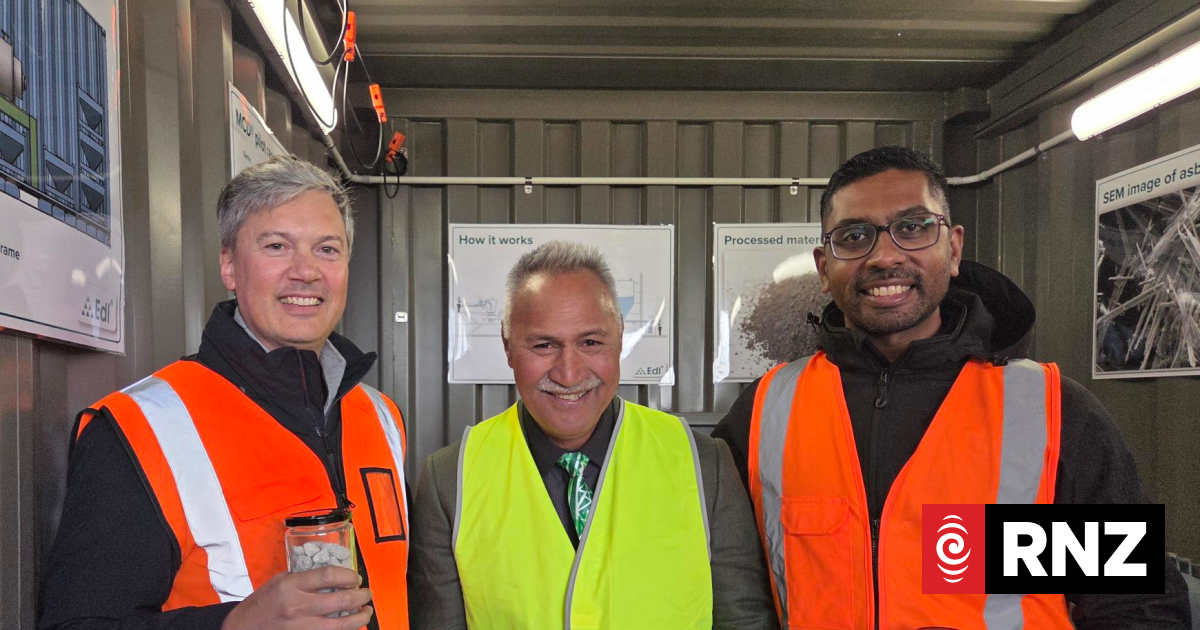
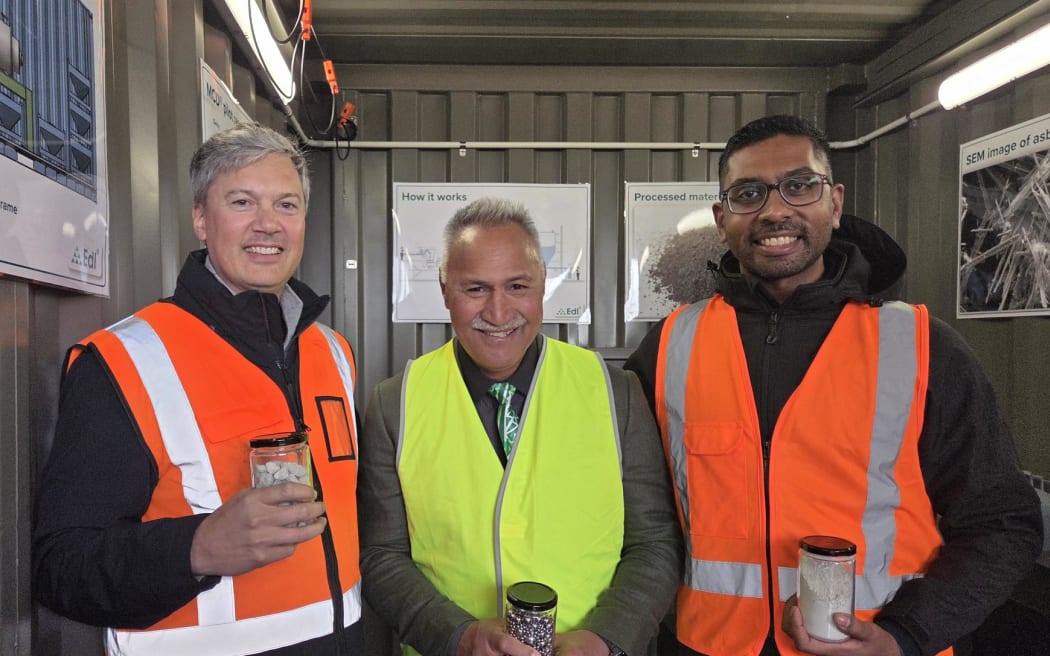
Mayor Ken Laban with EDL Chief Executive Marcus Glucina (left) and Chief Technology Officer Kapish Gobindlal (right).
Photo: RNZ / Sammy Carter
A company is testing out technology at Lower Hutt’s Silverstream landfill which it says can destroy asbestos, making it into something safe.
The technology designed by Environmental Decontamination Limited (EDL) was launched on Thursday, and is being trialled in New Zealand for the first time.
Asbestos is a toxic fibrous building material used throughout New Zealand before it was banned in 2016.
It is a severe risk to health when the fibres become airborne.
The technology works by using metal balls at high speeds to break down the asbestos fibres, changing the chemical structure into a safe form that no longer poses a health and environmental risk.
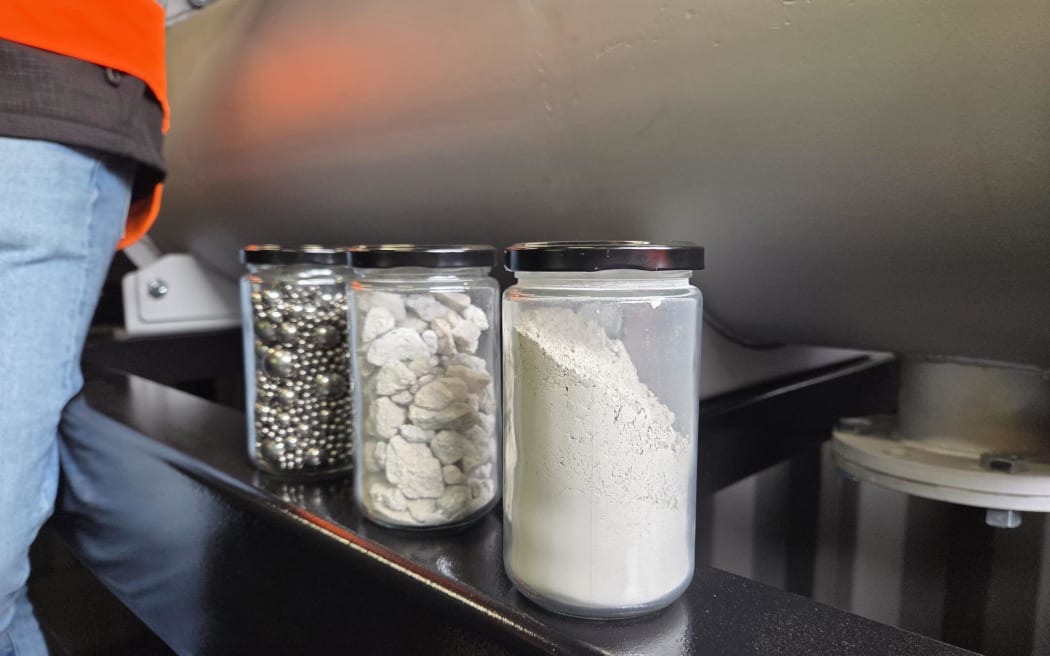
The technology uses balls at high speed to break asbestos fibers into a powder.
Photo: RNZ / Sammy Carter
Lower Hutt mayor Ken Laban said for decades, asbestos had been buried and left for future generations to manage.
“This trial gives us the chance to explore a safer and more sustainable alternative to simply burying asbestos waste.”
He said it could be a significant step forward for Lower Hutt.
Hutt City Council has invested $365,000 of its yearly waste levy in the project.
If the trial was successful, Laban said it could change asbestos waste in New Zealand and around the world.
The goal was for the end product to be resold and reused in concrete – which could make it cheaper to dispose of asbestos because it meant there was value in the waste product.
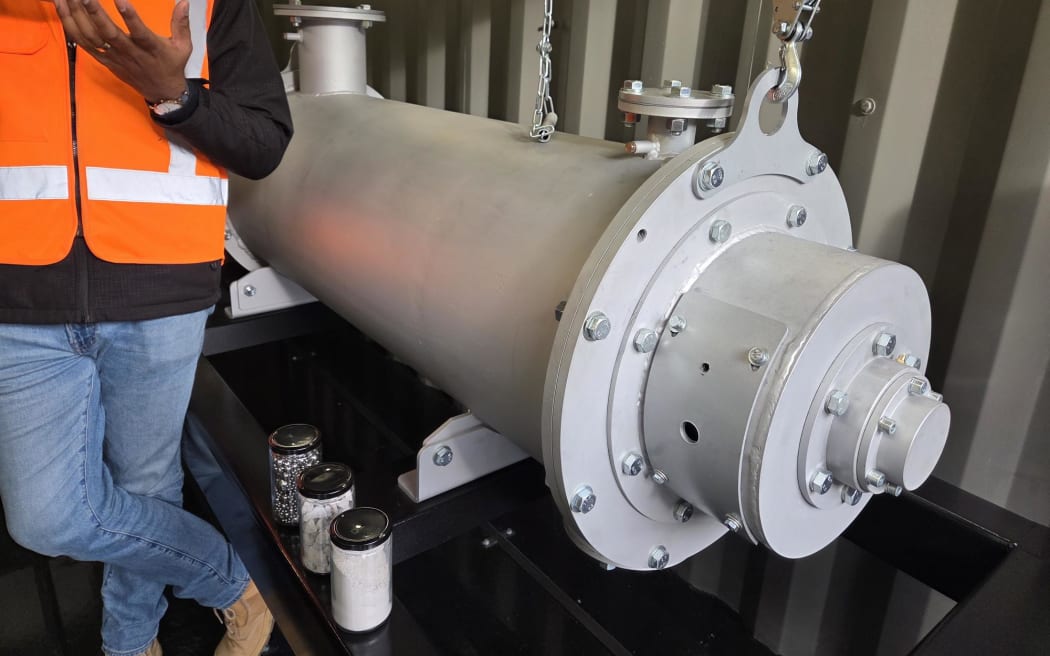
A prototype of the full scale machinery is at the Silverstream Landfill in the Hutt.
Photo: RNZ / Sammy Carter
EDL chief executive Marcus Glucina said the project was about testing the technology at the landfill under controlled conditions.
“This trial is not about making big claims before the evidence is in. It is about gathering the evidence needed to understand whether this technology can work safely on a global scale.”
He said the trial would be run by specialist engineers and scientists with asbestos handling experience, with strict safety controls in place.
Each tonne of asbestos cost consumers $398 at the Silverstream Landfill – and that was with prior approval required from the council.
At Silverstream Landfill alone, 2000 to 3000 tonnes of asbestos was disposed each year.
The final findings from the trial would be ready before the end of the year, the tech company said.
Sign up for Ngā Pitopito Kōrero, a daily newsletter curated by our editors and delivered straight to your inbox every weekday.