
NASA has announced a formal realignment of its internal organizational structure, a move that is intended to adopt a lean organizational model and to fast pace mission delivery. The announcement also comes against a backdrop of refocusing of priories under President Trump’s Executive Order Ensuring American Space Superiority, also known as the National Space Policy.
As per this policy NASA is directed to focus talent and resources on accelerating the Artemis program, establishing a Lunar Base, developing a nuclear space reactor, simulating the orbital economy, and expanding discovery and science missions.
NASA Administrator Jared Isaacman said “This initiative reflects NASA’s extreme focus on executing the mission in direct support of the National Space Policy. We are focusing resources on the most pressing objectives only NASA is capable of undertaking and liberating the workforce from unnecessary bureaucracy and obstacles that impede progress. We aim to rebuild competencies and instill a culture that attracts the best and brightest capable of pursuing the most demanding engineering challenges and moving safely and urgently”.
“There will be no reduction in force, no program cancellations, no closures, but we will achieve cost savings through more efficient execution and taking an active role in delivering the outcomes the world has been waiting for from NASA. This is how we deliver on the mission, meet the moment, and continue to make history on behalf of the American people.”
What the restructuring involves
At present NASA is organized under Administrators, Administrator Staff Offices, 6 Mission Directorates, Mission Support Directorates, and 18 Centers and Facilities. The reorganization consolidates several existing directorates and reporting lines, reducing the number of organizational layers between mission teams and senior leadership. In practical terms, this is intended to shorten decision cycles and give program managers clearer authority over resources and schedules.
Some of the reporting line changes include mission directorates directly reporting to the administrator and the associate administrator also serving as NASA chief engineer.
Mission directorate integration includes the formation of Human Spaceflight Mission Directorate (HSMD) and Research and Technology Mission Directorate (RTMD).
HSMD will focus on human spaceflight operations to both low Earth orbit and the Moon. The Exploration Systems Development Mission Directorate and Space Operations Mission Directorate will unify as HSMD.
RTMD will be a combined research, space technology, and aeronautics organization charged with nuclear power and propulsion development. NASA will integrate the Aeronautics Research Mission Directorate and Space Technology Mission Directorate into the new RTMD.
Budgetary context
Fiscal year 2027 budget request for NASA is $18.8 billion which is $5.6 billion decrease (accounting to negative 23 percent) from the 2026 enacted level. With this proposed budget, NASA intends to primarily direct the funds towards Artemis and Martian missions ($8.5 billion), space exploration missions ($3.9 billion), commercial orbital economy ($3 billion), aeronautical research ($610 million), and upgrading NASA infrastructure ($101 million).
Updated areas of focus
Artemis architecture updates, these include standardizing the Space Launch System (SLS) rocket configuration, 2027 Artemis III demo mission, and 2028 Artemis IV and V landing missions on the Moon. NASA also intends to pause Gateway lunar orbital space station (in its current form) and shift focus to lunar surface infrastructure that enables sustained operations.
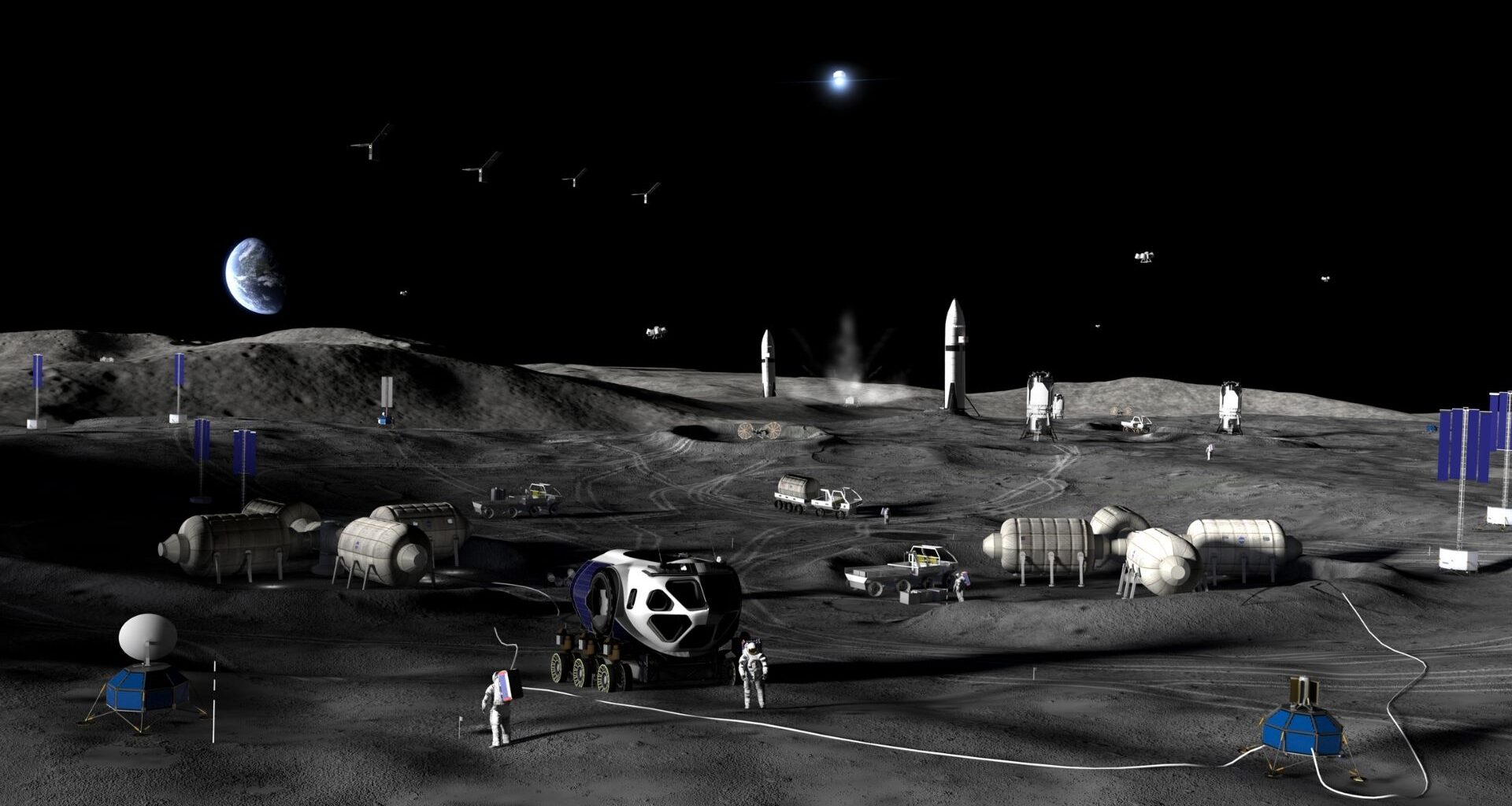
Lunar base construction, to be carried out in threes phases. Phase I will be a building, testing and learning phase. Phase II will be focusing on establishing early lunar infrastructure and Phase III will be focusing on enabling continuous human presence on the Moon.
LEO orbital infrastructure, the major focus area is to transition from the International Space Station (ISS) to commercial space stations. These will carry forward the ISS mission of serving as an orbital innovation laboratory.
Nuclear space propulsion, NASA will launch Space Reactor 1 (SR-1) Freedom to Mars before the end of 2028, demonstrating deep space nuclear electric propulsion.
Near term space exploration missions, these include Nancy Grace Space Telescope, and Dragonfly (a nuclear-powered octocopter launching in 2028 to arrive at Saturn’s moon Titan in 2034). Lunar science missions include up to 30 robotic landings starting in 2027.