
The policy’s statement of proposal said increases in the cost of capital, infrastructure at Te Maunga Wastewater Treatment Plant and retaining the Queen Elizabeth Youth Centre indoor court facility while delivering the Haumaru sports and recreation facility on Cameron Rd drove the proposed increase.
The proposal said the new charge for a three-bedroom dwelling would be $37,349, excluding GST.
The charge would be $42,951 including GST.
For the 2020/21 financial year, the citywide development contribution for a residential dwelling “that is not one or two bedrooms” was $12,208 including GST, council documents showed.
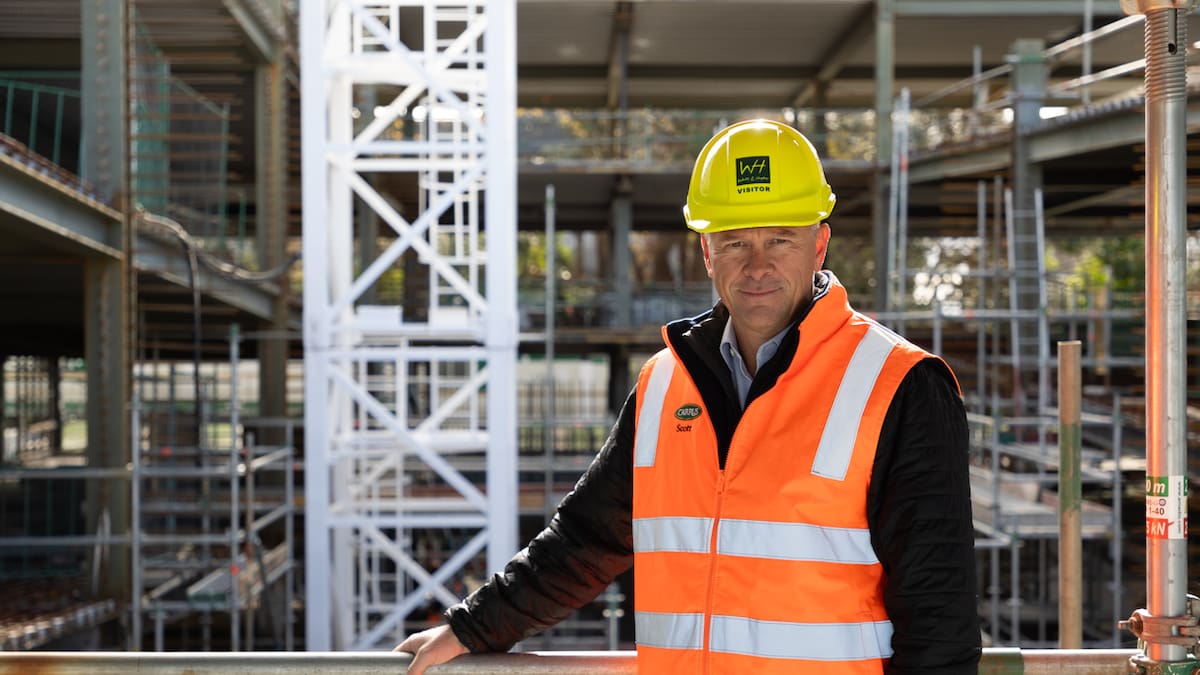
In a UTF statement, chairman Scott Adams said more than $30,000 had been added to the cost of a new three-bedroom home in five years “before land, construction costs or interest rates enter the picture”.
Adams said development contribution costs flowed into the price of every newly built home.
The UTF submission said Tauranga had “severe” housing affordability issues and recent increases in citywide development contributions had been “unprecedented”.
“Given the current economic downturn, the building sector is under significant financial strain,” the submission said.
Increasing development contribution costs further would negatively impact on the sector and “will only worsen the current Tauranga housing affordability crisis”.
The UTF statement said development contributions must be linked to infrastructure demanded by new growth under the Local Government Act.
Adams said, in his view, new home buyers were “subsidising infrastructure for everyone else” as indoor courts and aquatic centres were “used equally by existing residents across the city”.
The submission referenced the Te Maunga Wastewater Treatment Plant, which had been identified as highly vulnerable to coastal inundation, yet the council was continuing to increase development contribution funding for it.
Adams said, in his view: “Charging new home buyers to expand critical infrastructure on a known flood-risk site, without any public examination of alternatives, is not acceptable.”
UTF asked the council to defer any further increases until the Government’s new national development levy framework was in place and shift to funding tools such as targeted rates.
The Government announced in November a draft policy to replace development contributions with a development levies system, aimed at enabling more housing to be built faster.
Tauranga City Council has proposed a 7.3% increase to its citywide development contributions. Photo / Mead Norton
The Bay of Plenty Times put UTF’s concerns to the council.
Tauranga City Council strategy, partnerships and growth general manager Christine Jones said it was lawful and “common practice” across New Zealand to collect development contributions towards community infrastructure such as pools and indoor courts.
“As our population grows so does demand for these types of assets.
“It is equitable that new development makes a contribution towards funding a share of the cost of building these facilities.”
Jones said the risk from coastal inundation to the Te Maunga Wastewater treatment plant was “not significant”.
“As the risk will increase with sea level rise and a changing climate, TCC is in the process of adopting an adaptive pathway to mitigate the future risk.”
Jones said this planning framework would identify opportunities to manage a range of natural hazards to infrastructure.
Tauranga City Council strategy, partnerships and growth general manager Christine Jones pictured in 2023. Photo / Alex Cairns
Jones said development contributions had risen “significantly” in the past five years, “reflecting the very high costs of delivering new infrastructure”.
This was a problem experienced in growing communities across New Zealand, she said.
“Tauranga’s development contribution charges for new growth areas are very similar to those in similar areas of Auckland and Hamilton.”
Jones said the rising costs of building, including increases in development contributions, had made it more expensive to build everywhere in New Zealand.
“This is a challenge TCC is working with the Government and the development community to address.”
Jones said UTF was asking the council to delay increases to development contributions until the Government’s reform of growth charging was complete, and for the council to meet the costs of community infrastructure from general rates.
“Both ideas would result in rates rises and stray from TCC’s strongly held principle that our existing community should not pay for the cost of growth.”
Jones said the council was focused on ensuring costs of new community infrastructure projects were “as low as possible and provide value for money”.
Jones said the council received 14 submissions on the proposed citywide development contributions. Analysis was underway and would be publicly reported to the council on June 2.
Megan Wilson is a health and general news reporter for the Bay of Plenty Times and the Rotorua Daily Post. She has been a journalist since 2021.