
‘What we are discussing today is not a conceptual project or a long-term aspiration. It is a real and advancing initiative,’ said Lakehead official
Lakehead University unveiled an ambitious long-term vision for the future of its Orillia campus Monday, telling city council that a proposed expansion tied, in part, to the future Orillia Soldiers’ Memorial Hospital (OSMH) site, could help transform the city for decades to come.
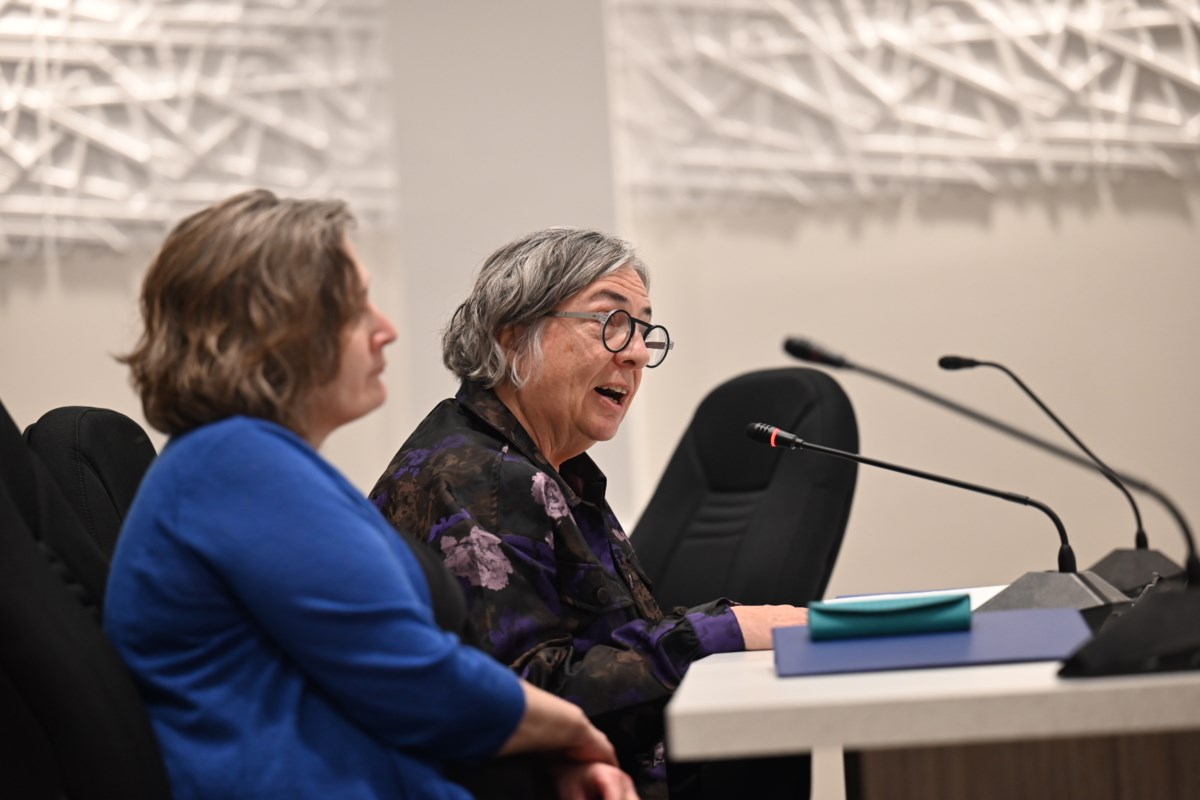
Lakehead president and vice-chancellor Dr. Gillian Siddall told council Monday the university is moving forward with plans for a new $45-million academic building as enrolment growth continues to outpace the campus’ current physical capacity.
“What we are discussing today is not a conceptual project or a long-term aspiration,” Siddall told council. “It is a real and advancing initiative.”
The university says enrolment at the Orillia campus has increased by 43 per cent since 2020. More than 2,300 students are currently enrolled across five faculties, including business, education, social work, psychology, biology, environmental science and the humanities.
Siddall said more than half of Lakehead Orillia students come from Orillia, Barrie and communities throughout Simcoe County, while more than 66 per cent are first-generation post-secondary students.
Over the past five years, more than 3,100 students have graduated from the Orillia campus with a reported 97 per cent employment rate within six months of graduation, she said.
Lakehead also told council the Orillia campus contributes an estimated $355 million annually to the local economy.
Mayor Don MacIsaac questioned the university’s economic impact calculations during council discussion.
“Taking that $355 million economic contribution to the economy that they’ve touted and divided by the number of students to get $145,000 just seemed large,” he said.
Siddall said the university would provide additional information regarding the figures.
Central to Monday’s presentation was Lakehead’s emerging partnership with OSMH and the province’s decision earlier this year to identify the university lands as the “preferred” location for a future hospital redevelopment.
Siddall described the opportunity as much more than a simple co-location project.
“It is about the opportunity to create stronger connections between health care, education, research, student learning, workforce development and community services, all within a shared and accessible environment,” she said.
The university says the expansion vision also includes future athletics and recreation facilities designed to serve both students and the broader community.
Coun. David Campbell described the proposal as potentially “transformational” for Orillia and said he was encouraged by the potential synergies between a university and hospital operating side by side.
“I think this could make a tremendous difference to the city of Orillia,” Cipolla said.
Discussion at council also focused heavily on the ownership and future use of the university lands.
City staff confirmed the property is owned by Lakehead University, but remains subject to restrictions under the original development agreement signed when the city transferred the lands to the university in 2006. That agreement calls for the university to seek city approval if it plans to sell any of the land.
Coun. Whitney Smith sought clarification from Lakehead on exactly what the university is asking of the city. She said if the market value of the land is $15 million, that money should go to the city — not the university.
Siddall confirmed Lakehead is leveraging proceeds from a potential sale to help fund its expansion. She said the university is not seeking direct municipal funding for the expansion project, but is asking the city to continue collaborating under the existing development agreement and ultimately permit the sale of a portion of the property to OSMH.
“It does also allow us to build a new academic building,” Siddall said of the proposed land transaction.
The university said Simcoe County has already committed $15 million toward the academic building project, while Lakehead is pursuing an additional $15 million through the federal Build Community Strong Fund.
Siddall also confirmed Lakehead responded through the formal site-selection process conducted by OSMH before the university lands were selected by the province as the preferred hospital location.
Coun. Cipolla raised concerns about hospital accessibility for residents living east of Highway 11, noting travel times to West Ridge could become a challenge for much of the community.
“Eighty per cent of the population lives on this side of Highway 11,” he said. “I have a lot of concern.”
Despite questions surrounding land arrangements, funding and accessibility, council members broadly voiced support for the university’s continued growth and its role in Orillia’s future.
“We have the opportunity to strengthen regional infrastructure, expand access to education and healthcare partnerships to support long-term economic and workforce development,” Siddall said.