
Patients need depression treatments to reach the brain, but the brain is well-guarded.
Pills travel the bloodstream for days, implants require surgery, and magnetic pulses struggle with precision. Every option carries costs.

A research team in Seoul found a path that bypasses most of that. It’s delivered through the eye.
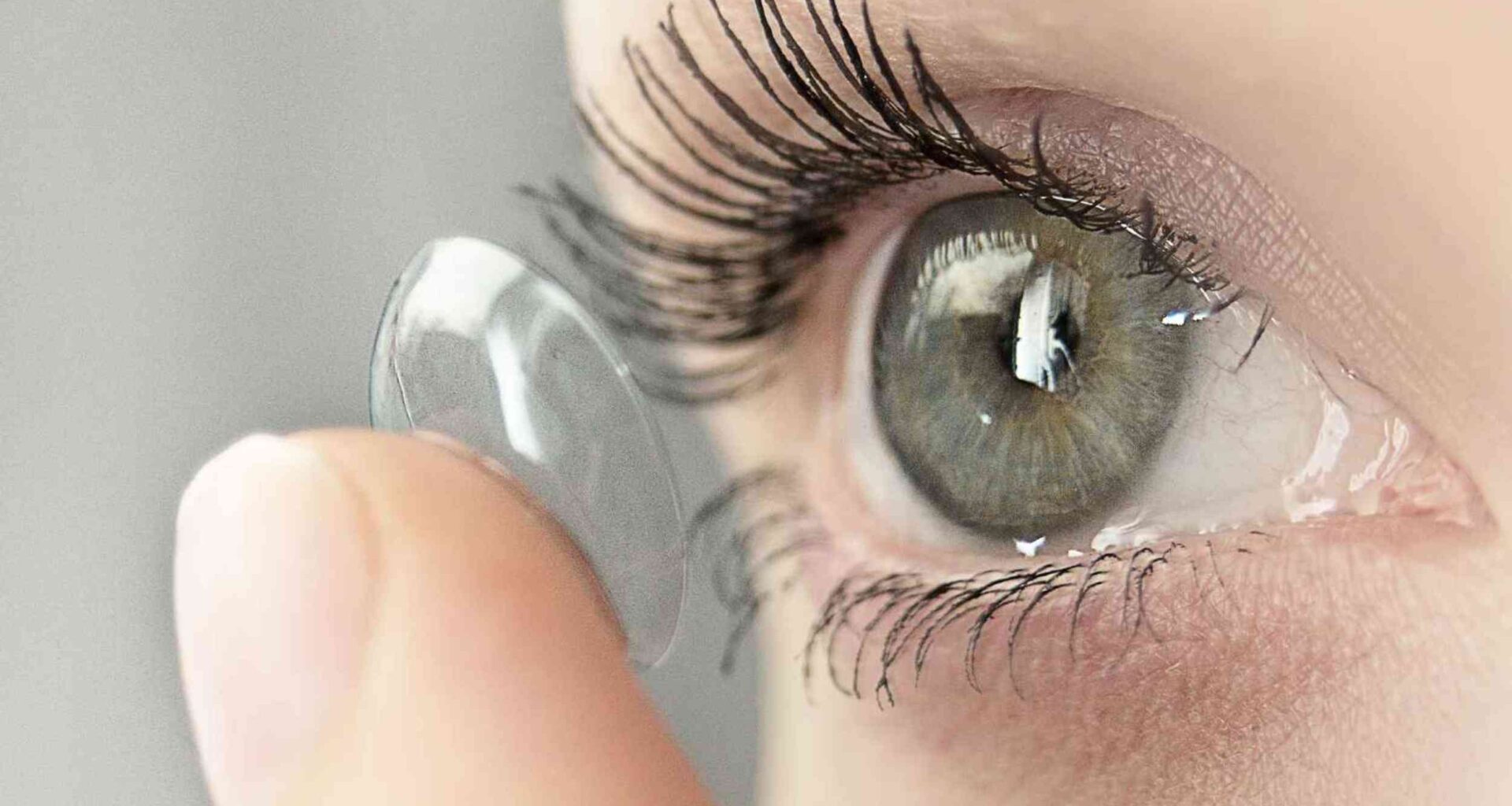
Until now, contact lenses have never been used to treat a brain disorder.
Eyes as gateways
The retina at the back of each eye begins as brain tissue during development. The visual signals it sends travel along neural pathways that pass through mood-regulating regions.
Jang-Ung Park, a materials scientist at Yonsei University in Seoul, wanted to use that direct and biological link as a way inside.
Existing depression treatments such as pills, electroconvulsive therapy, and surgical brain implants all aim at the same circuits. They just require difficult paths.
Park’s team asked whether a soft contact lens sitting on the cornea could send a useful signal through the eye instead of the skull or scalp.
Two beams overlap
The trick is a method called temporal interference. Two electrodes are built into the lens, and each emits a high-frequency electrical signal that the retina ignores on its own.
But where the two signals cross, they produce a slower combined rhythm the cells will respond to. This results in a kind of remote stimulation.
The surface of the eye stays calm, while the activity only flares deeper, where the two beams meet. That meeting point can be steered to land near mood-regulating regions of the brain.
Earlier human trials of the approach pressed electrodes against the scalp, never the eye. Going in through the eye sidesteps the skull entirely.
Building the lens
To keep the lens both soft and clear enough to see through, the team built ultrathin electrodes from gallium oxide topped with platinum.
The full assembly stays transparent, so light still reaches the back of the eye. The lens body uses the same flexible material as standard soft contacts.
That combination is conductive, nearly invisible, and gentle on the eye’s surface. This engineering piece makes the rest of the idea work.
Detailing the experiment
The team set up four groups of mice. One stayed healthy and untreated, serving as the baseline.
A second was put under chronic stress to induce a depression-like state, then left alone. A third received the lens treatment in 30-minute sessions, once a day, for three weeks.
The fourth got fluoxetine, the active ingredient in Prozac and one of the most prescribed antidepressants in the world.
Researchers then ran the mice through standard behavioral tests, recorded electrical activity in their brains, and measured chemicals in their blood and tissue before and after.
Brain wiring restored
Depression degrades the conversation between the hippocampus and the prefrontal cortex, two regions that handle memory, emotion, and decision-making, according to research.
The recordings showed this disconnect clearly in the untreated depressed mice. But in the lens-treated group, the disconnect reversed.
Activity in the two regions tracked together again, much closer to what the healthy controls showed.
The fluoxetine group improved too. But the lens treatment didn’t trail the drug. It matched it.
Body chemistry changes
Biology moved with it. Stressed, untreated mice carried high corticosterone, the rodent equivalent of cortisol. Within three weeks of treatment, those levels dropped by nearly half.
Serotonin, the neurotransmitter most antidepressants try to lift, climbed by close to the same amount. Inflammatory molecules in the brain, another known marker of depression, fell as well.
The changes didn’t always line up perfectly between the two treatments. But the overall direction did, with both pulling the same biological markers back toward a healthy baseline.
Machine learning verdict
To check whether the improvements were as broad as they appeared, the team fed every measurement, including behavior, brain recordings, and blood markers, into a machine learning model.
There were no labels indicating which mice had received which treatment. When asked to sort the animals by similarity alone, it placed the lens-treated mice in the same cluster as the healthy controls.
It separated them from the untreated depressed group entirely. Until this study, no one had shown that a contact lens could treat an animal’s full depression profile.
A device most people associate with blurry vision had just performed work that previously required drugs or implants.
What happens next
What is known now is that a soft lens worn for 30 minutes a day can deliver enough signal through the retina to reach the brain’s mood circuits.
In mice, it changes behavior, brain activity, and body chemistry in tandem, performing about as effectively as one of the world’s most widely used antidepressants.
What happens next depends on whether the same effect appears in humans. If it does, depression treatment could gain an option that does not require a daily pill, a clinic visit, or a surgical implant.
The team is now working on a wireless version of the lens and plans safety testing in larger animals before clinical trials.
For patients who cannot tolerate antidepressants or who have not responded to them, this may eventually become another treatment option.
The study is published in the journal Cell Reports Physical Science.
—–
Like what you read? Subscribe to our newsletter for engaging articles, exclusive content, and the latest updates.
Check us out on EarthSnap, a free app brought to you by Eric Ralls and Earth.com.
—–