

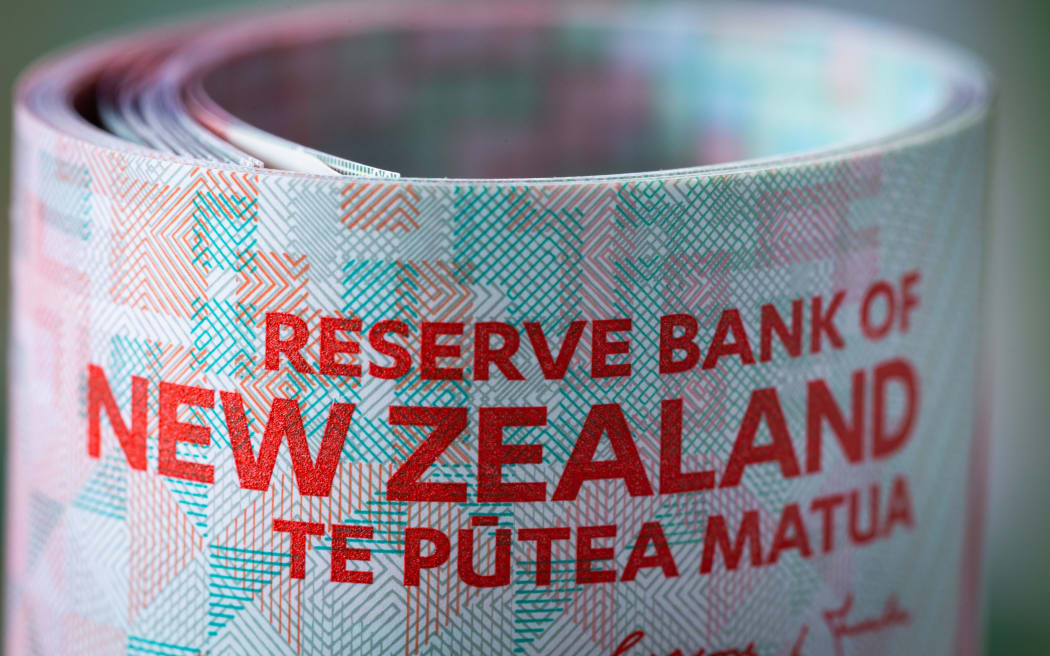
RBNZ is expected to hold official cash rate steady at 2.25 percent.
Photo: 123RF
RBNZ to hold official cash rate steady at 2.25 percent
Expected to wait for more clarity on the inflation impact of Middle East conflict
A repeat likely of April’s statement of balance between growth and inflation fighting
Economists broadly expect three rate rises to 3 percent by year end
New communications approach — monetary committee members’ stance will be made public if a vote
The Reserve Bank is expected to leave the Official Cash Rate (OCR) unchanged at 2.25 percent on May 27 as it once again balances the need to protect economic activity ahead of a pre-emptive strike against surging inflation caused by the Middle East conflict.
At its last meeting the monetary policy committee took what was dubbed a “hawkish hold”, as it warned it was ready for timely and decisive action to head off inflation.
BNZ head of research Stephen Toplis said the monetary policy committee had just one question to answer — “will the current inflation shock take on an air of permanence?” — which he said was cloaked in uncertainty.
“We have six decision makers, all of whom will be relatively perplexed about the future of the world.”
He said the answer depended on how long the war would go on for, when would oil production recover to meet demand, and what were the likely number of consequent price shocks caused by the conflict.
Toplis said the threat was clearly more elevated inflation, but it was unclear whether that was a cause of weakening growth.
“Getting rid of that inflation should be prioritised over concerns about growth.”
Too early to tell, too early too raise
However, a vocal opponent to any rate imminent rate rise was Kiwibank chief economist Jarrod Kerr.
“It is simply too early to assess the inflationary pulse, and the likely unwind. It is too early to gauge the impact on demand. And it is too early to see the adverse effects in the labour market. Therefore, it’s too early for the RBNZ to hike.”
He said an early rise in the OCR would destroy the fledgling economic recovery.
Westpac chief economist Kelly Eckhold said an immediate rate rise was justified, although he expected a majority of the monetary committee to vote to hold.
“The outlook clearly has changed now that headline inflation is set to move above 4 percent for the balance of 2026. It would be much better to have the OCR near neutral today. Hence beginning to get there now seems a pressing priority.”
Annual inflation is currently sitting at 3.1 percent, and has been above the target midpoint of the RBNZ’s 1-3 percent band for more than a year.
The RBNZ’s own surveys of business and consumer sentiment have shown as spike in short term inflation expectations, which Governor Anna Breman has identified as key flag in the wind.
Wait and see
The RBNZ is expected to adopt a “wait-and-see” stance for now, keeping its powder dry.
Financial conditions have tightened since the US/Israel-Iran conflict started with wholesale interest rates having risen and flowed through to retail fixed mortgage rates.
That will have dampened consumer activity and demand, which if it leads to broader economic weakness is regarded as a factor bringing down inflation.
Close attention will be paid to the revised economic forecasts and the prospective OCR track, which is likely to signal that interest rates will need to stay higher for longer.
The BNZ’s Toplis sympathised with the MPC committee’s dilemma.
“The RBNZ will be accused of tightening too quickly or too much and then be blamed for clobbering the economy, or it will be charged with tightening too late and be at fault for any resulting inflation.”
Sign up for Ngā Pitopito Kōrero, a daily newsletter curated by our editors and delivered straight to your inbox every weekday.