

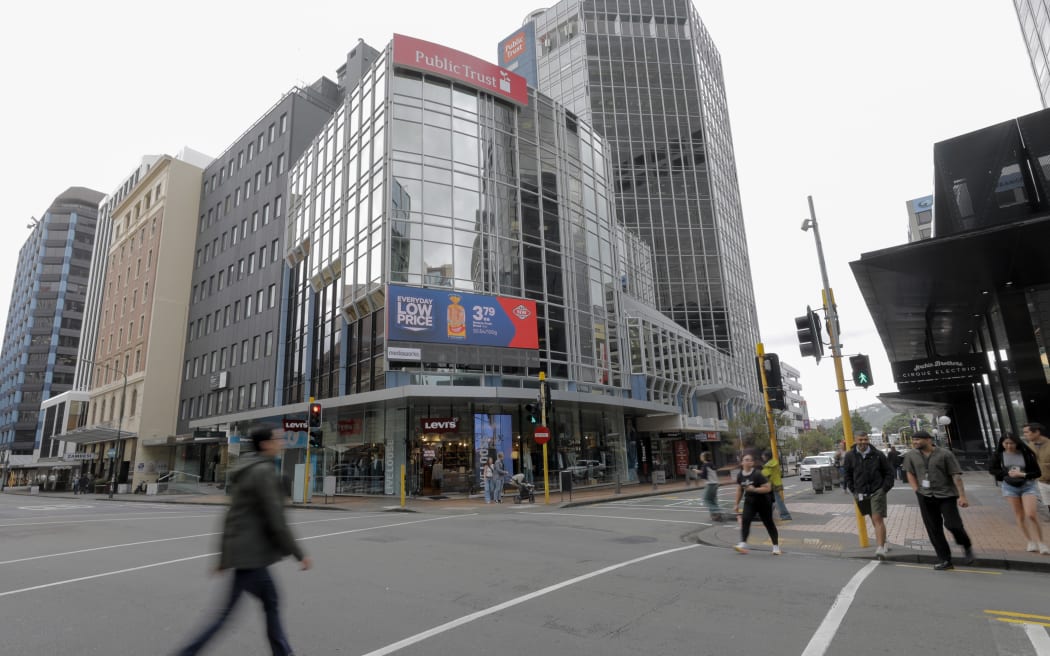
The prospect of more job cuts in the public sector is bad news for some Wellington workers who have not been able to find work since 2024.
Photo: RNZ / REECE BAKER
Wellington workers who have been unable to find jobs after public sector cuts two years ago say they feel deflated by news of further job losses.
The government announced last week that nearly 9000 public servants are in line to lose their jobs over the next three years.
But experts say with more people facing long-term unemployment, there comes the risk of higher rates of anxiety and depression.
Benj – a middle-aged man from Wellington – took a voluntary redundancy in 2024 during the government’s first round of cuts in the public sector.
He had been working in marketing for government agencies for 20 years.
But after applying for more than 130 jobs over the past two years, he is still out of work.
“Making ends meet is only just putting food on the table and getting lunchboxes out to school.
“I’ve had a lot of job interviews, but I seem to just miss out and then hear that there’s going to be more cuts and unemployment on the rise.
“I don’t know where to go, I don’t know what to do, to afford living and pay the bills.”
Benj and his wife, who works full-time, have four children who still live at home.
Benj has picked up some part-time shifts working in supermarkets, taste testing yoghurts and juice, to support his family.
“The last job I applied for was to be a sandwich maker and that’s because I just felt a complete change.
“Something that is so different to the career that I’ve built but will keep me busy and keep me motivated.”
Benj said his family have thought about moving to Australia, but they were unsure whether to make the move as they had heard the grass was not always greener on the other side.
Being unemployed for a while had also left him anxious about saving for retirement.
“The worthlessness that you feel because of it, I’m a very capable person and I’m smart and intelligent and I know lots of stuff.
“But you just feel beaten down through it all.”
‘A worry I don’t have an answer to’
It’s a similar situation for Wellington worker Mary*. She has 15 years of experience working across public sector IT departments.
Two years ago, her contract with the Department of Internal Affairs was not renewed.
She has applied for more than 50 jobs but has not had much luck, leaving her worried about being able to make ends meet heading into winter.
“My heating bill was over $500 last year; my last rates bill was over $1800.
“These are things before even getting sick or unexpected things, I try not to worry about it because worry isn’t productive, but it’s pretty scary.”
Mary said her team at the Department of Internal Affairs went through four restructures in 18 months.
She has decided to study counselling to help her chances in the job market, but she has started chipping into her retirement savings.
“I’ve just done a financial analysis with an adviser, and I might run out of money before I’m 90, so what does that mean?
“Clearly, the super is just not enough to get by with and I’m not expecting any future government is going to magically solve that problem for me.
“It’s a worry that I don’t have an answer to.”
Should NZ follow in other countries footsteps?
Jacqui Maguire, a registered clinical psychologist works across Aotearoa with businesses to support wellbeing in workplaces.
“I can tell you there’s a palpable difference between the mood, between those in Auckland and those in Wellington.
“In Wellington I think there is higher levels of anxiety and concern around what the future brings, especially with the public sector cuts over the last few years and those that are projected.”
Maguire told Checkpoint that people that have been unemployed long-term were at higher risk of anxiety and depression as it impacted people’s sense of purpose and social networks.
“We do know for countries like Denmark and Sweden when you look at past recessions, they managed to get through those times without mental illness or suicidality rising.
“When you look into that research, it was really public policy and nationwide framework that supported people through that time.”
The latest Stats NZ data showed unemployment eased to 5.3 percent in the three months ended March, down slightly from the previous quarter.
A total of 163,000 people were unemployed, a fall of 2000 on the previous quarter – but 7000 higher than a year ago.
The government said the public sector job cuts will save $2.4 billion that will be deployed towards frontline services.
*Name changed to protect identity
Sign up for Ngā Pitopito Kōrero, a daily newsletter curated by our editors and delivered straight to your inbox every weekday.