
First published on 
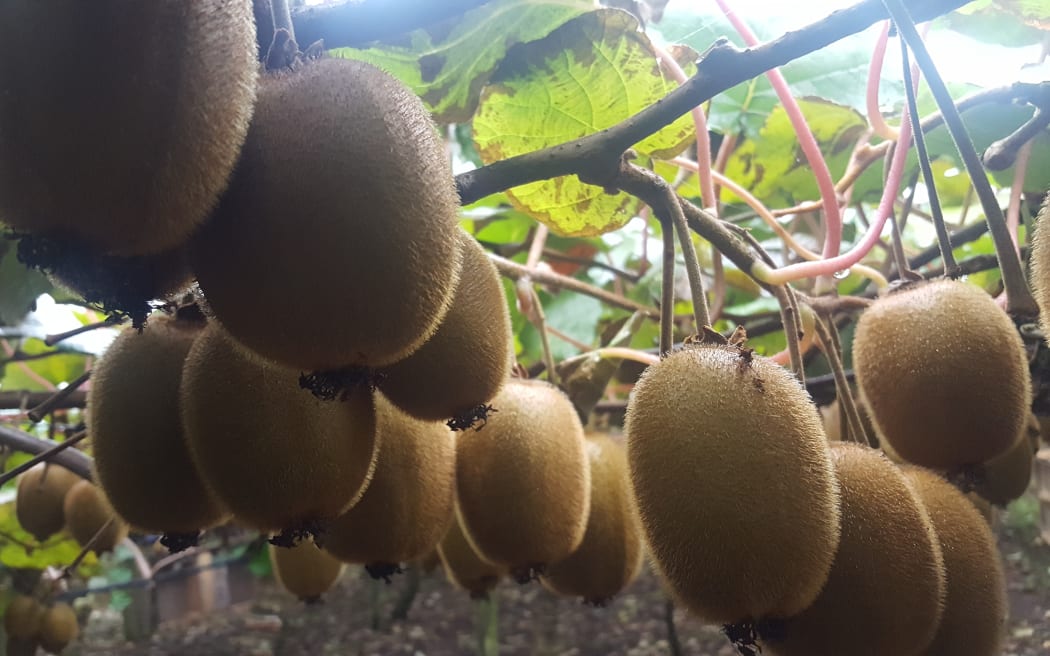
The decision comes after a Labour Inspectorate-led operation in the Bay of Plenty in April.
Photo: RNZ / Susan Murray
Tarun Gautam charged an employee just over $23,300 to secure a job at his Bay of Plenty kiwifruit business.
Multiple payments were made into New Zealand and Indian bank accounts.
However, once Jagmeet Singh started work he was not paid annual leave or the minimum wage and did not get any holiday entitlements.
Now, after an investigation that ended up in the Employment Relations Authority, Singh will get some of that money back but only the part of the premium that went into Gautam’s New Zealand accounts.
According to a recently released decision, Gautam and Hariom Horticulture Ltd have been fined more than $40,000 for failing to comply with minimum employment standards, including breaching the Employment Relations Act, the Holidays Act, the Minimum Wage Act, and the Wages Protection Act.
Gautam and his company, which is now in liquidation, were taken to the Employment Relations Authority by the Labour Inspector after an eight-month investigation following complaints from two workers.
Two additional complaints were received throughout the investigation.
Authority member Claire English found employees Jai Shiva, Vinayak Chopra, Raman Shekhar, Jagmeet Singh and Phoolmeet Kaur were reliant on the company for their work visas, which made them vulnerable.
“This is a matter where the imbalance of power has allowed an experienced local businessman to employ multiple vulnerable immigrants without providing them with minimum employment entitlements.”
Singh paid premium to company owner’s mother
The investigation found all five employees were not paid their minimum entitlements, including not paying out annual leave and holiday entitlements and paying less than minimum wage.
Shekhar, Singh and Shiva were owed a total of $8203 in wage arrears.
Singh told the authority that he was also required to make several payments to Gautam to secure his employment.
This included a payment on 26 December, 2022, in Indian rupees to Gautam and another to an account name of Arun Bala, who was said to be Gautam’s mother.
He also made three payments on 2 January, 2023, in Indian rupees to Gautam, two payments on 13 January and a payment on 30 March, 2023, in NZ dollars, to Gautam.
In addition, Singh said his wife made a further payment to Gautam on 17 April in Indian rupees.
However, the relevant bank statement does not show that the funds were sent to Gautam.
Singh made a final payment of $11,276 on 30 March, 2023, to Gautam’s New Zealand bank account.
English said she was only able to order the reimbursement to Singh of the payment made on 30 March, which was for NZ$11,276, as this was to a New Zealand bank account.
Overall, English found there were 12 breaches across the Employment Relations Act, the Holidays Act, the Minimum Wage Act and the Wages Protection Act.
This included five breaches of record-keeping requirements, three breaches of failing to pay holiday pay on termination of employment, three breaches of failing to pay the minimum wage and one breach of seeking and receiving an unlawful premium.
Gautam was ordered to pay a total of $40,000 in penalties.
Each of the five affected employees were to be paid $5000 as a penalty amount, while Singh would receive an additional $5000 in penalties in recognition of the unlawful premium paid.
The remainder of the penalties are to be paid to the Crown account.
Labour Inspectorate cracking down on horticulture
Kevin Finnegan, lead inspector strategic alignment for the Labour Inspectorate, said he hoped other companies, particularly those operating in the kiwifruit and wider horticulture sectors, would take note of the penalty award.
“The vast majority of orchard owners and labour-hire operators working in the kiwifruit industry comply with employment standards and take good care of their workers. But there are some who believe it is acceptable to exploit vulnerable people to gain unfair competitive advantage.”
The decision comes after a Labour Inspectorate-led operation in the Bay of Plenty in April. Dubbed Operation Indigo, it was specifically planned to identify serious non-compliant behaviour in the kiwifruit sector.
During the four-day operation, labour inspectors and compliance officers visited work sites operated by 21 companies, including labour hire operators and orchard owners. Information gathered was being assessed to determine whether enforcement action was necessary.
“Through operations like this we are able to identify those who break the law and then take appropriate action,” Finnegan said.
“We want all players in this sector to operate on a level playing field.”
* This story originally appeared in the New Zealand Herald.