
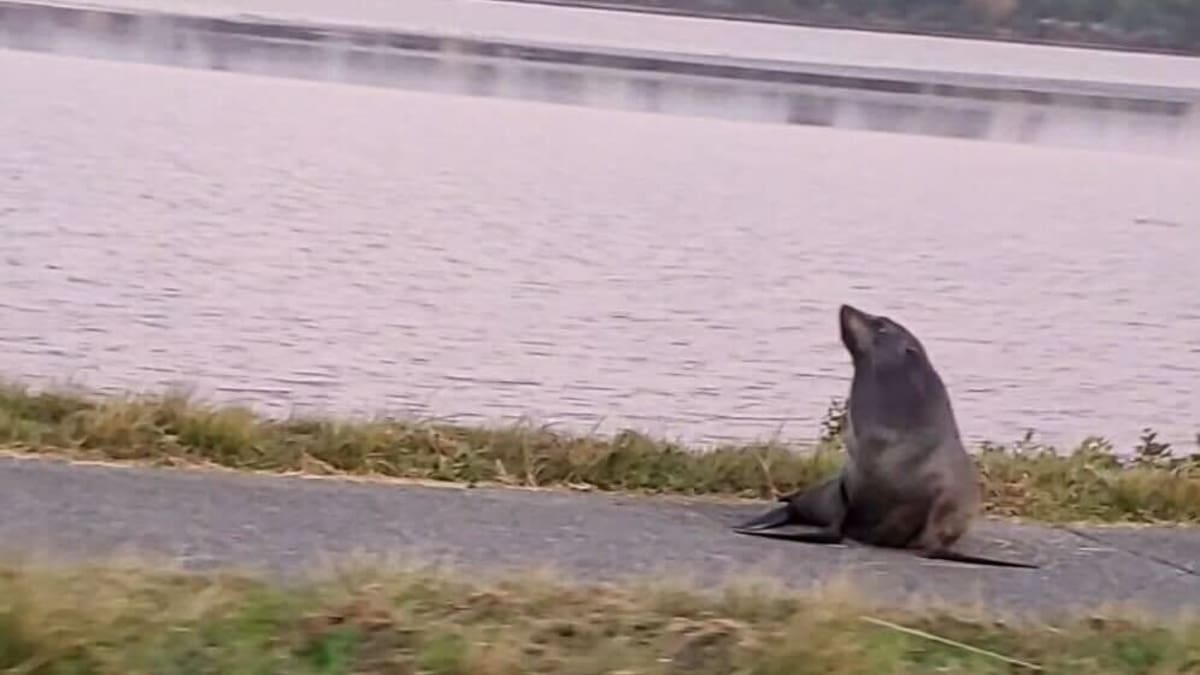
Sightings like this are not unusual during winter.
Between May and September, fur seals (kekeno) often “haul out” onto land to rest and build up energy. Juveniles in particular are known to travel inland while exploring on their own.
The Department of Conservation said there is typically an increase in adolescent seals from July to September as pups begin to wean and disperse while their mothers prepare for the next breeding season.
DoC takes a largely hands-off approach, advising the public to leave seals alone wherever possible.
“Seals are capable and resilient and, given time and space, usually find their own way home,” DoC said in a previous SunLive story.
However, it warns that seals are wild animals that can move quickly on land and may defend themselves if threatened, posing a risk to people and dogs.
Under the Marine Mammals Protection Act, it is illegal to disturb, harass or harm a seal, with dog owners potentially facing prosecution if their pet attacks one.
DoC recommends staying at least 20 metres away, keeping dogs and children clear, avoiding loud noises, and never attempting to touch or feed a seal.