
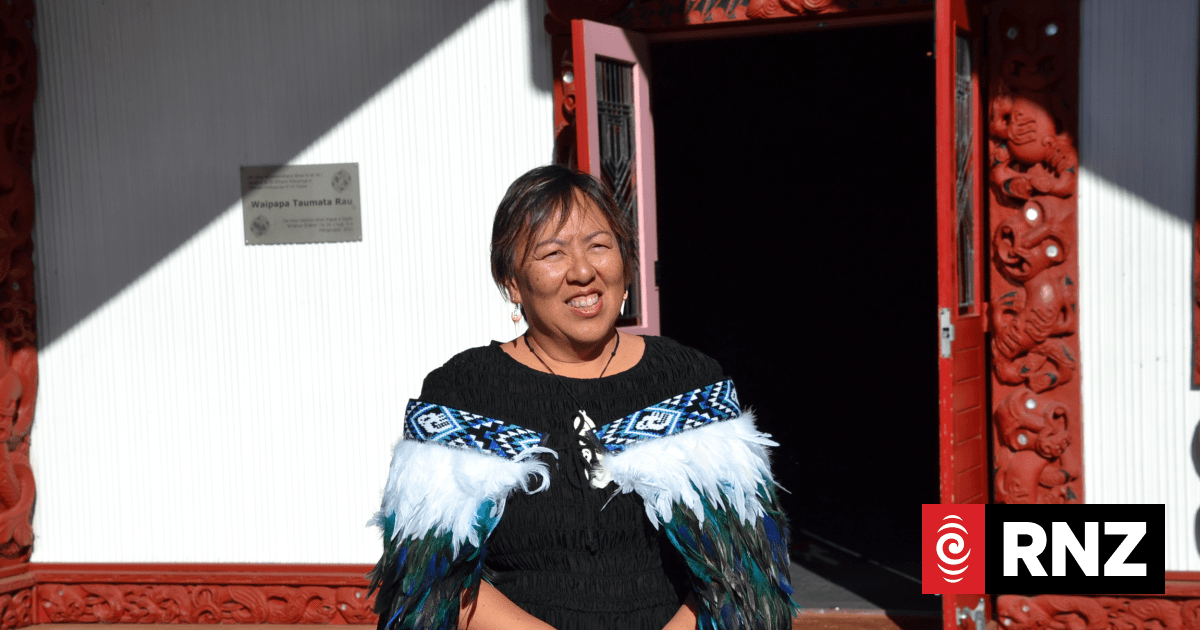
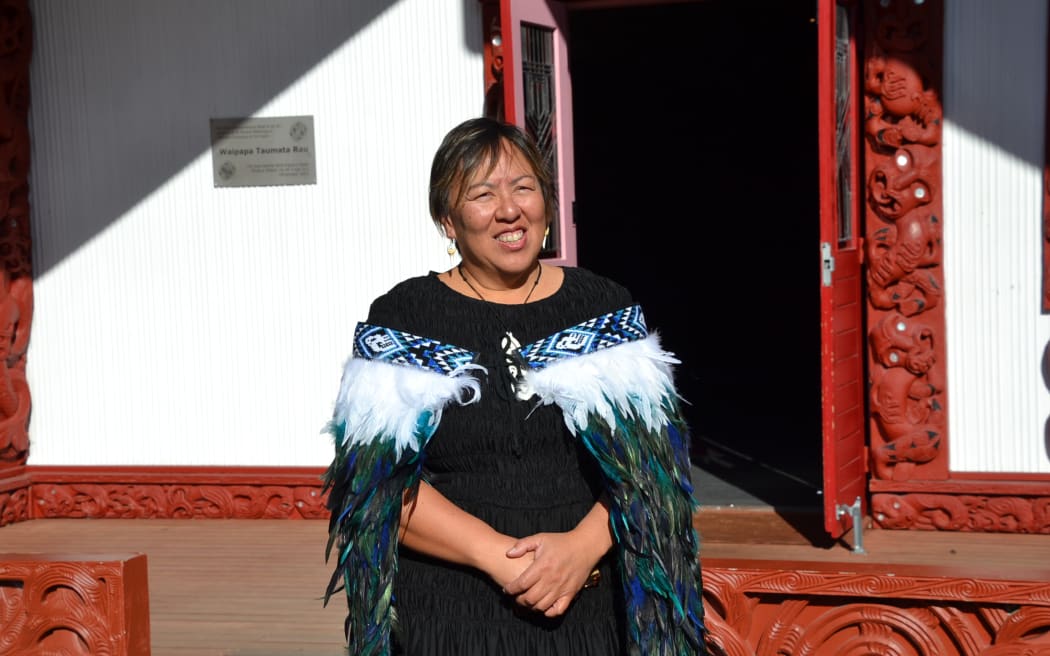
First Māori Head of School of Nursing at Waipapa Taumata Rau Josephine Davis says she hopes her appointment shows Māori that “people that look like them” can lead in health spaces.
Photo: Layla Bailey-McDowell / RNZ
A 17-year-old kōtiro stepping onto a nursing course could never have imagined she would one day become the first Māori head of the School of Nursing at Waipapa Taumata Rau, University of Auckland.
But on Monday morning, surrounded by whānau, colleagues and supporters at Waipapa Marae, Josephine Davis (Ngāti Manu, Ngāti Whātua Ōrākei) was formally welcomed into the historic role.
Davis said the appointment represented an important moment of visibility for future generations of Māori entering nursing and health leadership.
“I want to say to the 17-year-old girl who went on a nursing course, where she was picked up from school and taken to one of the nursing schools to see if this might be the career that she wanted to do, never in her wildest dreams would she have thought she would be standing here today,” Davis said following the pōwhiri.
“And so, I hope that for all those tauira Māori out there … they see people that look like them in these spaces.”
Davis said she also carried generations of wāhine with her into the role.
“I come from a line of strong wāhine. So, the people who sit on my shoulders on the daily are my grandmothers.
“One of my grandmothers was brought up by her nanny, who was a healer who used to ride around the community on horseback and deliver babies and care for the whānau that were unwell, and I think they’re with me every day.”
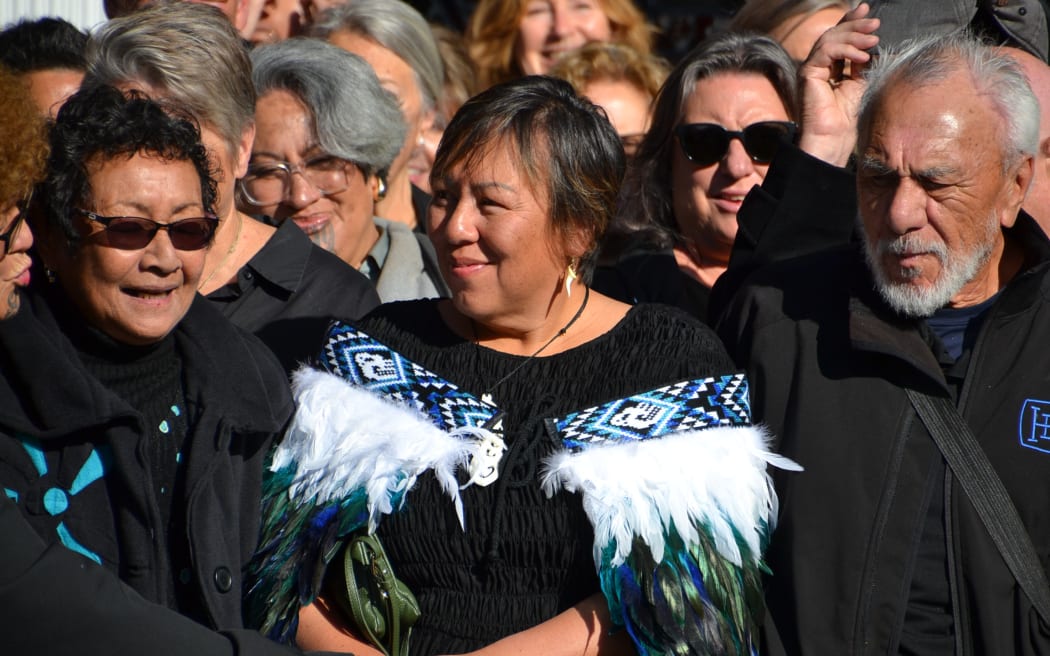
Josephine Davis says she carries the strength of her tūpuna and a whakapapa of strong wāhine as she steps into the historic role.
Photo: Layla Bailey-McDowell / RNZ
Davis brings nearly 40 years of experience across nursing practice, education, workforce development and Māori health advocacy. She was also among the country’s first Māori nurse practitioners.
Speaking to RNZ after the pōwhiri, Davis said she felt “overwhelmed” but proud to lead the School of Nursing.
“I just really hope that having a Māori leading the school shows really clear visibility and pathway for other Māori who might not necessarily have aspired to these types of roles.”
She said visible Māori leadership mattered because rangatahi needed to see different examples of leadership.
“Without visible leaders, people see one type of leadership and that’s not the only right type of leadership.”
Over the course of her career Davis said she had seen Māori nurses increasingly move into senior leadership positions, rather than remaining solely in frontline clinical roles.
“Our two chief nurses in Aotearoa [are] wāhine Māori, so to have Māori in leadership roles across the sector just shows the potential for our people.”

Surrounded by whānau, colleagues and supporters at Waipapa Marae, Josephine Davis was formally welcomed as the Head of the School of Nursing at Waipapa Taumata Rau – the first Māori to hold the role.
Photo: Layla Bailey-McDowell / RNZ
Davis also reflected on moments early in her career that pushed her toward leadership and further study.
“I can remember clearly working in a particular service and not feeling happy with some of the things that were happening in nursing. And when I looked around the executive leadership table of nursing, there was one Māori, and it was at that time that I decided to start studying again.”
She said she had also witnessed significant changes within tertiary institutions themselves.
“At that time, coming to a marae as part of my work would never have been imagined. And so I really feel privileged to have witnessed the transition of the university, of the School of Nursing, and that mātauranga Māori and Māori values are lived and breathed every day, with the people, and the culture.”
The appointment came during Budget week and amid ongoing pressure on the country’s health workforce, including nursing shortages and wider debates around Māori health equity and Te Tiriti obligations.
Davis said nurses across Aotearoa deserved greater recognition and investment.
“When I talk to my colleagues working out clinically, they are doing amazing work… I just really want them to be seen and acknowledged by our leaders in this country.”
She described nursing as critical to healthcare and to the wellbeing of communities.
“We’ve got 85,000 nurses across Aotearoa across all scopes of practice. We know that nurses, frontline staff, they’re the ones that are doing the caring 365 days of the week, 24 hours of the day.
“So they’re a workforce that has significant influence, not only in their professional lives, but in their personal lives. They’re the ones that often lead the families, that provide that hauora across the families and communities. So I think investment in a nursing workforce isn’t just about a profession – it’s actually about future-proofing.”
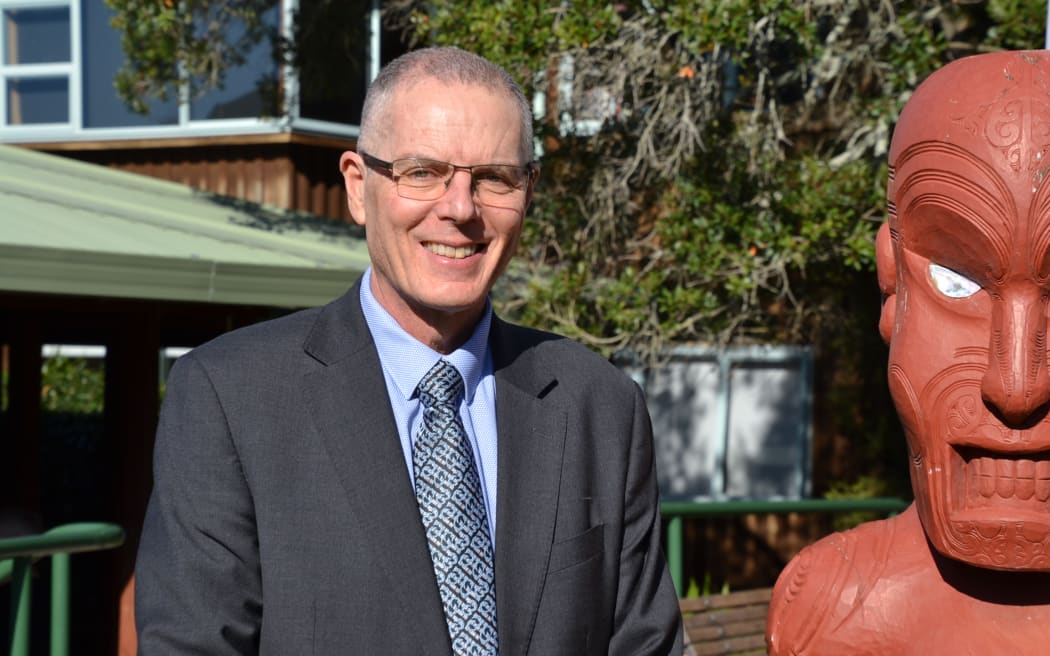
Dean of Faculty of Medical and Health Sciences Professor Warwick Bagg says the appointment of Josephine Davis reflects the growing emergence of Māori leaders across health disciplines.
Photo: Layla Bailey-McDowell / RNZ
Dean of the Faculty of Medical and Health Sciences, Professor Warwick Bagg, said Davis’ appointment represented an important milestone for the university and Māori leadership within health education.
“We’ve been fortunate in our faculty to have several Māori leaders emerge, and here’s another one emerging,” he told RNZ.
“She’ll be the first in the School of Nursing, the first among many.”
Bagg also used the occasion to reflect on what he described as growing challenges around Te Tiriti and Māori health protections.
“Our business is health and health equity,” he said. “When we continue to see a real gap for Māori and non-Māori, then we need to have the legislation that protects those rights-led health obligations that we have.”
Speaking during the pōwhiri, Bagg referenced recent legislative changes impacting Te Tiriti provisions across multiple sectors, including the proposed repeal of section 7 of the Pae Ora legislation in the Healthy Futures (Pae Ora) Amendment Bill.
“The work is never done,” he said. “And my challenge to Josephine and to all of us as we sit here on Monday is the wero has been laid down and we have to pick it up again.
“We will not be quiet.”

Josephine Davis took over the position from Professor Julia Slark (pictured left).
Photo: Layla Bailey-McDowell / RNZ
Despite the challenges facing the sector, Davis said nursing remained an incredibly rewarding career and hoped rangatahi Māori feel inspired to enter the profession.
“Never has my nursing career been easy, but it has always been rewarding,” she said.
“You can’t underestimate the value of holding someone’s hand in their darkest days, being there to witness the birth of children, being there to awhi someone when their loved one passes away. That’s all nurses.”
Sign up for Ngā Pitopito Kōrero, a daily newsletter curated by our editors and delivered straight to your inbox every weekday.