
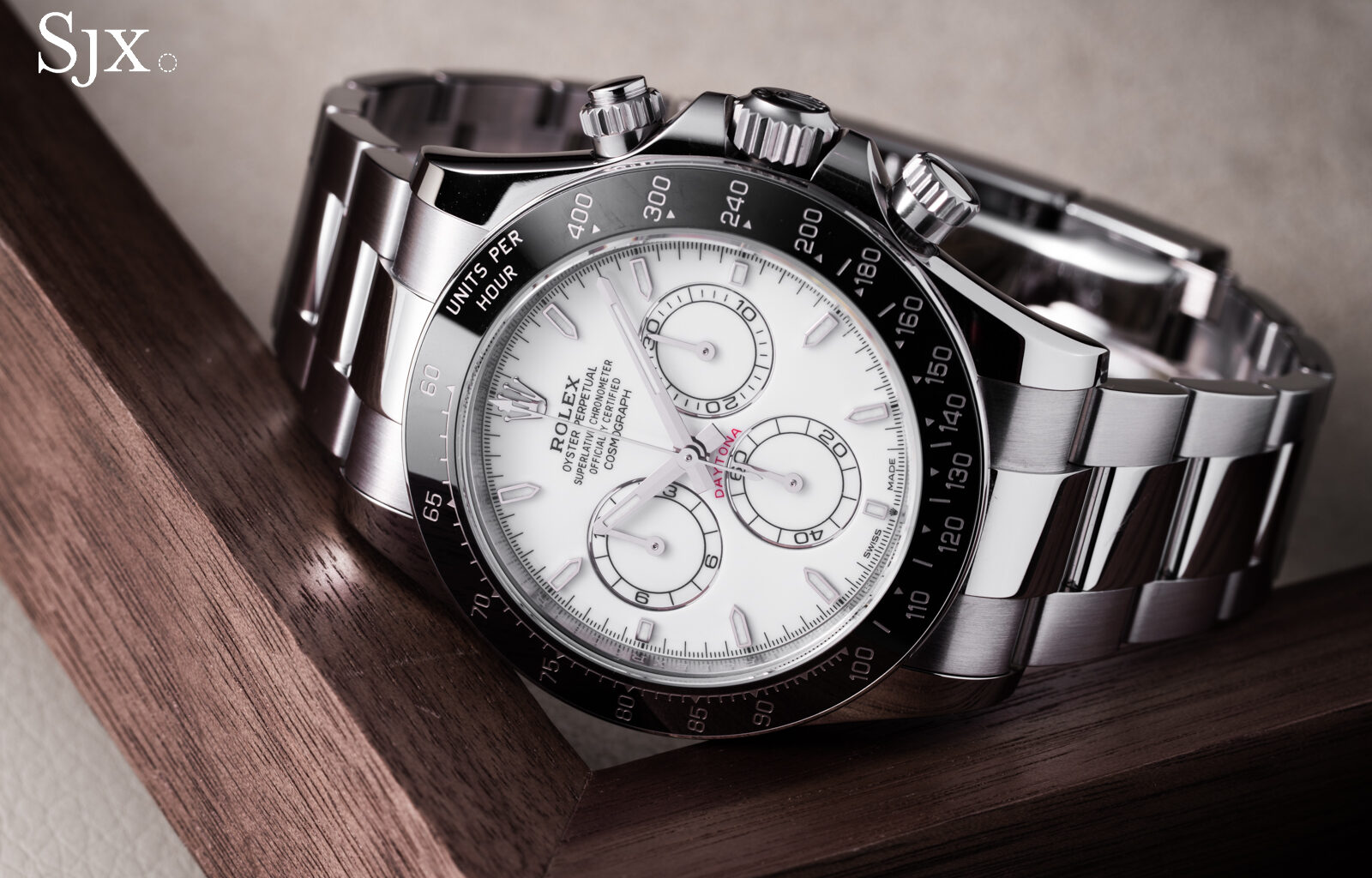
Rolex surprised in a big way with the Cosmograph Daytona Rolesium Enamel Dial ref. 126502. Despite being an “off-catalogue” model, the new Daytona was launched publicly, perhaps to emphasise its unusual nature. To start with, it features a grand feu enamel dial – yes, fired vitreous enamel – inside a bi-metal case of mostly steel, with a touch of platinum, plus a new ceramic (or cermet) bezel. It also has a display back and a steep price tag rivalling that of an all-gold Daytona.
While last year’s Land-Dweller and its cal. 7135 was chock-full of patents that Rolex explicitly explained, the Daytona ref. 126502 is more typical Rolex in possessing incremental technical innovation that is left unspecified; it probably incorporates multiple patents that Rolex will not elaborate on. The traditional nature of the dial, the materials and production techniques, and even the display back, hint at future developments at the leading champion of industrial quality perfection.
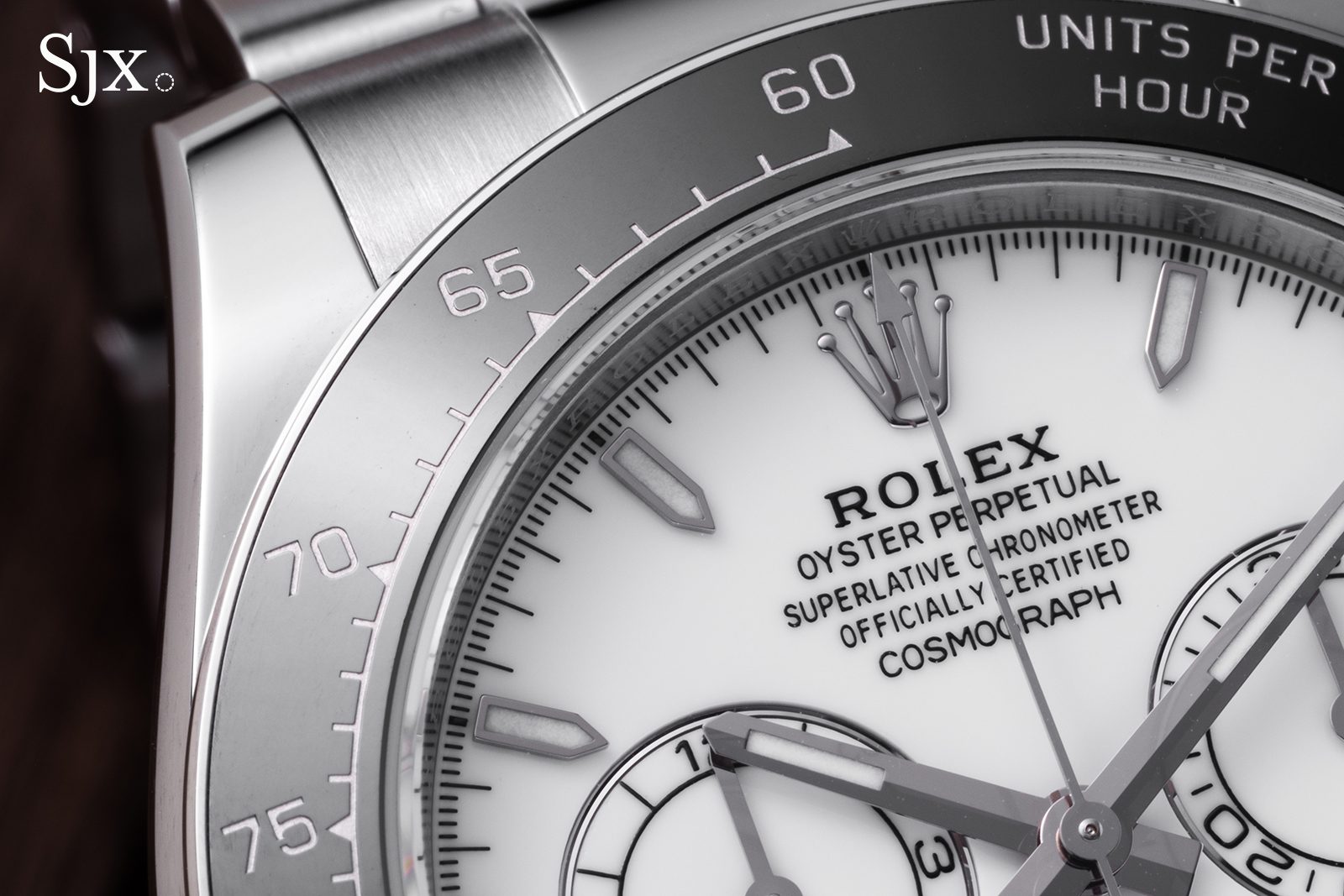
The dial is a four-part affair in white grand feu enamel, while the bezel insert in cermet
Initial thoughts
Let’s start with the obvious: do I like the new Daytona? Yes.
Do I think the dial is actually and technically enamel? Yes.
Do I think it’s too expensive? No. While it seems pricey on its face, Rolex pricing is practically always reasonable. I believe the seemingly high price here is justified by something in the watch that Rolex hasn’t explicitly divulged.
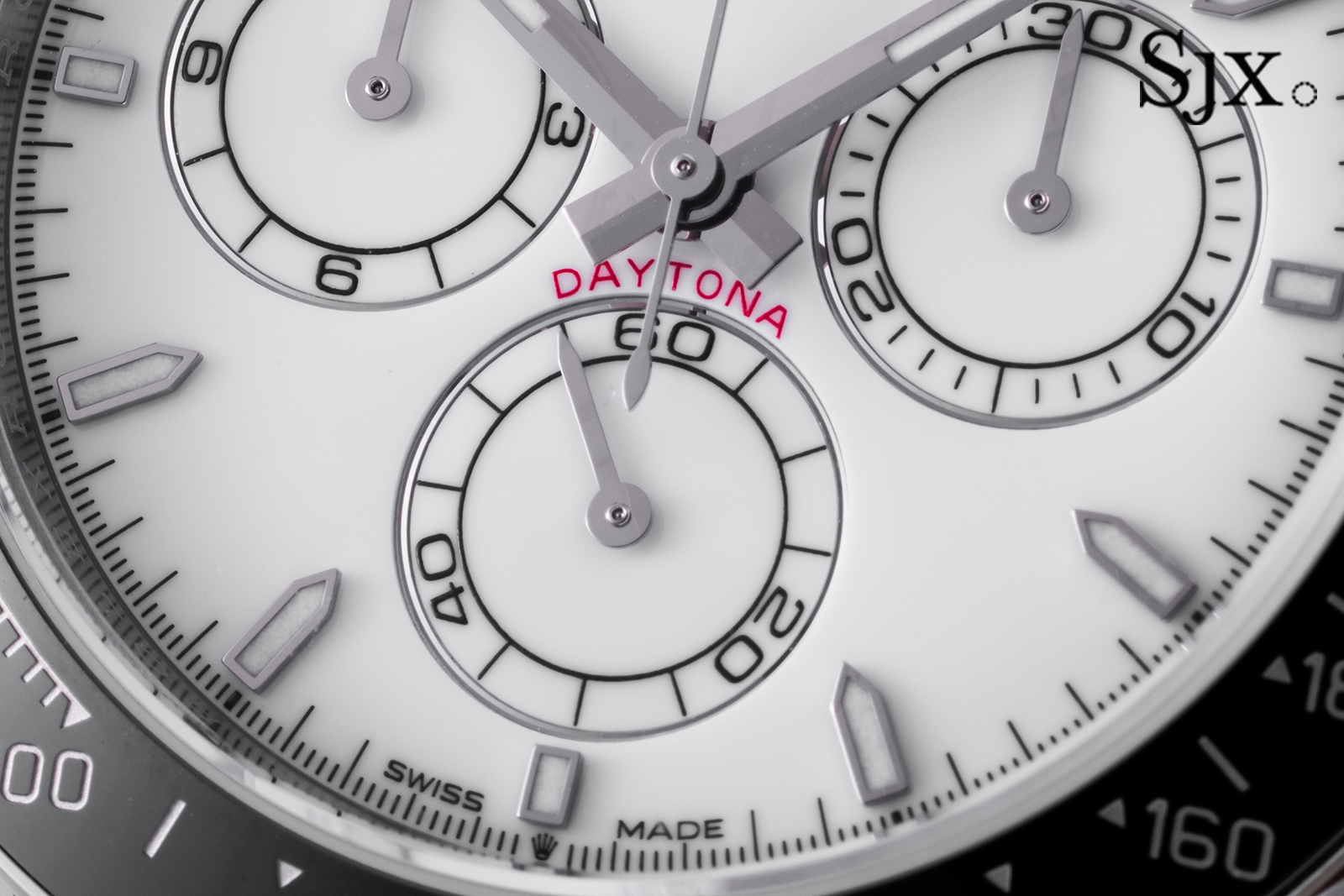
Price aside, it takes a bit of examination to discern why this is special. At a distance the new Daytona looks decidedly ordinary; it might even pass for the base model in stainless steel. But up close it is different but subtly so: the bezel is not as dark, grey more than black, while the dial has the glossy and convex edges characteristic of enamel.
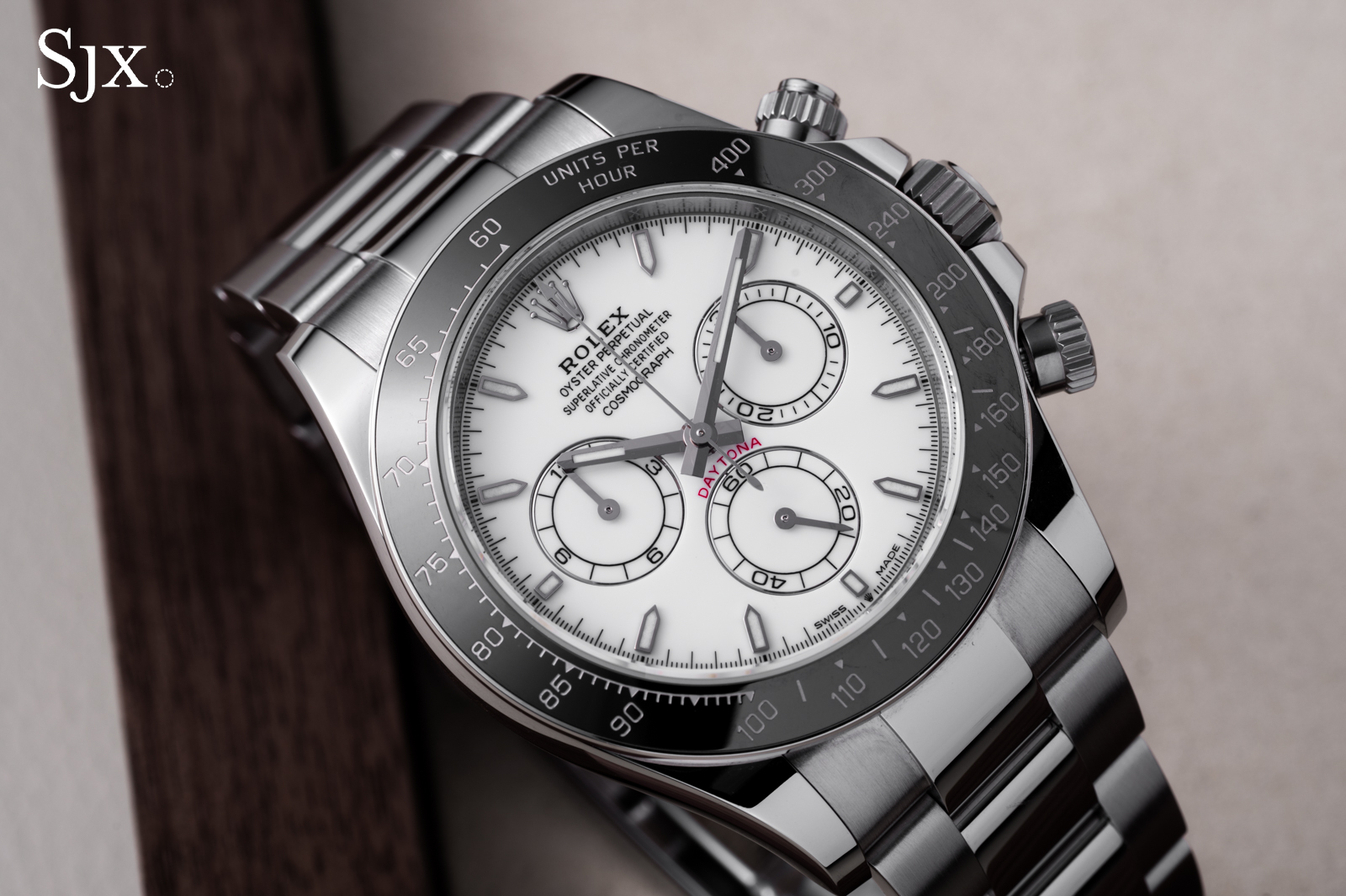
The platinum bezel ring and case back are modest, so the precious metal isn’t likely there to add to the tactile feel or price. I think it’s more likely a subtle nod to the Oyster, the pioneering watch case that employed a screw-down bezel, back, and crown for water resistance.
There are also discreet (potential) historical references contained in the watch. The enamel dial is a reminder of the “porcelain” dial Daytona from the early 1990s (that was actually lacquer), while the platinum bezel rim and case back are a reminder of the Oyster’s trademark construction.
With all of that subtlety, this would be a watch for those in the know in any other situation, but as a new Daytona it’s probably one of the most scrutinised watches on the internet. But despite all the eyeballs, it is impossible to know what the watch really means. Will we see more artisanal crafts emerge in Rolex watches? Will Rolex roll out the high-tech new ceramic across the catalogue? What is in this cal. 4131 that justifies a display back?
More than meets the eye
The new Daytona is instantly familiar; the case has the same dimensions so it feels the same on the wrist. In the hand it’s indistinguishable in terms of weight since the platinum parts don’t add significant weight.
But it is different up close, especially in the dial and bezel. The colour, texture, and sheen of these components are noticeably different from prior models. The differences, however, are subtle and probably not the point. It’s more like this is a platform for new materials and manufacturing techniques than a revolutionary new look.
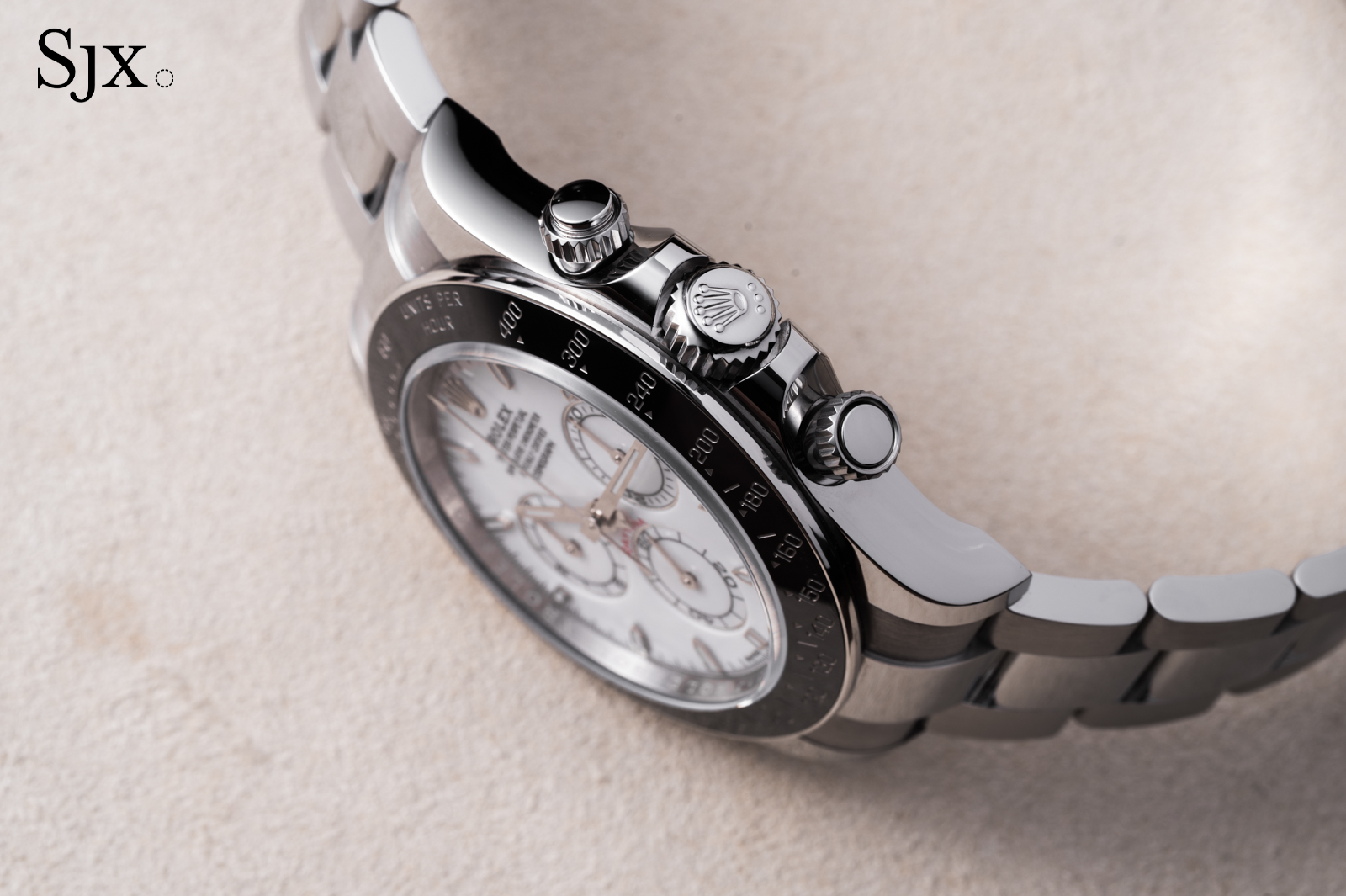
Like most current Daytona models, the bezel is made up of an insert affixed to a metal ring. But unlike the common set up of a ceramic insert on steel, this has a tungsten-zirconia composite bezel insert on a platinum bezel ring.
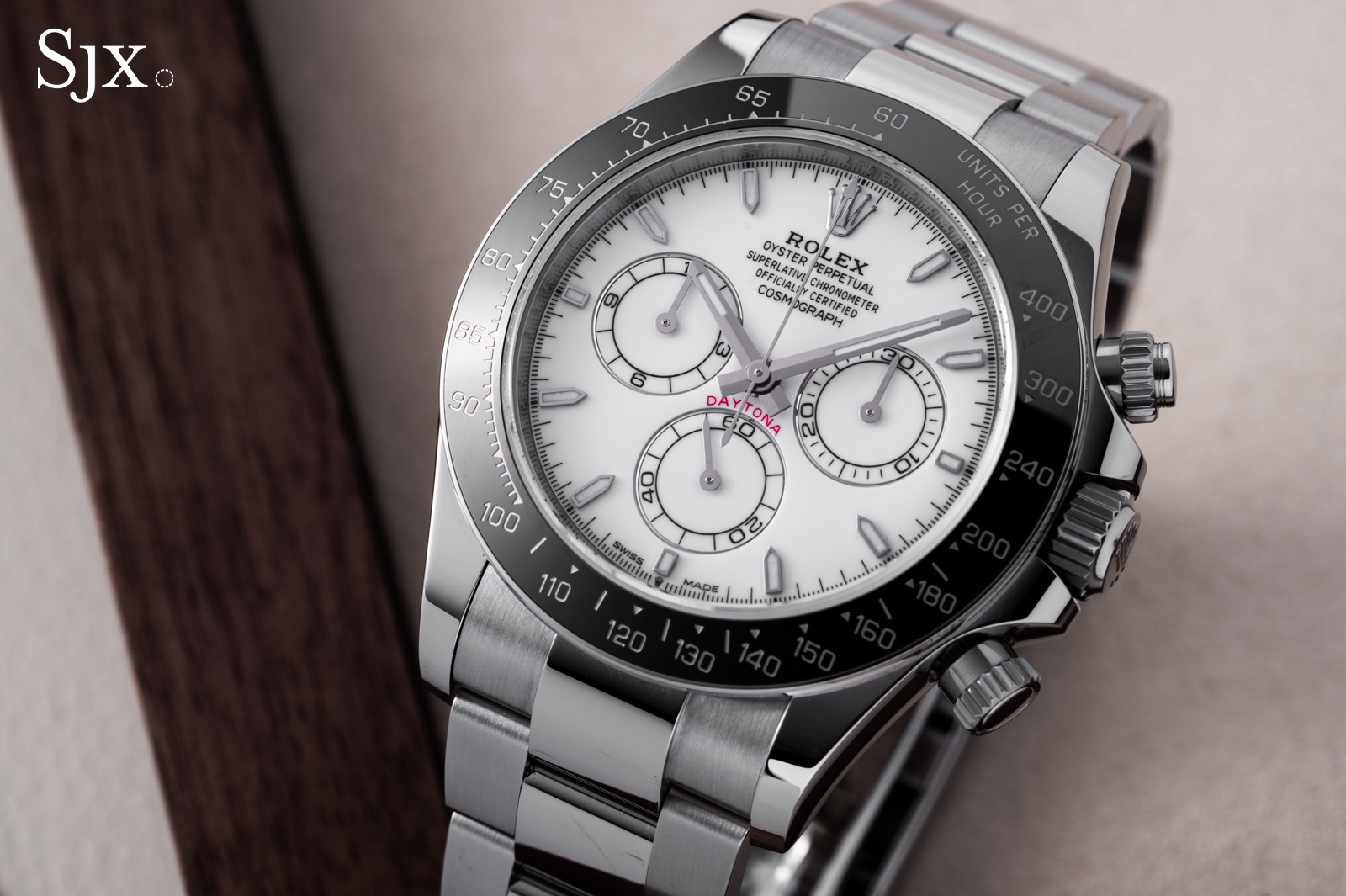
Though Rolex describes the bezel as Cerachrom, the trade name applied to all its ceramic components, this insert is different. It is instead zirconia strengthened with tungsten carbide – ceramic enhanced with metal, making it a cermet, a class of materials that are ceramic-metal composites that combine the properties of both constituents. Unsurprisingly, the bezel insert resembles metal, it looks like black-coated steel in fact, but has the scratch resistance of ceramic.
Though cermet has been used in watchmaking before, the cermet bezel is not special merely because of the material, but how it comes about: a proprietary method of affixing the insert onto the ring and then finishing the insert. This presumably results in a more robust bezel that is both resilient to scratches and solidly anchored to the ring.
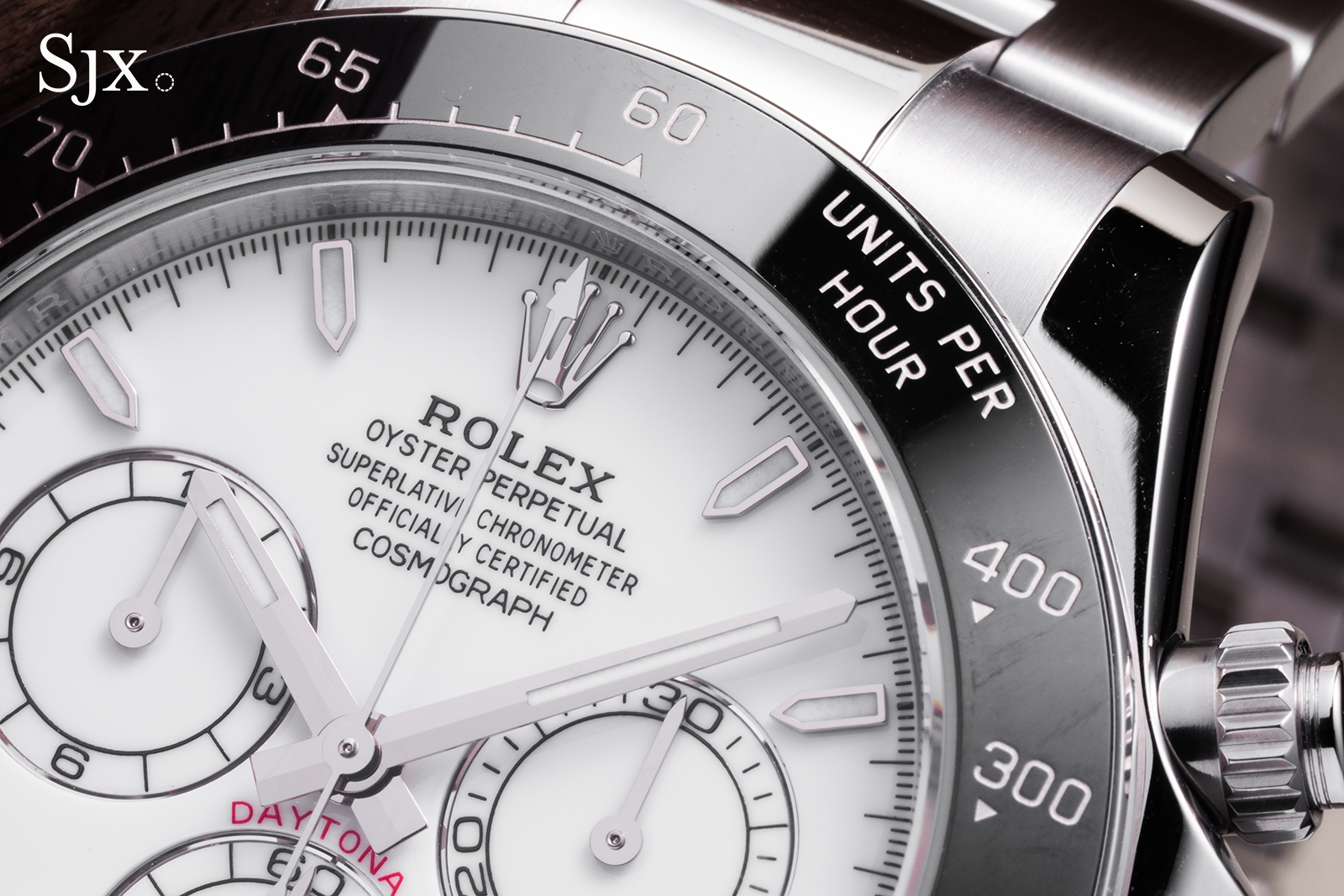
Reading the Rolex patent for the grand feu enamel dial makes it clear the goal was to simplify and perfect the production of vitreous enamel. While the imperfections of hand-made enamel are a key aspect of artisanal haute horlogerie, it is clearly not the Rolex way.
Even though there is clearly tremendous materials science research and industrialised production behind the enamel dial, the enamel itself is traditional. It is ground-up glass mixed in a liquid, which is then painted onto the ceramic surface. The disc is then fired at about 840°C, melting the powdered glass onto the ceramic, bonding them together permanently.
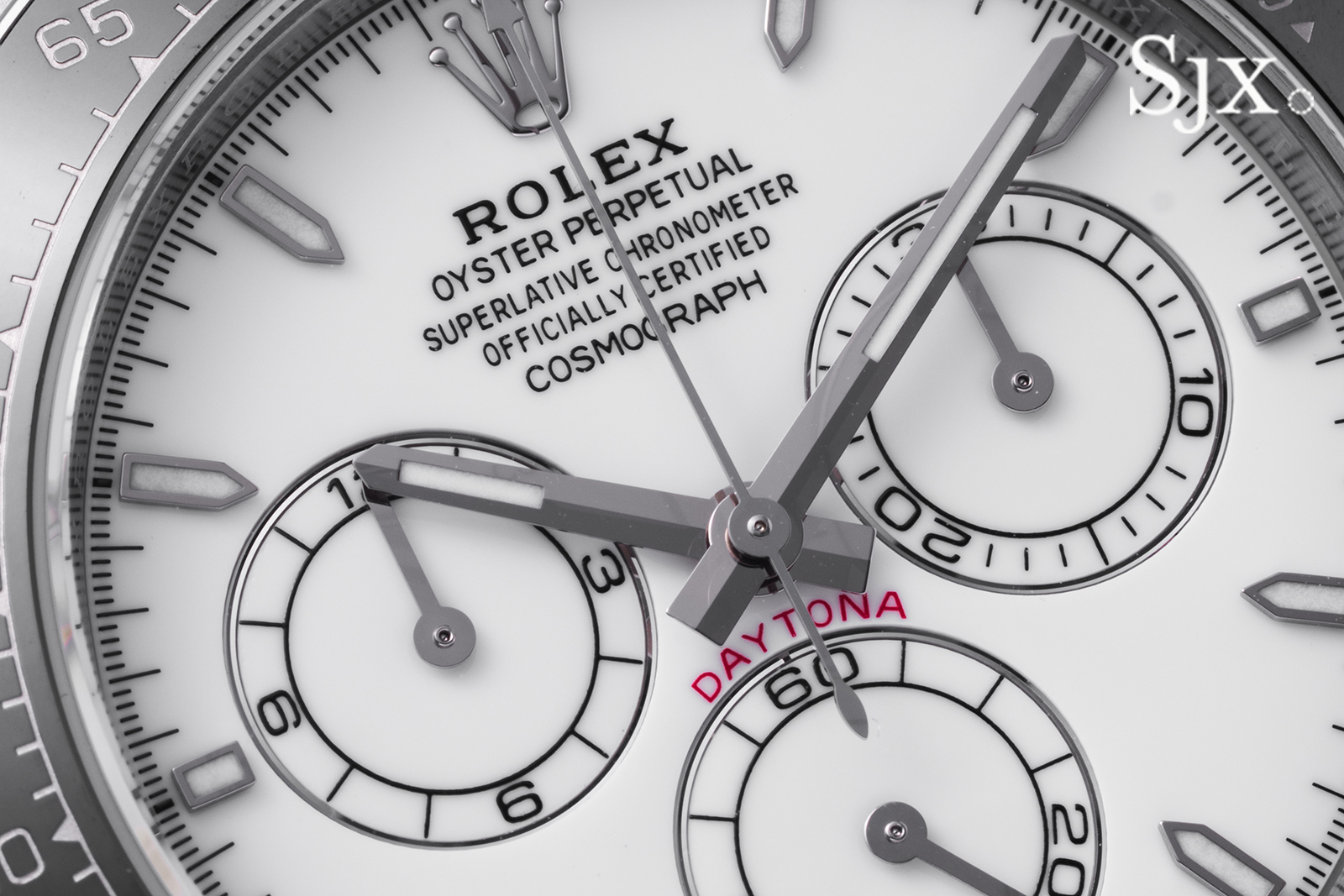
The dial in the Daytona is enamel on a ceramic disc that is in turn mounted on a brass dial plate. The patented technique for enamel dials encompasses multiple aspects of the production, including the shape of the dial blank and using a laser to cut the holes in the dial. The enamel layer is 0.12-0.13 mm – almost a hair’s breadth, literally – but boasts all of the traditional qualities associated with enamel like colour-fastness. Rolex also implies this type of enamel dial, despite the thinness, offers superior robustness.
The thinness of the enamel was one of the key challenges in developing the dial, according to Rolex. The enamel is thin but sufficiently opaque that the ceramic below is completely hidden.
Some might criticise the use of ceramic as detracting from the enamel dial, even transforming it into something non-enamel. I think that’s a moot point because ceramic substrate for enamel is actually a well-established method for grand feu enamel.
The Swatch Group was one of the pioneers of this process on a large scale – employed by brands including Breguet, Blancpain, and Omega – but the Rolex approach boasts several advantages, most notably thinness, according to the related patents. Interestingly, the patent for this enamelling technique includes enamelling directly onto a solid gold plate, which is more traditional.
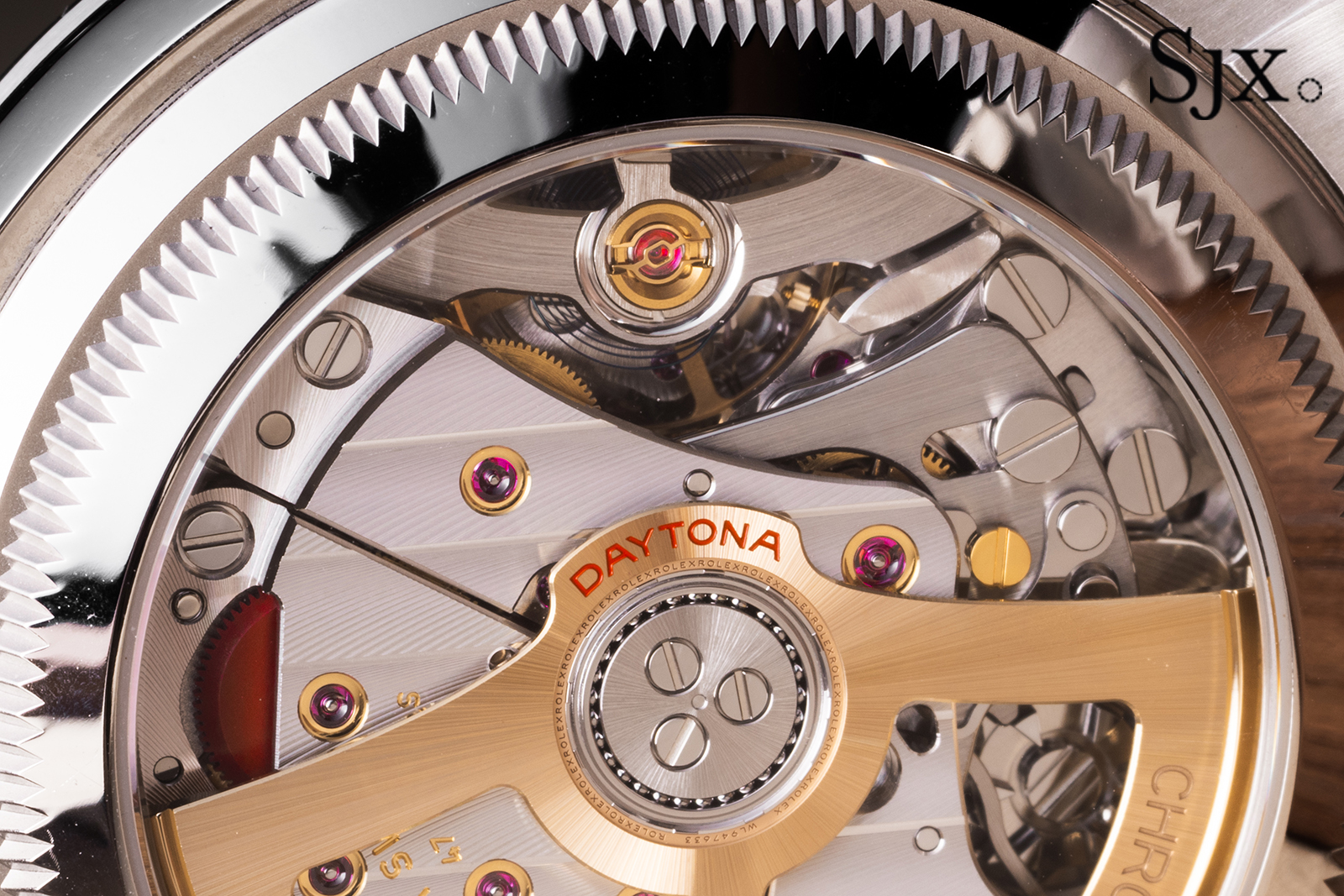
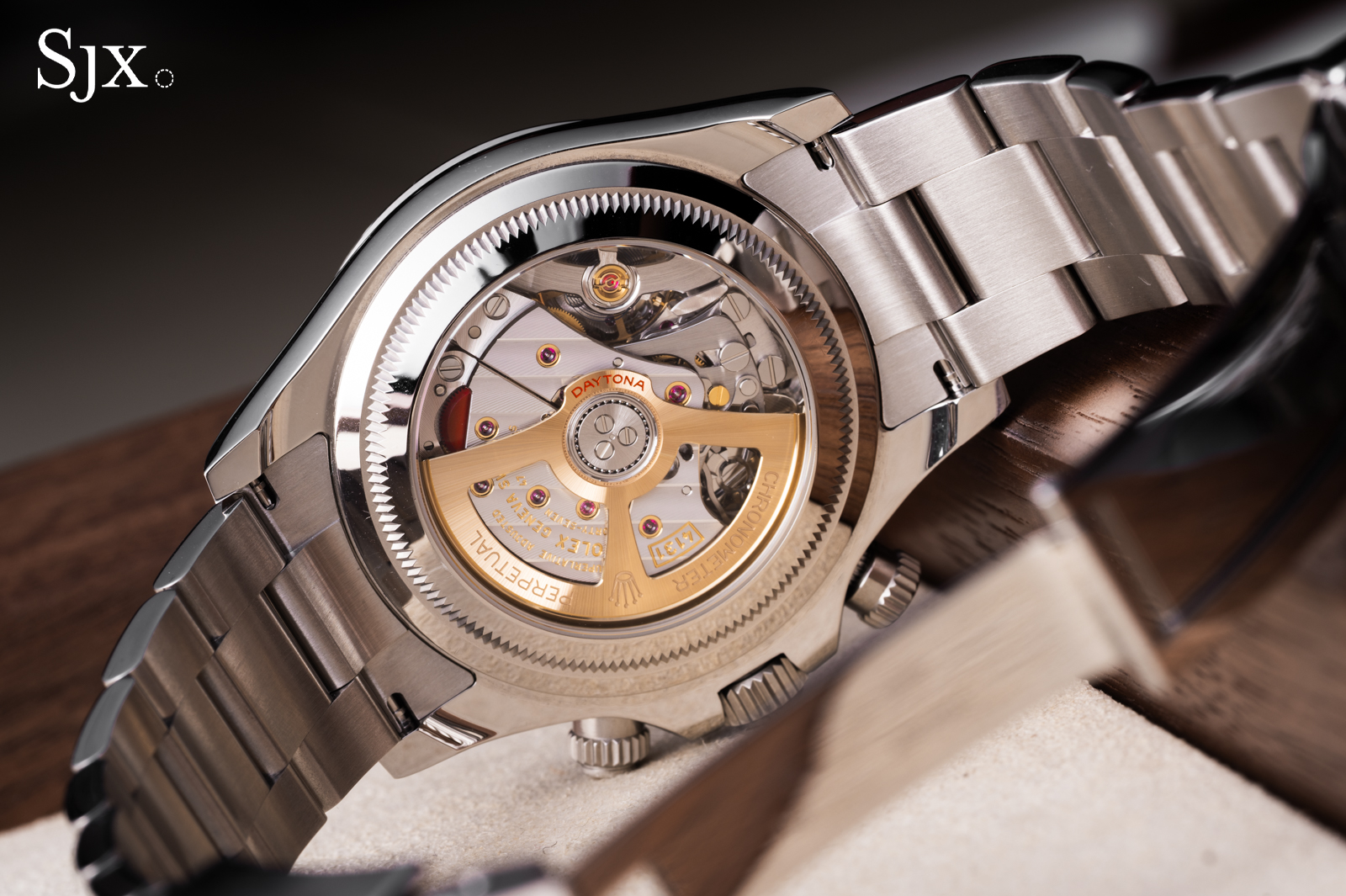
Another unusual detail is the display back. The only other Daytona with a display back is the all-platinum ref. 126506, likely explained by the fact that it’s the most expensive Daytona without gemstones in the catalogue.
As is usual, Rolex is mum about the rationale behind the open back on the Daytona enamel, but there is presumably a reason for it somewhere inside the cal. 4131, though on its face the movement looks (almost) identical to that in its siblings in the Daytona line-up.
Key facts and price
Rolex Cosmograph Daytona Rolesium Enamel Dial
Ref. 126502
Diameter: 40 mm
Height: 12.2 mm
Material: 904L Oystersteel with platinum case back and bezel ring
Crystal: Sapphire
Water resistance: 100 m
Movement: Cal. 4131
Functions: Hours, minutes, seconds, and chronograph
Winding: Automatic
Frequency: 28,800 beats per hour (4 Hz)
Power reserve: 72 hours
Strap: Oyster bracelet
Limited edition: Off-catalogue
Availability: From Rolex boutiques and retailers starting May 2026
Price: US$57,800, or CHF51,500 excluding taxes
For more, visit Rolex.com.