
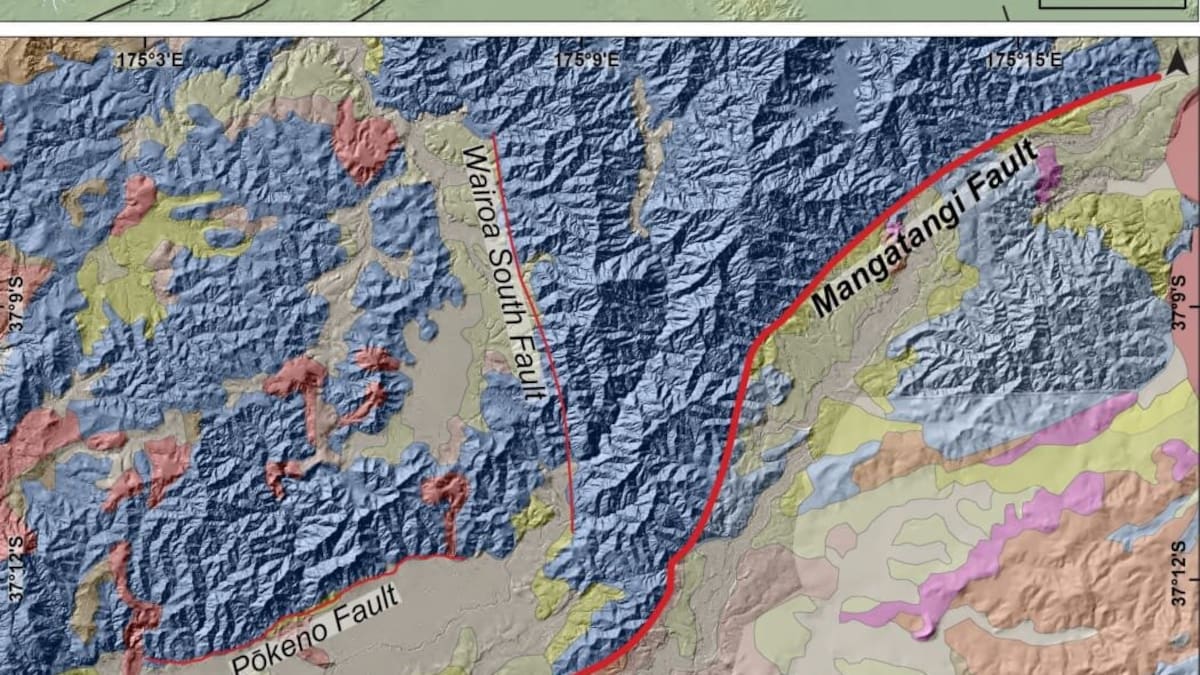
The Mangatangi faultline is considered active as it has ruptured within the past 10,000 years. Any fault that has moved within 125,000 is considered active.
Dr Muirhead said: “Auckland’s level of hazard is obviously nothing like Wellington’s or much of the South Island, but it may be significantly higher than the public and policymakers believe – we need more factual information to know”.
The researchers say continued expansion south of the city is putting more people and infrastructure at risk – given the close proximity to the faultline.
Lead author Hannah Martin said although the fault may not rupture for tens of thousands of years, it remains an active fault “with the potential to generate a large earthquake in a region that doesn’t expect one”.
Muirhead said although people don’t usually feel them, earthquakes occur in Auckland every year.
He and two other authors from the study are continuing to research Auckland faultlines to determine how active they are.
They are using advanced mapping, ground-penetrating radar and trenching, according to the media release.
One of the researchers, Dr Jennifer Eccles, said: “It’s always better to plan based on evidence rather than on our best hopes or worst fears”.
– RNZ