

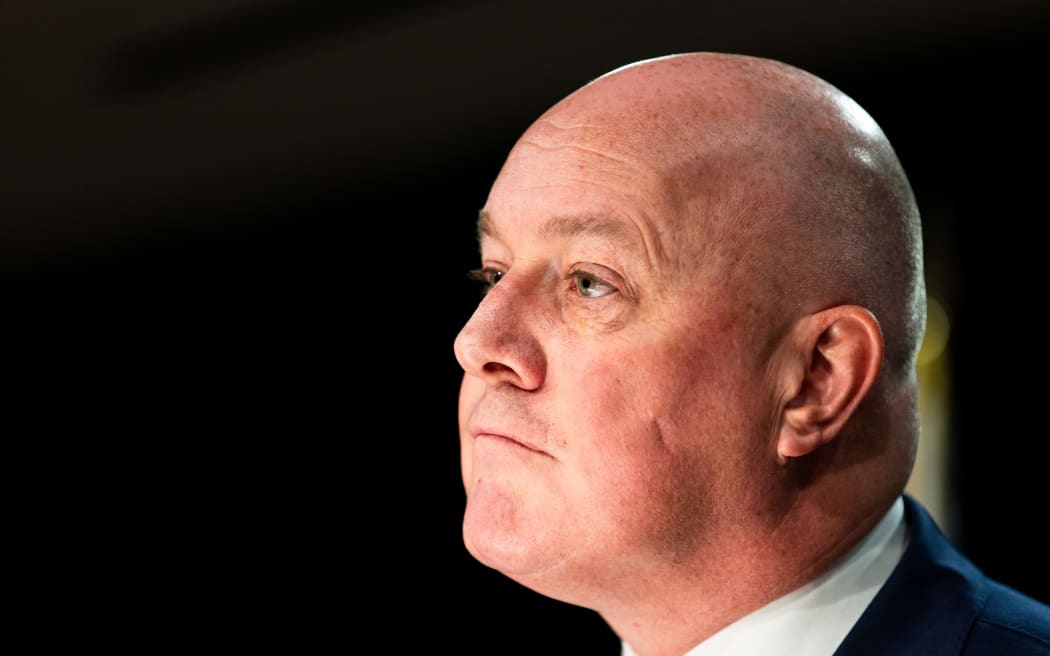
On Wednesday, the Prime Minister said he wouldn’t “go into names”.
Photo: RNZ / Samuel Rillstone
This story has been updated after the Prime Minister’s office corrected the dates Burgess held the role of chief policy adviser.
The staffer who received a document from Fonterra and Z Energy – that made suggestions for a potential law change – was a senior adviser in the Prime Minister’s Office.
The Prime Minister’s chief policy adviser Matt Burgess received the briefing note, which had been delivered in hard copy in mid-2024.
Burgess was in the role in the Prime Minister’s office (PMO) between January 2024 to October 2025, and had previously worked at the New Zealand Initiative think tank as senior economist.
It’s understood he remained working in the Beehive for some months after that, but was no longer within the Prime Minister’s office.
When approached for comment, Burgess told RNZ he had nothing to add.
RNZ reported on Sunday that a previously undisclosed briefing document had been provided to the prime minister’s office by Fonterra and Z Energy regarding climate activist Mike Smith’s case against those companies and other major emitters.
Christopher Luxon said at the time there was no record of the document on file.
He has since been questioned about the issue by Opposition parties, telling the House on Tuesday the staffer was “someone who left a while ago”.
On Wednesday, Luxon said again he wouldn’t “go into names”, as it wasn’t appropriate.
“But the staff member hasn’t worked there for a while.”
Asked repeatedly if the staffer’s departure was related to this incident, Luxon said he wouldn’t go into “any staffing issues”.
“As I said yesterday, all I can confirm is the staff member left a while ago.”
Labour leader Chris Hipkins queried the timing of Burgess’ departure, asking whether Luxon would need to correct his statements in the house.
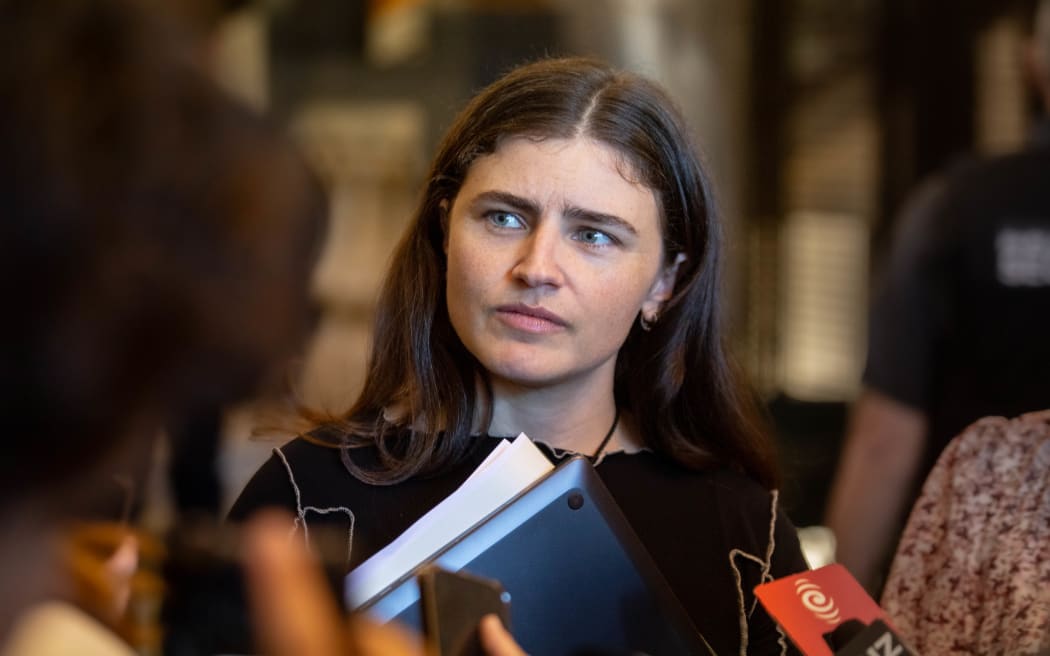
Chlöe Swarbrick questioned the Prime Minister in Parliament on Wednesday.
Photo: RNZ / Mark Papalii
The confusion may have arisen due to the staffer’s LinkedIn page stating he was still currently in the chief policy adviser role in PMO.
Discussion about the staffer continued into Parliament on Wednesday, where Green Party co-leader Chlöe Swarbrick asked the Prime Minister if he stood by his statement on Tuesday that the official in his office who received the briefing notes “left a while ago”, and if so, “when exactly did that official leave”.
Luxon replied “yes”, without answering the second part of the question.
The questions continued, and Luxon responded again saying he’d addressed the issue in recent days, and “I don’t think it’s appropriate that I identify specific members of staff”.
“All I said is the staff member left a while ago.”
Deputy Prime Minister David Seymour raised a point of order, asking whether it was “helpful for the reputation of the House for members to use their privilege to identify a specific person who is not in a position to defend themselves and ask what exactly is the public interest in doing that”.
The Speaker reinforced this, before Labour leader Chris Hipkins raised a point of order saying Swarbrick hadn’t named the individual, she’d described a job “and there is a difference here”.
“Somebody occupying a very senior position within the Prime Minister’s office, having their position named, is totally consistent with the practices of this house.
“Naming the person concerned by name would be something that’s done very, very rarely, but naming somebody’s position, particularly when it’s the chief policy adviser to the prime minister is absolutely consistent with the practices that have been followed in this house.”
Green MP Steve Abel added the point that the office of the official has been named, “it is not calling into question the conduct of the official, but the extent to which the prime minister was not aware of the conduct of this of their chief policy advisor”.
Leader of the House Louise Upston chimed in, saying the prime minister had answered the question and been clear about the intent in terms of individuals.
“Anyone in this house would know if you use particular titles, it is very easy then to identify people, so it has the same result as the intent of not naming an individual by that connection. It’s pretty obvious.”
Swarbrick then said she hadn’t named the individual, but pointed out the individual had been named in the media on Wednesday afternoon.
The Speaker acknowledged “while a name can be given, people should bear in mind that public officials do not have the opportunity to defend themselves in this house”.
Finally, Swarbrick asked if it was credible for the prime minister to “not know” that one of his most senior staff members was meeting with the “largest company in the country, who was actively lobbying for a law change in their favor, which they ultimately got”.
Luxon responded by saying he rejected the characterisation of the question. He also wouldn’t answer when exactly he learnt about the secret meetings and briefing notes.
Hipkins continued the question line, asking why Luxon hadn’t sought more information.
Luxon also continued to state there had been no record or documentation from that interaction in 2024.
“There is no record. There is no documents from that interaction in 2024 – yes, there should be.
“That is why my office has asked ministerial services to go and make sure that staff understand their obligations going forward.”
He stood by his comments that the staffer left “a while ago”.
Luxon reiterated it was a Cabinet decision.
“Many ministers in the newly formed government had very strong views actually that legislative action was needed because we are not going to tolerate having a parallel system where climate change frameworks are administered by courts.”
Sign up for Ngā Pitopito Kōrero, a daily newsletter curated by our editors and delivered straight to your inbox every weekday.