

Listen to this article
Estimated 4 minutes
The audio version of this article is generated by AI-based technology. Mispronunciations can occur. We are working with our partners to continually review and improve the results.
Quebec has hit its target to register half a million new patients with access to primary care, reaching the milestone more than a month ahead of the deadline laid out in an agreement with family doctors.
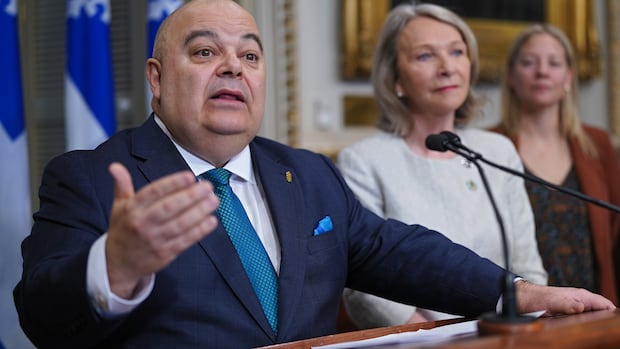
Health Minister Sonia Bélanger said Wednesday more than 550,000 patients now have access to a family doctor or a family medicine group, known as a GMF.
“Our initial objective, which was to reach more than 500,000 people by June 30, has been achieved as we speak,” Bélanger said at the National Assembly in Quebec City.
Dr. Marc-André Amyot, president of the Fédération des médecins omnipraticiens du Québec (FMOQ), the group representing family doctors, was also on hand for the announcement.
He noted the objective was reached despite Quebec facing a shortage of at least 2,000 family doctors.
“We are in a new era, and it is in this spirit of collaboration that we can improve the health network,” Amyot said.
Despite the optimistic tone, the announcement does not mean every newly registered patient has been matched with their own dedicated doctor.
In fact, Bélanger couldn’t confirm how many have direct access to a family doctor.
According to the minister, many registrations are “collective,” meaning patients without a specific doctor are instead affiliated with a team of physicians and health-care professionals at a clinic.
Moving forward, the province plans to expand access using other health-care professionals.
“The challenge now will truly be to continue progressing this target with other health professionals, notably with specialized nurse practitioners,” Bélanger said, reiterating her desire to see specialized nurse practitioner clinics open.
Opposition parties said questions remain. Liberal health critic André Fortin said it will be crucial to see if people registered with a clinic actually have quick access to care.
“Will those patients have more access? Will they be able to see a doctor? Where will they be able to call when their kid is not doing well that morning?” Fortin asked.
The deal reached last December included a bonus for the doctors for meeting the target, and Québec Solidaire health critic Guillaume Cliche-Rivard said they shouldn’t get that money until there is proof that patients are being cared for.
WATCH | How Quebec is going digital when it comes to health care: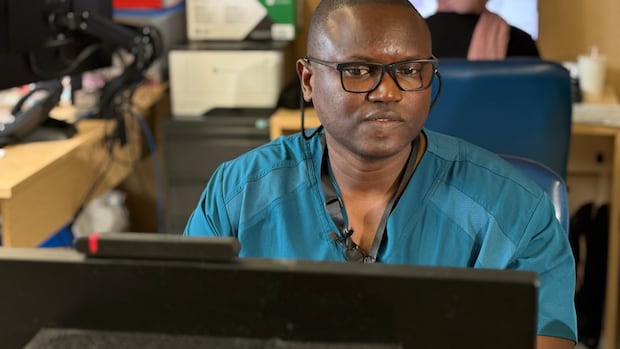
How Quebec’s new digital health record system is changing care in the province
Quebec has started digitizing health records through a pilot project at two regional health authorities. Here’s a look at how the new system works at Jean-Talon Hospital in Montreal.Bill 2 fallout
The milestone comes after a protracted and bitter contract dispute between the Legault government and the province’s 10,000 family doctors, which culminated in a last-minute deal in December.
The original targets proposed by former health minister Christian Dubé under Bill 2 were far more stringent, aiming to force family doctors to take on 1.2 million “orphan” patients by Jan. 1, 2027.
The government also attempted to link 15 per cent of doctors’ salaries to performance metrics, such as emergency room wait times.
This prompted fierce resistance from both family doctors and specialists, who suspended clinical teaching for medical students in protest. The bill also initially proposed a colour-coded triage system for patients based on urgency.
The government ultimately backed down in mid-December, stripping the performance mandates from the legislation.
The gridlock took a toll on the workforce. During legislative committee hearings into ministry spending on Tuesday, Bélanger revealed that 518 family physicians quit Quebec’s public system last year during the saga surrounding Bill 2.
However, the minister noted that the network is expected to welcome a cohort of more than 400 new doctors on July 1.