
It was now time for Bathurst to “give up and go home”, Coal Action Network Aotearoa spokesperson Cindy Baxter said.
“We don’t need any new coal mines in this country.”
Another local climate group said now was the time for the company to start talking to employees and the Government about a “just transition” for coal workers.
The Rotowaro Mine continuation was among projects listed in the Fast-track Approvals Act, that are eligible to apply for streamlined consent.
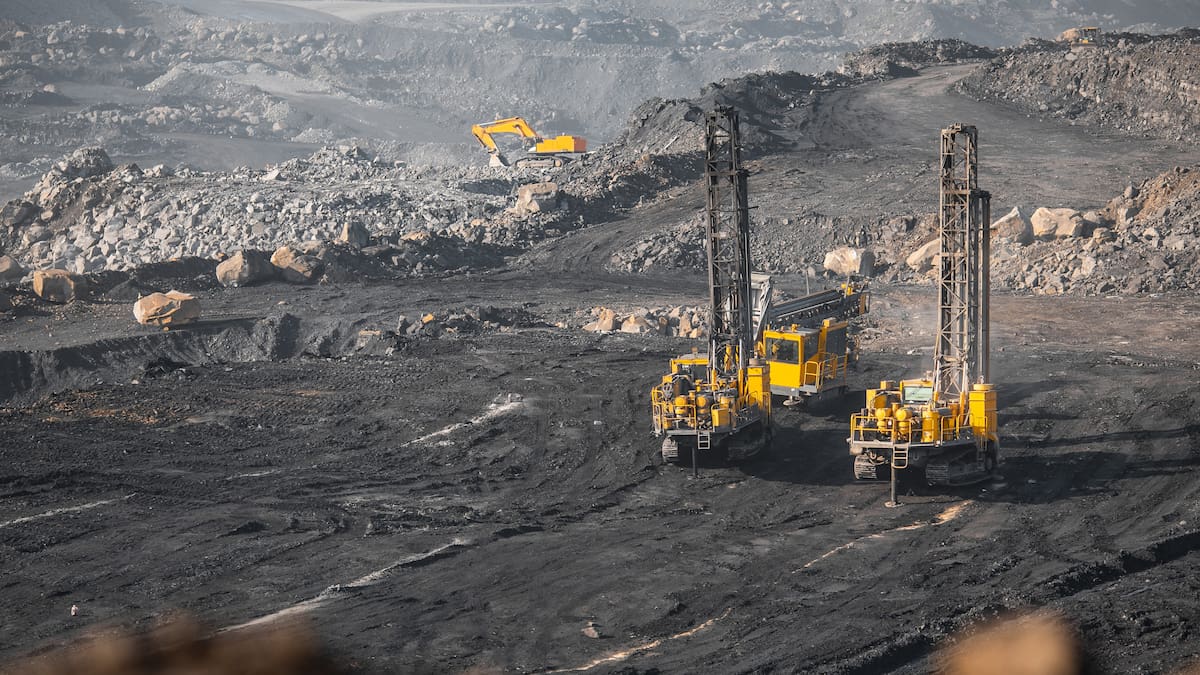
It would expand the opencast mine, which is just west of Huntly, north towards the settlement of Renown.
Rotowaro is the second-largest opencast coal mine in New Zealand and is operated by BT Mining, jointly owned by Bathurst and Talley’s Energy.
As of late 2024, it employed about 190 people.
The uncertain status of the expansion was revealed by a Bathurst representative at a Genesis community stakeholder meeting earlier this month in Huntly.
In a post on Facebook, which he later confirmed to RNZ, Waikato district councillor David Whyte said his understanding was that the fast-track application was not going ahead at all and that the current mine would start closing down from 2027 or 2028.
Bathurst chief executive Richard Tacon said that was incorrect, but it was accurate to say that work on the expansion had “paused”.
“The project has been advanced to the stage of being nearly ready to go into the [fast-track process] but we need a signed-up partner to move forward,” he told RNZ.
The biggest risk to the project was certainty of customers for the coal.
Currently, Glenbrook Steel Mill receives 98% of Rotowaro’s coal, with the balance going to Genesis.
“We have a number of years of supply to NZ Steel and Genesis still to go from the existing mine,” Tacon said.
“We are working with these two customers to see if we can match their anticipated need for coal. We have no certainty on that at present, so we are not prepared to spend any more funds on the development and hope for a customer to want the coal.”
The fast-track project had not been halted or lost, he said.
“We are simply evaluating the market situation before moving into the next phase.”
Mine could close from 2030
In the meantime, coal mining from the current seam would end in 2027/28 and that part of the mine would be rehabilitated, Tacon said.
“The rehab, at this point, will be the active areas of mining and not the infrastructure used to process and transport the coal. This will be utilised for the extension.”
Rotowaro workers would continue mining and rehabilitation at the current site until approximately 2030, he said.
“If no further certainty is gained for the project, then the mine will complete rehab and close.”
Former Waikato district mayor Allan Sanson was also at the community meeting and said Tacon’s explanation reflected his understanding of what attendees were told.
“It’s only been stopped until they can come to an agreement.
“Once they sign contracts with NZ Steel they will carry on with that fast-track process.”
An NZ Steel spokesperson said the company “doesn’t comment on business decisions of other companies”.
However, the company has previously said the electric arc furnace, which melts and recycles scrap steel, would halve the mill’s coal use and save an expected 1 million tonnes of carbon emissions a year.
It was among projects to receive funding from the previous Government’s $400 million GIDI fund, which provided subsidies to businesses to convert their gas and coal use to cleaner energy sources.
The fund was scrapped in December 2023 by the National-led Government.
It was not replaced with an alternative policy until earlier this week, when the Government announced a scheme that will allow businesses to access low-interest loans to transition away from gas.
Mine workers need ‘just transition’
Cindy Baxter said the current pause on the Rotowaro expansion showed decarbonisation policies could work.
“The fact that Glenbrook Steel Mill is moving to an electric arc furnace … is having a direct impact on local coal mining, which is exactly what we want.”
It was time for Bathurst to give up on the expansion completely, she said.
“We need to stop any new expansion of coal mines, we need to shut down dirty coal, and it looks as though this could be working.”
Between now and the eventual closure of the mine, Bathurst, unions, and central and local government should all be working together to make sure the mine’s employees had a “just transition” to other meaningful work, Baxter said.
“It would be really good to get those discussions up and running as soon as possible because the future we’re looking at is one without fossil fuels.”
Local climate justice group Ngā Haumi also welcomed the news the mine expansion might not go ahead.
Spokesperson Hannah Huggan (Te Aitanga-a-Māhaki) said BT Mining “should do the right thing and rule out going through fast-track”.
“But stopping the mine is only one part of that story – we need governments to step up and deliver a just transition for workers.”
Current climate policies were “inconsistent and incoherent”, she said.
“We know we’re needing to move away from fossil fuels and at the moment that’s happening in an unplanned and disorderly fashion in a way that doesn’t give people certainty or workers any plan.”
Huggan pointed to the example of Spain, where unions and the Government struck a landmark deal in 2018 to close down the entire coal industry over the space of a few years, with a mix of early retirement and retraining in other industries for workers.
“It’s certainly not an easy thing to do,” she said.
“[But] there’s examples right across the world.”