

Listen to this article
Estimated 4 minutes
The audio version of this article is generated by AI-based technology. Mispronunciations can occur. We are working with our partners to continually review and improve the results.
Last summer, about 100 people visited Station 20 West every day looking for bottles of water to quench their thirst, an anti-poverty advocate says.
Colleen Christopherson-Cote, co-ordinator of the Saskatoon Poverty Reduction Partnership, said the organization handed out about 2,000 bottles a week.
About a month ago, Christopherson-Cote found out city council had cut $50,000 in funding for that water supply as part of a larger budget item eliminated during budget deliberations.
As a result, she anticipates major problems because 400 to 450 vulnerable people are visiting the core neighbourhood community centre this year and daytime temperatures are already above 30 C this week.
“The city council seems to not really understand the volume of people that has changed over the course of the last year, and a basic response with what was provided last year wouldn’t be sufficient,” Christopherson-Cote said in an interview Wednesday.
“And, in fact, this year they’ve actually cut that basic service that was provided last year.”
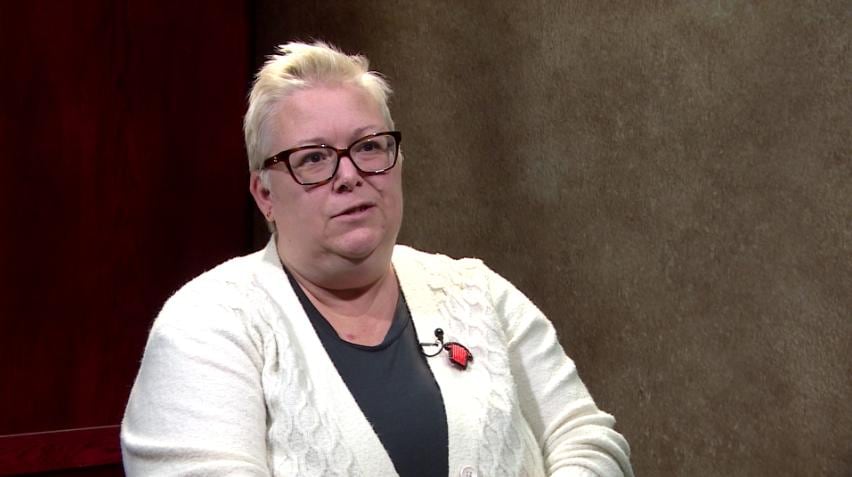 Saskatoon Poverty Reduction Partnership coordinator Colleen Christopherson-Cote anticipates issues after city council eliminated $50,000 in funding to distribute bottled water to vulnerable people. (Travis Reddaway/CBC)
Other agencies that provide water would have handed out similar numbers of bottles last year, she said.
In response to an inquiry from CBC, City of Saskatoon spokesman Braedan Hafichuk said there are other options for people to use, such as public water fountains, water filling stations and cooling locations.
Christopherson-Cote pointed out that all of those options existed last summer and Station 20 West still gave out hundreds of bottles of water.
Vulnerable people often don’t have a bottle to be refilled and may have trouble finding specific locations, she added.
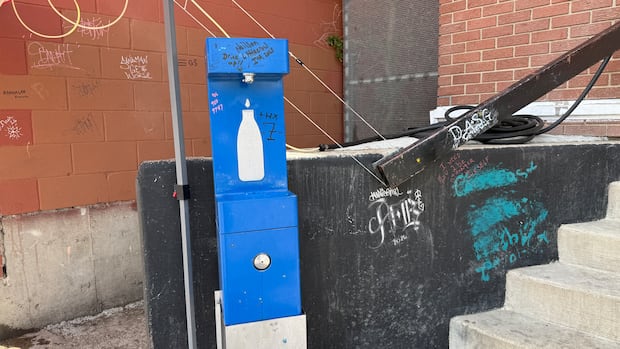
Two water bottle filling stations are located in the Pleasant Hill neighbourhood near Station 20 West, including at the Saskatoon Community Clinic and at Central Urban Metis Federation Inc. CUMFI also distributes bottled water.
At council’s governance and priorities committee meeting on May 13, the city’s director of planning and development, Lesley Anderson, said city hall has only been funding the bottle water distribution for a few years and the money was not included in any long-term program.
Christopherson-Cote said amenities like water fountains are located throughout the city and not necessarily in areas of greater need for basic services, like in core neighbourhoods west of downtown.
The closure of Prairie Harm Reduction and its supervised drug consumption site, which included a variety of other services for vulnerable people, has also exacerbated the situation, she said.
Coun. Senos Timon, who represents the Pleasant Hill and Riversdale neighbourhoods, said Christopherson-Cote is raising an important issue that bears more study.
Timon said he lives on the west side, drives down 20th Street every day and witnesses the increase in unhoused people.
“The challenges are great, obviously, there is no question about it,” Timon said.
Christopherson-Cote said the absence of bottled water could be far more expensive for the city. She said a drink of water can help de-escalate a situation where a person is agitated and help avoid a call to police for help.
“Seems a little bit expensive and, quite frankly, ridiculous to think that police need to be called when a simple de-escalation strategy by providing a basic service like water access could be used to alleviate that pressure,” Christopherson-Cote said.
On Tuesday, city hall activated a Level 2 response of its extreme heat emergency plan as a result of the forecast for unseasonably hot weather this week.