
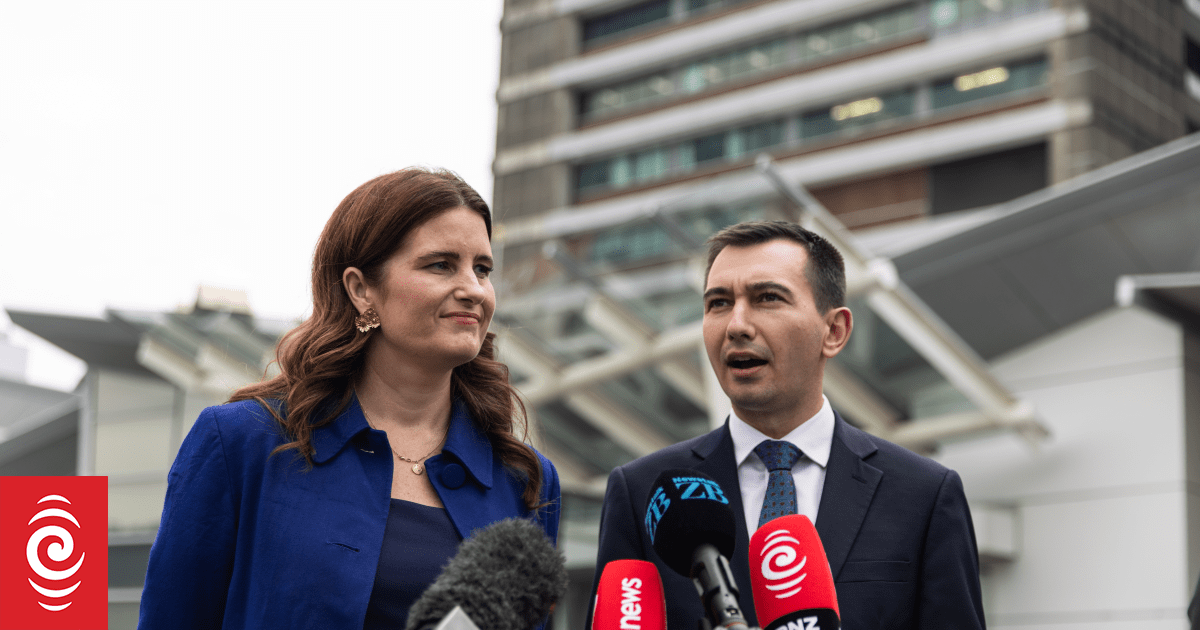
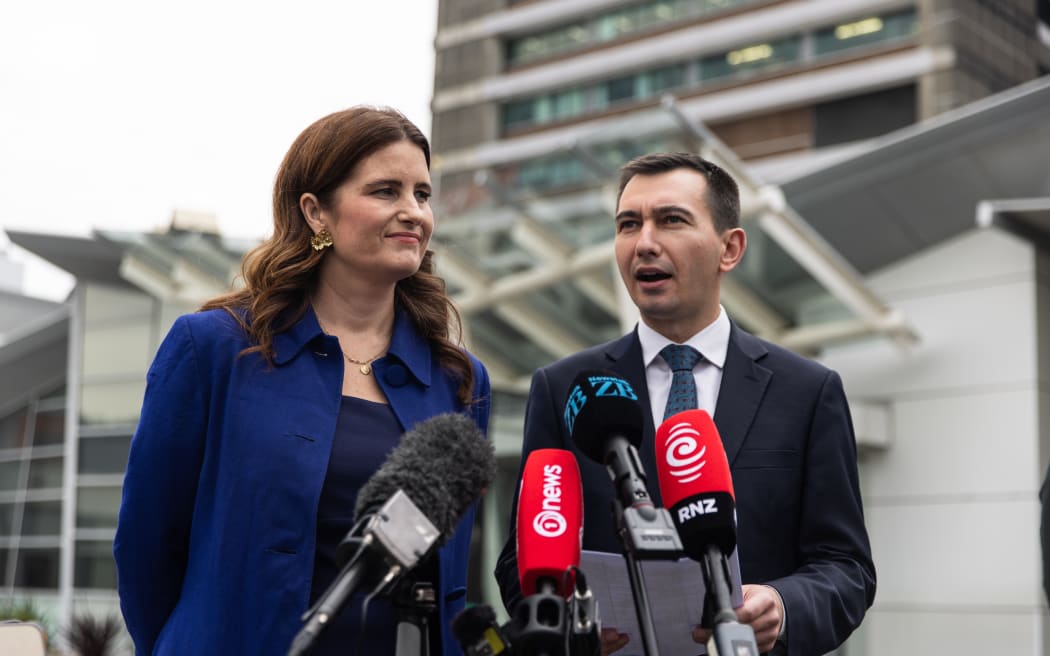
Health Minister Simeon Brown and Finance Minister Nicola Willis.
Photo: RNZ / Samuel Rillstone
Nurses and emergency doctors say there is no point investing in new hospital beds if there are not people to staff them.
The Budget has promised a huge boost in capital funding for regional hospital upgrades and new digital systems, but there is no funding specifically earmarked to train or hire new staff.
Total health spend in the coming year will surpass $34 billion – a 10 percent increase on last year – and includes $680 million in capital spending for regional hospital upgrades in Tauranga, Hawke’s Bay and Palmerston North.
APEX union advocate Omar Hamed said those regions were fast-growing areas of the country, and their infrastructure was ageing.
“There’s a huge backlog of rural and provincial hospitals that need capital investment, but it’s really good to see those hospitals being prioritised in this budget.”
Data had shown some of the most over-capacity hospitals were in the Auckland region, he said – and this Budget had committed to funding the purchase of a piece of land south of Auckland in Drury, on which a new hospital would be built.
Hamed said this was “one of the most positive things about this Budget”.
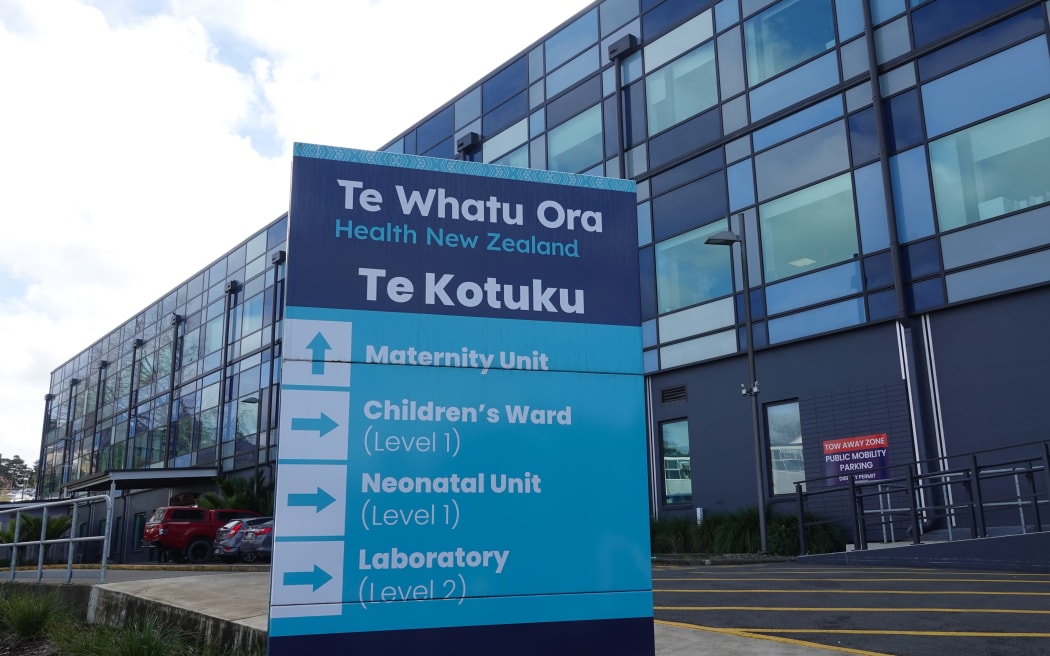
Te Kotuku maternity and children’s unit at Whangārei Hospital.
Photo: RNZ / Peter de Graaf
There’s also funding for a new hospital block, adding 158 beds, in Whangārei, due to be completed in late 2031. This will enable stage two of the redevelopment of Whangārei Hospital, much of which dated back to the 1950s.
Funding for stage one, $759m for a new acute services building, was confirmed in 2022.
Plans for stage two, a 150-bed ward tower, had been announced previously but funding had not been committed until on Friday’s Budget. This exact amount of funding earmarked for the project was not specified in the Budget documents, due to commercial sensitivity.
More beds, but will there be staff?
A recent report by the unions NZRDA and APEX found some regional hospitals use only half their beds on average each month due to staffing shortages.
Dr Michael Connelly from the Australasian College for Emergency Medicine told RNZ on Thursday the budget was a step in the right direction, but the system needed sustained funding across the sector.
He said the college was concerned about anything that affected emergency departments – and that included ‘bed block’ in other parts of the hospital keeping people in EDs.
“If you have the physical beds but you don’t have the people to resource them, then what’s the point? Then you still don’t have a place for the patients to go when you’ve determined they require in-patient hospital care.”
Kerri Nuku, kaiwhakahaere at the Nurses’ Organisation, shared the concern.
“We’re not addressing that simple issue, which is to increase the staff to get people seen through the system better,” she said. “We’re just hoping that miraculously 150 beds are going to nurse themselves.”
She said Whangārei Hospital was one that frequently reported under-staffed shifts and found itself over capacity with patients.
No targeted funding for primary care
The Budget had not set aside any targeted funding for primary care, which the sector has been calling for.
Dr Bryan Betty, chair of General Practice New Zealand, said the overall increase in spending was positive – but any uplift for GPs would come from Health NZ’s allocation within the Budget and was yet to be announced.

Dr Bryan Betty.
Photo: Ross Giblin / Stuff
“Certainly the government does continually indicate that primary care and general practices are key to the New Zealand health system, which is something which we agree with – but always, more could be done.”
A spokesperson from Health Minister Simeon Brown’s office said Budget 2026 continued to enable the largest ever investment for primary care.
The annual funding increase of $1.37b to Health NZ would be shared between hospitals, and primary and community services, and enable Health NZ to deliver record funding for primary care as was currently doing.
It would negotiate further uplifts for primary care in the year ahead.
Sign up for Ngā Pitopito Kōrero, a daily newsletter curated by our editors and delivered straight to your inbox every weekday.