
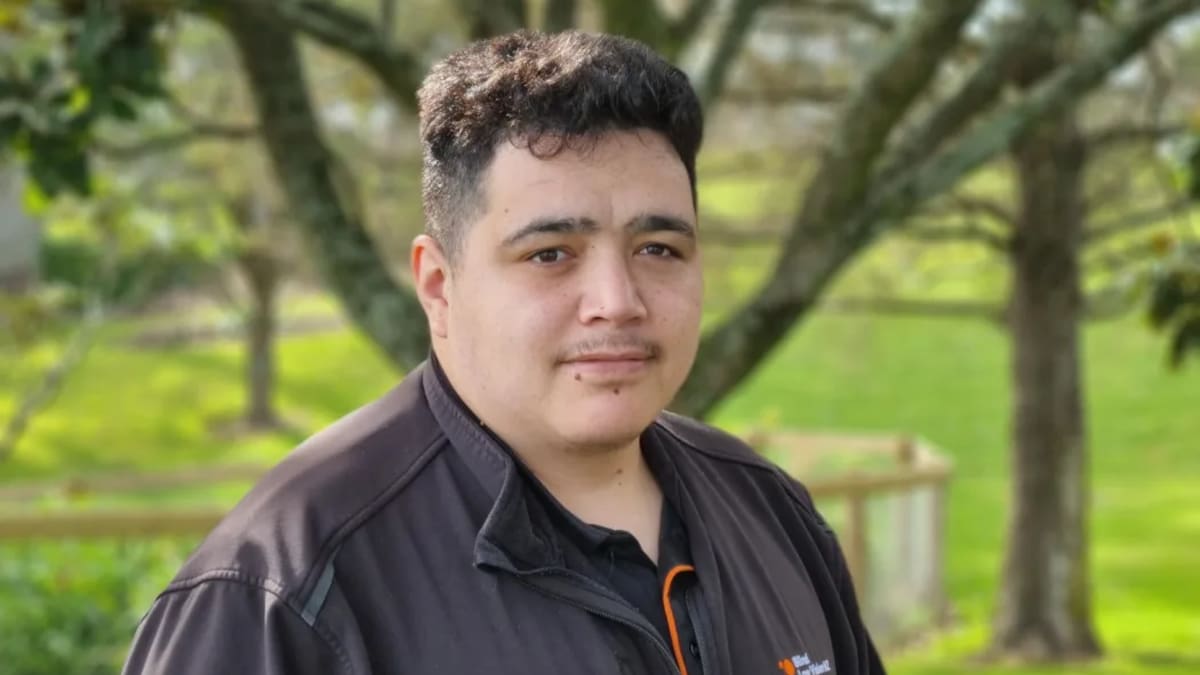
He is blind in one eye and has impaired vision in the other, with no ability to see depth. He says public transport from his home in Massey in the west to Homai in the south is not an option.
“It’s super crucial, it’s a service that I depend on to go to and from work. It’s a service I’ve used since I was 18 years old.”
It costs Paul $300 out of his own pocket for 10 taxi trips each week. The rest is funded through Total Mobility, but that subsidy is about to drop by 10%.
“This has kind of caught me off guard a bit with this whole change. It’s going to be a huge expense to me with the additional cost.”
On Thursday, a taxi ride to the barber was on the cards, but Paul said getting to work was his priority, and he might have to move house to be closer to his workplace.
“For this to continue, there are things that I’m going to have to cut out, or I may just have to move to a closer area, but again that’s a super struggle as it is.”
He had not caught a bus or train for six years because he found it hard to board the correct service.
Official figures show that less than half of disabled people were in paid employment and, for those who were working, the median income was $625 less than for non-disabled people.
Disability advocate Blake Forbes said reductions in the subsidy for taxi trips would force some to make tough decisions, perhaps to forgo trips to the doctor, supermarket or even work.
Disability advocate Blake Forbes. Photo / Samuel Rillstone, RNZ
“I’m really concerned that people will be choosing between food and health.
“I worry about disability employment that people won’t be able to afford to get to work because it’s so hard for disabled people to get employment. We’ve got one of the highest rates of unemployment in the country.”
Forbes travels with Driving Miss Daisy, which is applying a temporary surcharge to trips during the fuel crisis.
He said the Total Mobility subsidy helped to keep costs down, but his costs would rise when the subsidy was reduced.
“I’m certainly going to have to pick and choose a bit more. I expect I’ll be trying to stick around local things more or spacing my speaking engagements out a bit more so I can afford to take them.”
Forbes and disability advocate Nick Ruane are working together to advocate for more support for people with disabilities. They are concerned that an ongoing review of eligibility criteria for the Total Mobility scheme will lock out some who need it.
“The choice that disabled people are making is, ‘Do I leave the house today, do I make that trip to the supermarket, do I make that trip to the doctor?’ and those are the choices that they are making already,” Ruane said.
“This decision to limit who can go back into the scheme will make those choices even harder.”
He said it would come as a surprise to learn how much people who could not drive or take public transport spent on taxis; hundreds of dollars each week was common.
“The general public would be floored when they start hearing figures like that, but that is not an unusual figure.
“People are spending money in order to travel because public transport is not accessible to them, and that’s the only option available to them, unfortunately.”
Among the blind and vision-impaired, 60% had annual incomes between $20,000 and $40,000.
Blind Low Vision chief executive Andrea Midgen said the cost of a taxi was already a big expense for many, and the anticipated added cost when the subsidy reduced would force people to stay home more often.
Blind Low Vision chief executive Andrea Midgen.
She wanted the Budget to ensure the disabled community had the support it deserved to participate in society.
“It’s super tough for our community. Often they can’t get employment, so they’re on a benefit, they’re struggling around $20,000 to $40,000 a year. Every single hit they get makes it even harder.
“We just want our community to have the support that they deserve. Support to be able to be employed, support to be able to get to employment, support to have adequate housing that is accessible for our community.”
Paul would also like to see more support.
“It’s almost at the point where you live pay cheque to pay cheque, it’s almost like you have to have two incomes flowing in,” he said.
“I’m just not sure why the disability sector is getting targeted this time around, in this Budget. I understand that maybe there’s a lot of spending there, but it is well needed, especially in a space where we as low-vision citizens are already at a huge disadvantage in life.”
– RNZ