
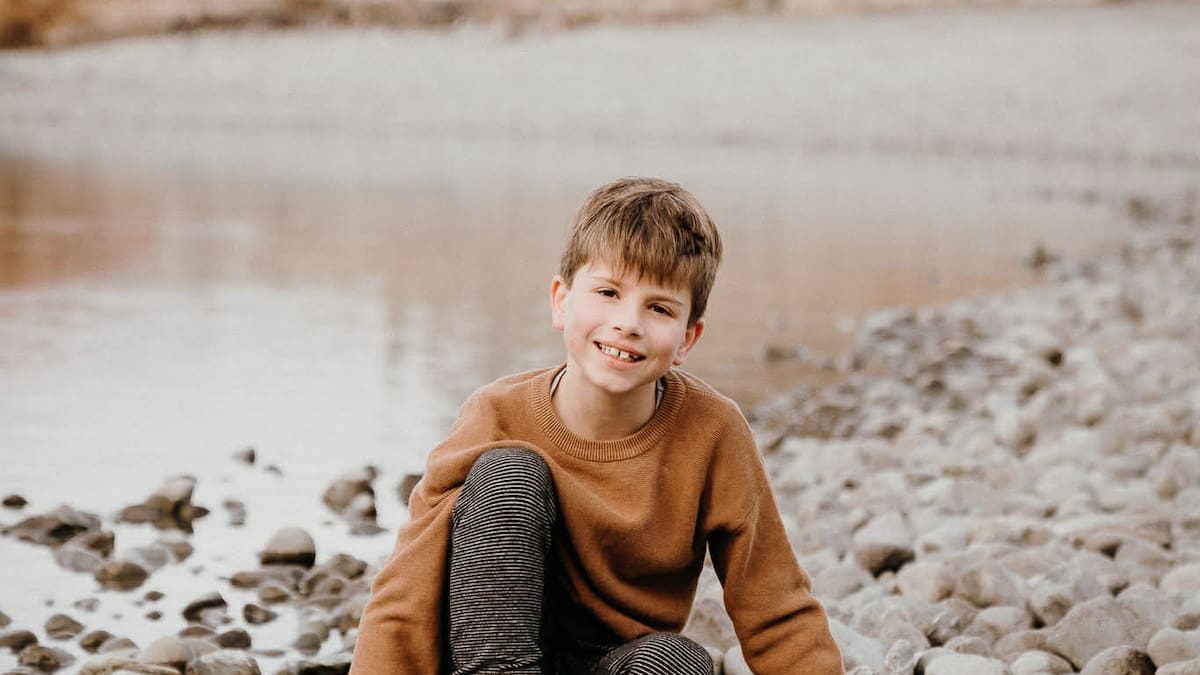
Hugo Donaldson was diagnosed at age nine with Stage 4 Alveolar Rhabdomyosarcoma.
His parents said Hugo was an incredibly good friend who was never afraid to be himself.
“He had his personality, and he didn’t change it for anyone,” Aaron said.
Through all the harsh treatment, Aaron said the one thing that ”really lit him up” was hanging out with his mates.
Samantha said they were going to miss Hugo’s quirkiness and the “warmth about him”.
“He loved building Lego. I think one of the last things he did was build Lego with Sam,” Aaron said.
“He’s just a joy. It was a privilege.”
Cancer journey
After Hugo’s diagnosis and after enduring nine rounds of high-dose chemotherapy and 28 sessions of radiation, he was declared cancer-free in August 2024.
Just months after receiving the good news while on maintenance therapy, he relapsed in March last year.
Scans in September revealed further cancer growth, and within days, he went from having a sore leg to being unable to walk, wheelchair-bound and in severe pain.
Last year, his parents told the Herald that doctors in New Zealand had exhausted all available options.
He was in a desperate race to raise hundreds of thousands of dollars for a cancer trial in the US, and raised more than $449,000 on Givealittle.
Hugo was accepted and underwent the Car-T therapy clinical trial in January.
“Unfortunately, the treatment didn’t work for Hugo,” Aaron said.
Hugo Donaldson was diagnosed at age nine with Stage 4 Alveolar Rhabdomyosarcoma.
He said they came back to New Zealand in March and found out his cancer had “quite a bit of progression”.
“We’d been quite hopeful because he was really good in himself at that point … even though we knew there was a high chance it wouldn’t work,” Samantha said.
Over the past few months, Hugo continued to undergo targeted treatment.
“We still had a lot of hope that there was something we could do that would work. We were still pushing,” Samantha said.
His parents said their family managed to go on holiday on the Gold Coast and spend some time at the theme parks. After this, combined with the seven weeks in the States, they said Hugo was looking forward to coming home and hanging out with friends.
Hugo Donaldson was diagnosed at age nine with Stage 4 Alveolar Rhabdomyosarcoma.
Aaron and Samantha said things progressed “quickly and unexpectedly” in Hugo’s final days.
“He had been out to a friend’s birthday party on Saturday night, and then on Sunday was sort of complaining about a little bit of back pain,” Aaron said.
He said the pain started to worsen the next day and began to impact his breathing. Aaron said they later took him to the hospital, where he was struggling to get enough oxygen.
Before his death, Hugo spent some time in the oncology ward before he was moved into the Paediatric Intensive Care Unit (PICU).
The family of a 12-year-old boy who died after a courageous fight with a rare and aggressive childhood cancer say they are experiencing “immeasurable sadness”.
Aaron said Hugo’s younger brother Louis, 10, probably didn’t understand the full extent of Hugo’s sickness until about 12 hours before he died.
“We had to say, look, he’s not likely …to make it. Louis during that period, was probably one of the strongest people in the room,” he said.
Hugo’s funeral on Thursday had 400 people attend and another 600 people online.
“We’ve got an amazing family, but we’ve got an unbelievable community who have lifted us up right through this and still do,” Aaron said.
Aaron said they had a cardboard casket so his friends could write messages and draw pictures on it, and everyone who attended went home with a piece of Lego in Hugo’s memory.
Hugo Donaldson was diagnosed at age 9 with Stage 4 Alveolar Rhabdomyosarcoma.
Aaron said Hugo never considered himself brave for going through what he was going through because he didn’t have a choice.
“I just saw so much courage and bravery in how he responded to it … he really did try really hard to make the most and enjoy himself,” Aaron said.
Hugo’s parents said they wanted to acknowledge the support from the Starship and oncology team and to advocate for making clinical trials more accessible in New Zealand.
Aaron said removing the barrier of having to raise a significant amount of money, or having to travel for potentially life-saving treatment would make a world of difference for many families.