
“To the untrained eye, you’re not really going to notice a difference,” Aoraki said, referring to the micromoon’s size.
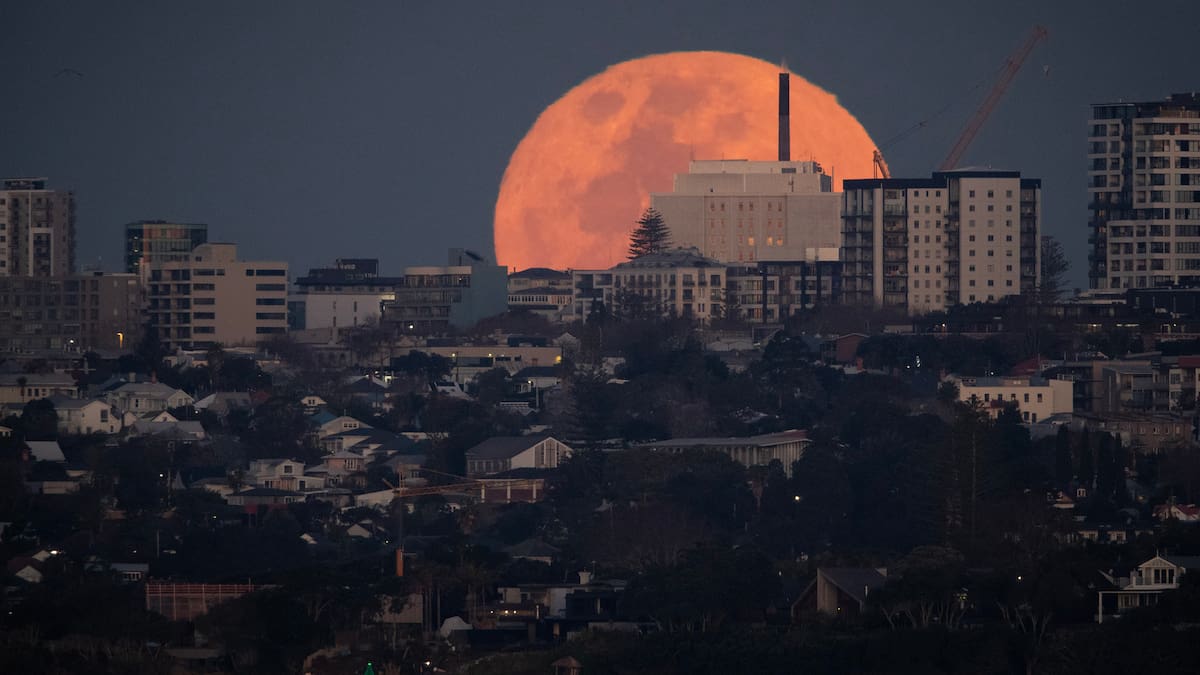
A blue super moon photographed in 2023. Photo / Girik Punwani
However, the full moon will be impressive to see.
“They occur when the sun is setting as the moon’s rising, and you get a really beautiful colour, regardless of how bright or big the moon looks in the sky,” he said.
Kiwis won’t need a telescope to see the spectacle – though binoculars and telescopes would sharpen the view of the moon’s craters.
The trick is to find a clear patch of sky away from city lights and a look to the east after moonrise.
The moon will reach peak fullness about 8.46pm on Sunday.
Astronomers estimate a micromoon appears about 6% smaller than an average full moon – a gap slight enough that you’d really only pick it in a side-by-side photo.
There are actually two flavours of blue moon: a calendar blue moon – the second full moon in a single month – and a seasonal one: the third full moon in a season that has four.
Sunday’s is the calendar kind – a quirk of the lunar cycle never quite lining up with our 12-month calendar, which serves up an extra full moon every couple of years.
There is a catch, though – downpours and clouds are expected in many places tomorrow so choose your lookout point wisely.
Sign up to The Daily H, a free newsletter curated by our editors and delivered straight to your inbox every weekday.