
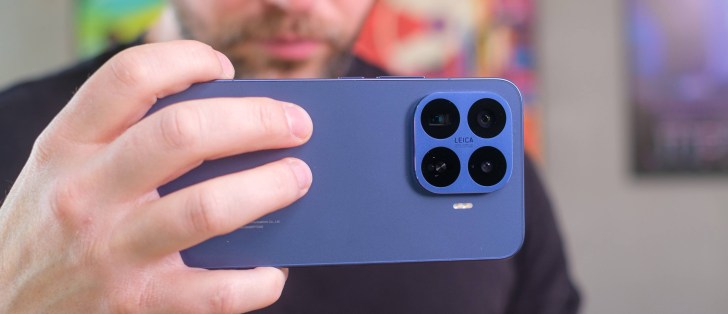
Familiar 6.83-inch OLED display
The handset sports the same OLED display as last year, which was plenty good to begin with – 6.83-inch diagonal, 1280 x 2772px resolution, 144Hz refresh rate and 12-bit color depth. People with sensitive eyes will be happy to see the high-frequency 3840Hz PWM dimming.
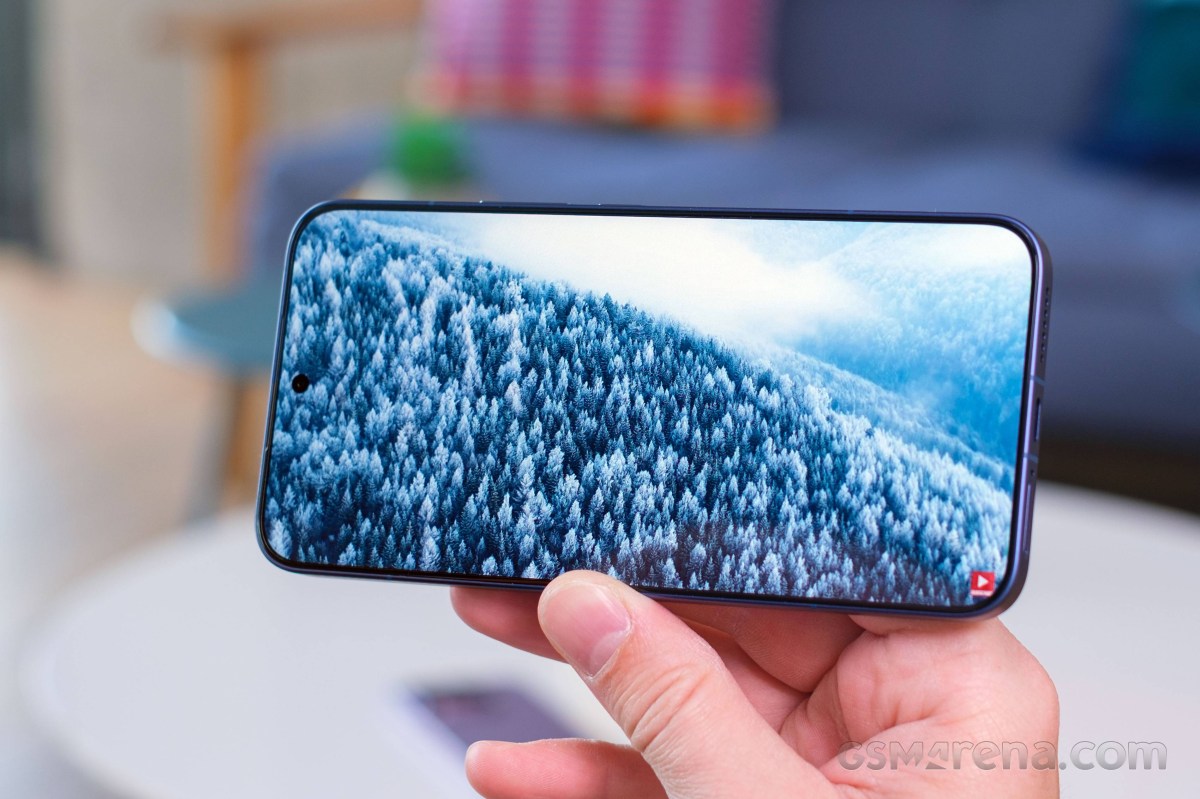
The display plays well with Dolby Vision and HDR10+ content served on video streaming platforms like YouTube, Netflix, etc.
Xiaomi 17T Pro
When it comes to brightness, the screen delivers. We got a little over 1,000 nits on a large 75% white surface in auto mode and nearly 3,500 nits on a 10% white patch. For outdoor use, anything above 1,000 nits is more than enough, while the 3,500 nits on a 10% patch indicate exceptional HDR performance.
The minimum brightness we were able to measure was 1 nit. That’s as low as you’d want to get in a pitch-black environment.
Refresh rate
There are just two refresh rate modes – Default and Custom. The Default one adjusts the refresh rate dynamically to reduce power consumption. For instance, it dials down to 60Hz when the screen is idle or when watching videos.
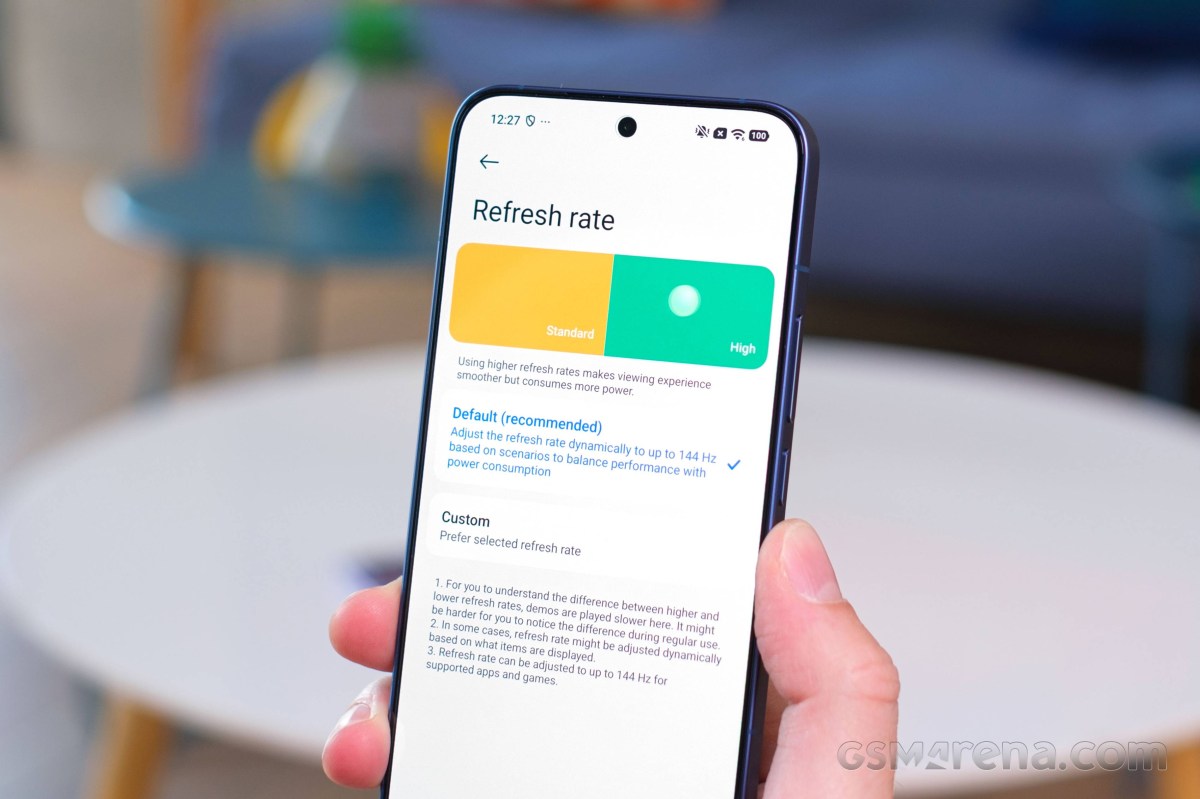
However, we never saw 144Hz in this mode. We also tried to boost the refresh rate in apps like Chrome to 144Hz, but it didn’t work. We didn’t get a 144Hz refresh rate in system apps and menus.
Battery life
The Xiaomi 17T Pro comes with a significantly larger battery than its predecessor, and it shows. The 7,000 mAh battery on board is enough to earn the 17T Pro an Active Use Score of 21:41h. That’s a lot higher than last year’s Xiaomi 15T Pro and higher than most competitors out there.
That’s not to say there aren’t competitors with longer battery life. Take the OnePlus 15, for example, and the Poco X8 Pro Max. Both devices outperform the 17T Pro in this regard due to higher battery capacities.
In any case, the 17T Pro’s battery life is excellent, with particularly strong showing in our web browsing test.
Charging speed
There are a lot of changes that impact the 17T Pro’s charging capabilities. It has a larger Si/C 7,000 mAh battery now and supports 100W over Xiaomi’s HyperCharge charger. That’s 10W up from last year, but those numbers are misleading.
In reality, the Xiaomi 17T Pro isn’t as snappy as before. It trails behind its predecessor significantly, and our best guess is that the new silicon-carbon chemistry is to blame. We’ve seen an increase in charging times recently with the adoption of Si/C batteries across the industry.
In any case, the 17T Pro still did pretty well and maintains competitiveness in its class. It’s only a few minutes slower to the finish line compared to most rivals, but it’s also a tad slower at the 15 and 30-minute marks.
Xiaomi also promises 100W charging power over compatible Power Delivery chargers with the appropriate PPS profile. This is a first for Xiaomi, because PD support has always been lower than the HyperCharge’s wattage.
We measured the peak charging power with HyperCharge and a compatible Power Delivery brick. With 100W HyperCharge, the Xiaomi 17T Pro reached about 83W for a brief while before settling around 40-60W for the majority of the charging cycle. With the Power Delivery charger, the 17T Pro peaked around 75W and maintained 30W-50W most of the time. As a result, the Power Delivery charging times were lower.So technically, the 17T Pro does seem to support high-wattage PD charging, but the charging curve is different, and it’s considerably slower than what you get from the HyperCharge charger.
Wireless charging is still on board, and if you pair the phone with one of Xiaomi’s 50W charging stands, the 17T Pro can go pretty fast.
One new feature is the fast 22.5W reverse wired charging, which is pretty impressive. However, compatibility is unclear. Xiaomi says only devices verified through Xiaomi’s internal labs can draw 22.5W.
Xiaomi has included a couple of charging options for extending the battery life in the long term. You can disable the fastest charging mode altogether, or limit the charging to 80%. There’s also a toggle that enables smart charging, which learns from your behavior and adapts the charging, so the battery doesn’t stay at full charge overnight.
Speakers
The Xiaomi 17T Pro features a hybrid stereo speaker setup, meaning the top one also acts as an earpiece, while the bottom one is a full-fledged loudspeaker. As a result, the latter is a tad louder with more pronounced bass. But this is par for the course.
Loudness-wise, the 17T Pro got a “Very Good” -25.6 LUFS overall score, but we are disappointed with the sound quality. It appears that Xiaomi has done tuning differently from last year, resulting in flat tracks without much bass and squeaky highs at higher volume. Alternatives such as the Samsung Galaxy S25 FE and the OnePlus 15 are both much better in this regard, delivering fuller and warmer tracks with crispier vocals.
Use the Playback controls to listen to the phone sample recordings (best use headphones). We measure the average loudness of the speakers in LUFS. A lower absolute value means a louder sound. A look at the frequency response chart will tell you how far off the ideal “0db” flat line is the reproduction of the bass, treble, and mid frequencies. You can add more phones to compare how they differ. The scores and ratings are not comparable with our older loudspeaker test. Learn more about how we test here.