
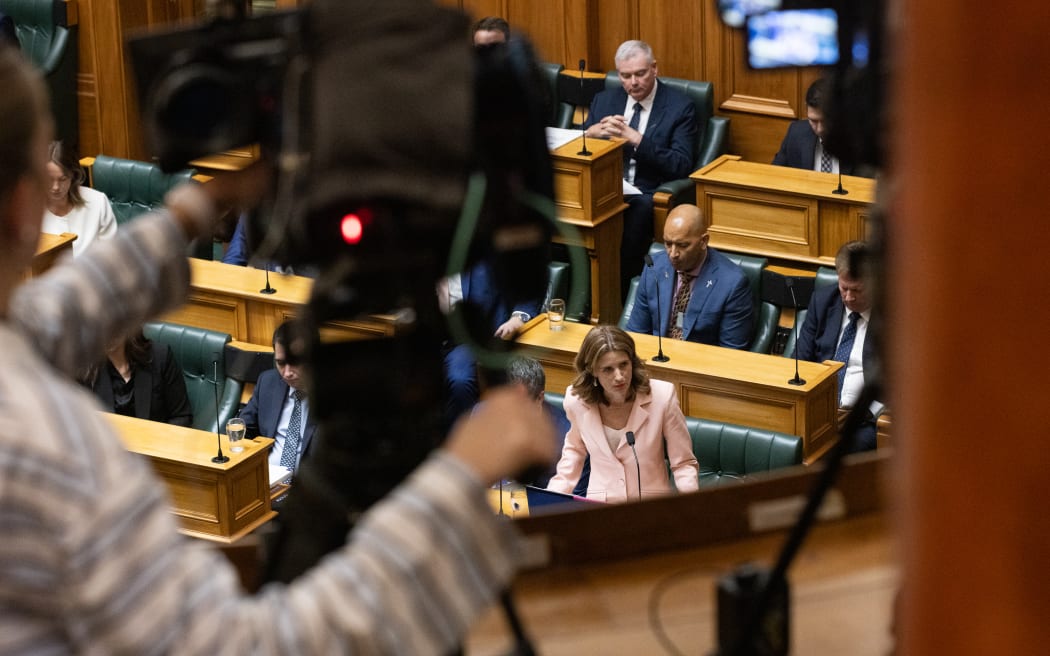
Under the watchful eye of cameras, Nicola Willis delivers Budget speech 2026.
Photo: VNP/Phil Smith
Between the government’s announcements, the opposition’s criticism and the media’s instant analysis, it’s easy to succumb to a case of ‘budget fatigue’.
The Budget is more than a mere spreadsheet – it is a political event, a speech, a collection of documents, a legislative process and, yes, a vast set of financial figures. It is also the mechanism through which Parliament authorises the government to spend public money.
Despite weeks of speculation and anticipation, the Budget statement and the debate conform to a familiar pattern. The Finance Minister typically begins by giving the Budget a defining theme or brand.
Like previous Budget statements, the speech highlighted the government’s preferred branding.
Funding commitments for infrastructure projects, hospitals, schools, roads, courthouses and police stations featured prominently, alongside broader claims that the economy was improving and the country was moving in the right direction.
“This is a responsible budget,” Nicola Willis said. “The government is responding to an increasingly uncertain world with an economic plan and sensible choices that will make New Zealanders more secure in the years ahead.”
The opposition’s task is to challenge that branding.
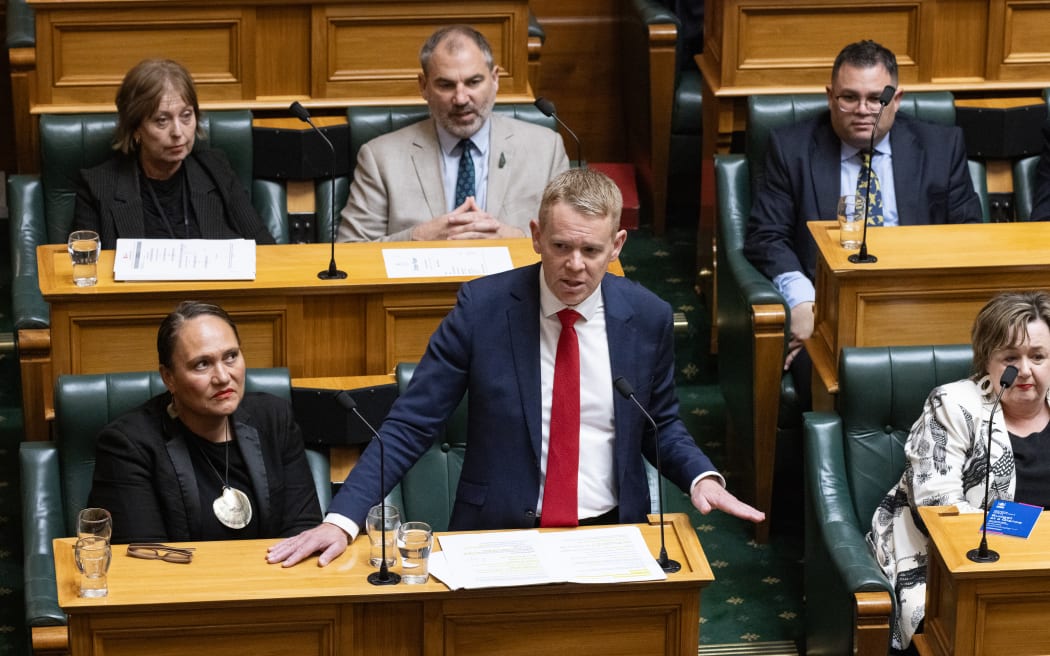
Labour Leader Chris Hipkins has first reply, offering a no-confidence motion.
Photo: VNP/Phil Smith
“Nicola Willis painted a very rosy picture of the country today,” Hipkins told the House. “It’s not a picture most New Zealanders would recognise.
“Those who are struggling, those who don’t know whether they’re still going to have a job in a couple of weeks or a couple of months, they won’t recognise the country that Nicola Willis and Christopher Luxon and Winston Peters and David Seymour think that we live in.”
The Budget Day debate is often less about individual line items than competing narratives about the state of the country. That dynamic is probably even more pronounced in election years.
Hipkins concluded by invoking a familiar electoral test first popularised by former US president Ronald Reagan – are people better off than they were three years ago?
“The answer is no, so my message to the members opposite: ‘Enjoy the leather benches for 163 days more, because your time is done’.” Hipkins said.
Prime Minister Christopher Luxon responded in kind, with much of his speech being a direct attack on Labour.
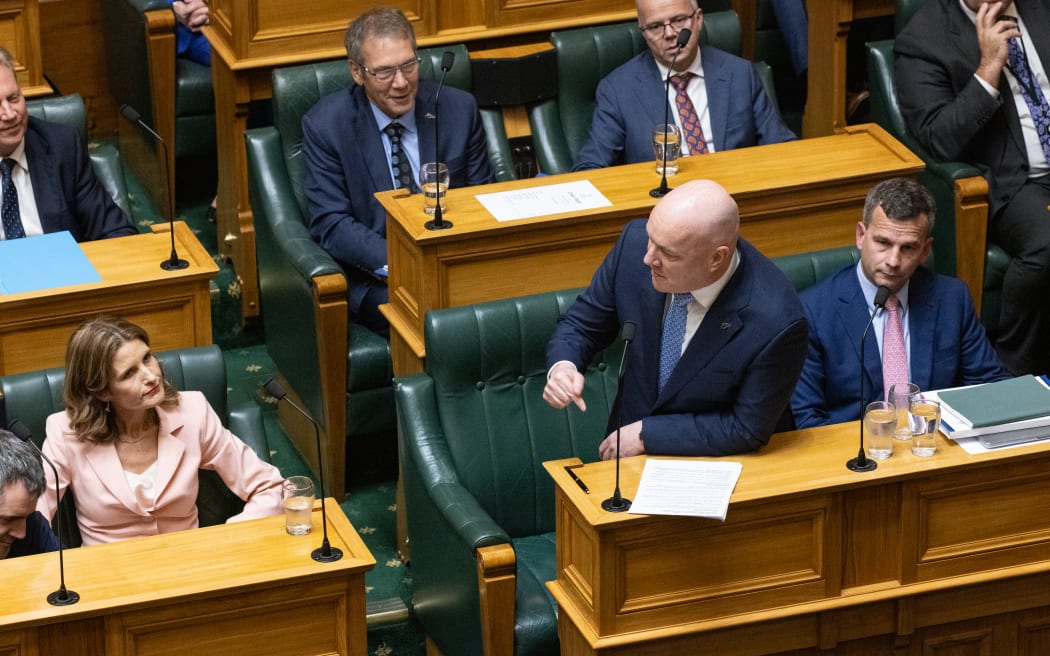
Prime Minister Christopher Luxon directs his budget speech towards a friendlier audience – his own caucus.
Photo: VNP/Phil Smith
“I have to say, I think it’s very clear and obvious now that, officially speaking, the 2026 Labour Party are the laziest opposition in the history of New Zealand,” Luxon said.
As each party seeks to frame the day’s events through its own political lens, the Budget becomes not just an economic document, but a contest of competing visions for the country’s future and, this year, vote-winning.
You can listen to the audio version of this story by clicking the link near the top of the page.
*RNZ’s The House, with insights into Parliament, legislation and issues, is made with funding from Parliament’s Office of the Clerk. Enjoy our articles or podcast at RNZ.