
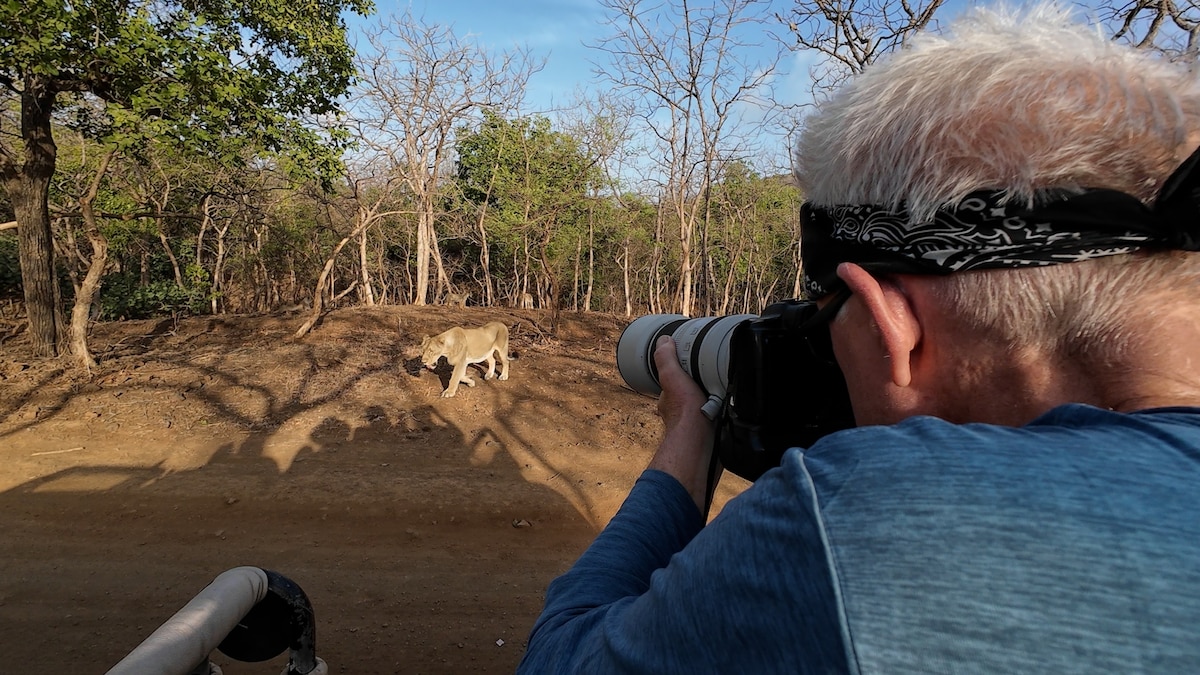
Well, the biggest challenge with things like this, is that you have a lion reserve, but you can only use 10 to 20 percent of that reserve for tourism. And even though I had special permits, I wasn’t allowed to go to the closed off areas. Every national park has a protected core area that’s for the animals, and it’s the same in the Gir Wildlife Sanctuary, which is actually fantastic, it’s amazing for the animals. It helps give them the security that they need.
In those areas of the park, the cats are in front of you a lot of the time, but it’s very difficult photographing something you haven’t seen.
For this story you set up camera traps throughout the park, which automatically take photos when triggered. What was that experience like?
I’m used to doing this, but camera trapping is hard. That’s why you have to work with trackers and scientists to find out where the animals go, where their pathways are, where they mark territory. But even so, cats are cats. They do what they want.
My camera traps are a box with a camera receiver transmitter that’s triggered when animals walk through an infrared beam. And then I usually have three lights set up and camouflaged. So if the flashes don’t go off and it’s dark, or the lights are in a bunch of cases, the monkeys will come through and have fun with them. On one of my camera traps, I had five to six flashes on it, so if they broke a couple, at least I had more than normal.