
Companies in at least nine European countries bought carbon credits from projects that appear not to exist or were verified by an auditor-turned-developer who treated the two jobs as a revolving door, a Bloomberg investigation found. By Petra SorgeNatasha White Graphics by Hayley Warren May 24, 2026
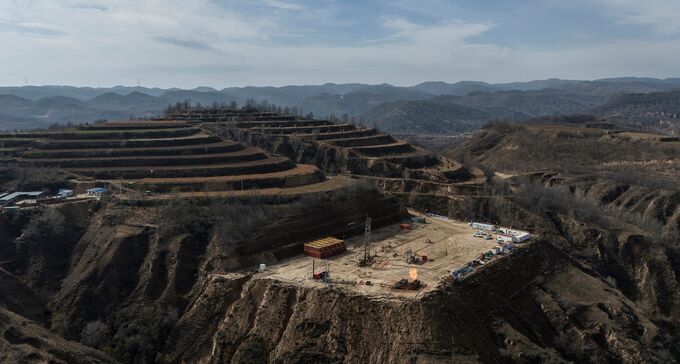
Among the yellow-brown hills of central China’s Loess Plateau, the energy industry is booming. So is the business of emissions reduction.
European companies have funded a number of dry-gas facilities in the area, which process gas containing little or no liquid hydrocarbon. Those companies have also financed projects that generate carbon credits, primarily by capturing pollutants that would otherwise leak into the atmosphere.
It’s a highly bureaucratic, but potentially lucrative, process. A project developer — either the facility owner, or someone else — files a proposal to a carbon-crediting program explaining how emissions will be cut and what equipment will be used. A third-party auditor verifies the site and the plan. Finally, the project can be registered, approved by authorities and implemented, then the developer can begin selling credits.
Projects in the Changqing oilfield claiming to avoid almost 120,000 tons of CO2e emissions were registered with Austrian and Polish authorities in 2023 and with Luxembourg in 2021, according to a verification report and European Union data. But when Bloomberg reporters visited some of the locations listed in the documents in November and BloombergNEF analysed drone footage and satellite images of the vicinity, the projects did not appear to exist. One site was still under development and there was no sign of the equipment needed to trap emissions.
Project registration documents include site coordinates, but identifying locations in China is not always straightforward. The government restricts access to geographic information and mapping services use “Mars Coordinates,” a system that adds a random offset to GPS positions meaning maps sometimes don’t perfectly align with the landscape.
One set of coordinates led to a nondescript office building in Shunning, a small town near the Changqing oilfield
A five-minute drive away from the office building, Bloomberg identified a large central processing facility with storage tanks for crude oil and liquefied petroleum gas. Signage showed it was the site reporters had been looking for, but the equipment present indicated that it was designed to process liquids. There was no obvious evidence of gas compressors or gas recovery equipment, according to BNEF’s analysis.
A large central processing facility with storage tanks for crude oil and liquefied petroleum gas
No emissions-control equipment was apparent at the sites Bloomberg was able to examine in detail. There are additional, inaccessible work sites in the area, but the available satellite imagery is not high enough resolution to determine whether emissions-reducing equipment is present, according to BNEF.
The Changqing carbon-credit project developer, according to the registration documents, is Shaanxi LY Oil and Gas Technology Service Co. However, the company’s Beijing address leads to what appears to be an apartment in a largely residential complex, a detail first reported by German TV station ZDF. Shaanxi LY did not respond to Bloomberg’s requests for comment.
Warning Signs
In Germany, a scandal over these Chinese credits sold into Europe’s government-run upstream emissions reduction (UER) scheme first erupted more than two years ago. Forty-five carbon-offset projects selling credits to major energy companies have been found by German authorities to be “suspicious,” to have overstated their environmental impact or to be fake. The authorities have withdrawn UER credits generated by two-thirds of these projects, an agency spokesperson said. Almost all of the sponsors are appealing the decisions, including one that has compensated for the credits, the spokesperson added.
While the carbon-credit market has long been dogged by concerns about its integrity, entirely falsified projects have been virtually unheard of, according to Jürg Füssler, managing partner at consultancy Infras and a former UN adviser on carbon credits.
The 30 invalidated projects had claimed to save 2.1 million tons of carbon dioxide, roughly equivalent to the pollution emitted by around 500,000 cars or the power use of about 300,000 homes in a year.
While the credits have now been voided, the companies and individuals behind the projects are unlikely to face any legal consequences. A fraud investigation into 17 employees at the European verification bodies that approved the projects was closed in January due to lack of evidence and the companies themselves cannot be criminally prosecuted under German law.
A spokesperson for the German Environment Agency said its investigations had clearly found that some projects relied on incorrect documentation, failed to deliver the promised emissions reductions or were not properly validated and verified as required. They added that while the projects were unlawful under administrative law, this does not automatically imply criminal liability.
None of the companies that bought the credits — including BP Plc, Électricité de France SA, Exxon Mobil Corp., MB Energy, MOL Group, OMV AG, the German-controlled subsidiary of Rosneft PJSC, Shell Plc, TotalEnergies SE and Vitol SA — are required to pay a penalty if avoided carbon emissions were inaccurately claimed. That’s because the offsets were purchased in good faith, a spokesperson for Germany’s General Customs Directorate said. In other words, the companies were using the system as it was designed.
Yet Germany is just one of at least nine European countries where carbon credits were purchased from projects exhibiting similar concerning characteristics, an investigation by Bloomberg News and BNEF has found. Some projects don’t appear to exist at all, site visits by reporters and drone footage analysis by BNEF show. Others involved a project developer-turned-auditor who — in a system that allowed developers to employ their own watchdogs — treated the two professions as a revolving door. Collectively, the projects sold credits equivalent to almost 500,000 tons of CO2 to countries other than Germany. But the total claimed by flawed projects may well be much higher.
Carbon-Credit Projects With Concerning Features and the European Countries That Registered Them
Source: European verification reports, Bloomberg reporting
The UER system shows how even carefully designed carbon-credit models can be abused.
“The apparent failure of the rules for reporting, verification and governance in the UER case is particularly problematic because it was run by governments,” Infras’ Füssler said. “Such crediting systems need stringent rules, consistent oversight, adequate resources and robust sanction mechanisms in all involved authorities.”
This year was supposed to be a turning point for carbon markets, with the United Nations’ long-delayed country-to-country trading system coming into force and airlines preparing to enter a mandatory program to offset their emissions. Spurious credits undermine climate-change mitigation efforts and drive down the value of legitimate emissions-reduction projects, meaning communities and businesses that invest in the credits take a financial hit.
At a time when conflict in the Middle East has upended confidence in fossil-fuel supplies and provided a powerful incentive for decarbonization, robust systems around green alternatives are all the more important. While the UER scheme is now winding up, carbon credits will still play a role in the European Union. Its ambitious target is to cut emissions by 2040 by 90% compared to 1990 levels, including through limited use of “high-quality international carbon credits.”
The European Commission has not specified whether the same auditing firms will be involved in the new system, but officials have privately expressed concern that it will be hard to avoid.
The UER’s failings showed, at best, gross negligence by some of the leading auditors of carbon credits, said Axel Michaelowa, senior founding partner at climate group Perspectives and senior researcher at the University of Zurich. “All this is stuff we do not want to see in international carbon markets.”
Fake Carbon Credits
Historically, carbon credits have been the cheapest way for companies to comply with EU greenhouse gas caps.
The EU introduced the upstream emission reductions market in 2015, allowing companies to buy UER credits from projects that mostly help reduce the pollution created during fossil-fuel extraction. Each credit is equivalent to one metric tonne of carbon dioxide emissions avoided or reduced. About 180 projects were registered, mostly in China, and in 2022, 15 EU member states collectively claimed offsets equivalent to 5.9 million tons of CO2.
While the UER market was government-managed — and “concrete implementation [was] in the hands of member states,” according to the European Commission — individual projects were verified by third-party auditing firms based in Germany. The biggest, TÜV Rheinland, is a global player in the auditing business, testing everything from cars and industry robots to IT security. The other key firms, Müller-BBM Cert and Verico SCE, focus on certification in emissions-trading schemes. On its website, Verico highlights a cooperative business structure composed of independent experts and auditors, described as “unique among accredited verification agencies.”
German police raided the offices of all three agencies in 2024 as part of the Berlin prosecutor’s now-closed probe into suspected “fraudulent certification of UER projects.”
In response to questions from Bloomberg, Verico Executive Chairman Werner Betzenbichler said the company had fully cooperated with the relevant authorities and will continue to do so as required. A spokesman for TÜV Rheinland, Alexander Schneider, said the firm had “launched comprehensive internal investigations and engaged an external law firm to help clarify the situation” when “possible irregularities” with UER projects came to light. He added that the company is also cooperating with authorities and “continuously revising its quality assurance and compliance processes to ensure the highest standards.” A lawyer for Müller-BBM Cert said the company is confident that their work fully complies with all applicable legal requirements.
From the outset, there were concerns about the UER system. More than a decade ago, the non-governmental organization Transport & Environment warned that the reporting requirements were “very vague,” raising the risk of credits being overvalued. It’s a criticism of the broader carbon-credit system that has become increasingly common over the years. A meta study published in 2024 found about 80% of the thousands of projects it analyzed had a much lower climate impact than they claimed.
In the end, the UER scheme’s problems ran even deeper. The German Environment Agency, represented by law firm Dentons and Dacheng Law Offices, found “serious violations” including Chinese projects that overstated emissions reductions or failed to conduct on-site audits and others where the identities of the owners were unclear. Luxembourg’s Prosecutor General opened a probe into possible wrongdoing last year, which is ongoing, according to a spokesperson. Austria’s government has changed its legislation and reached out to all individuals known to have been involved in the projects in question to help clarify the situation, a spokesperson said.
The European Commission received information from Germany about investigations into possible fraudulent UER cases and steps taken, an EC official said, adding that stringent criteria on the quality and reliability of international credits post-2030 will be laid out later this year.
The Chinese government is not the regulator of the UER system and is not informed in advance of projects managed by other countries’ mechanisms, wrote the National Center for Climate Change Strategy and International Cooperation, a think tank operating under China’s Ministry of Ecology and Environment, in a faxed response to Bloomberg’s questions. The ministry has held talks with relevant groups over market supervision, verification and consulting, the NCSC said, and has urged the enterprises involved to respond positively, actively cooperate and participate in relevant international mechanisms in a standardized and honest manner.
Credit Concerns
Germany is only one of the European countries that participated in the UER market. In order to analyze projects selling credits across other parts of Europe, Bloomberg used information held by regional and domestic bodies, along with satellite imagery, company documents and whistleblower accounts. Sharing information with the European Environment Agency has been voluntary since 2015, so the available data are not comprehensive.
Nevertheless, the analysis identified eight European nations apart from Germany where companies bought carbon credits from Chinese projects. Of those, five projects that variously sold credits to Italy, Luxembourg, Cyprus, Austria, Poland, Hungary, Estonia and the UK exhibited warning signs, such as an absence of relevant equipment at registered sites or audits conducted by a verifier who rubber-stamped more than 20 projects that German authorities have since disqualified.
One project in eastern China sold carbon credits to companies in the UK, Austria and Poland, including energy company OMV AG, between 2020 and 2022. A verification report prepared by Müller-BBM Cert states that the station, in the Shengli Oilfield, was set up to capture gas “which would otherwise be flared.”
But when Bloomberg reporters visited the site in Dongying, Shandong province, in November, there was no evidence of gas capture equipment. Instead: belt pumping units extracting oil, cylinders for recovering liquids and a flare tower to burn — not capture — the gas, according to BNEF’s visual analysis.
It’s highly improbable that the necessary environmental equipment had ever been present there, BNEF added, as a company would be very unlikely to invest in installing that infrastructure, only to write it off and replace it with combustion equipment in a short timeframe.
The project owner, Shengli Doro Energy Corp., did not respond to Bloomberg’s requests for comment.
“A sort of Wild West has emerged with the trade in counterfeit certificates,” said Sandra Rostek, Head of the Berlin Office at the German Biogas Association and vice-chair of the victims’ initiative Stop Climate Fraud. “Significantly stricter controls are needed to verify on-site whether the supposed production facilities even exist and are producing what they claim to be producing.”
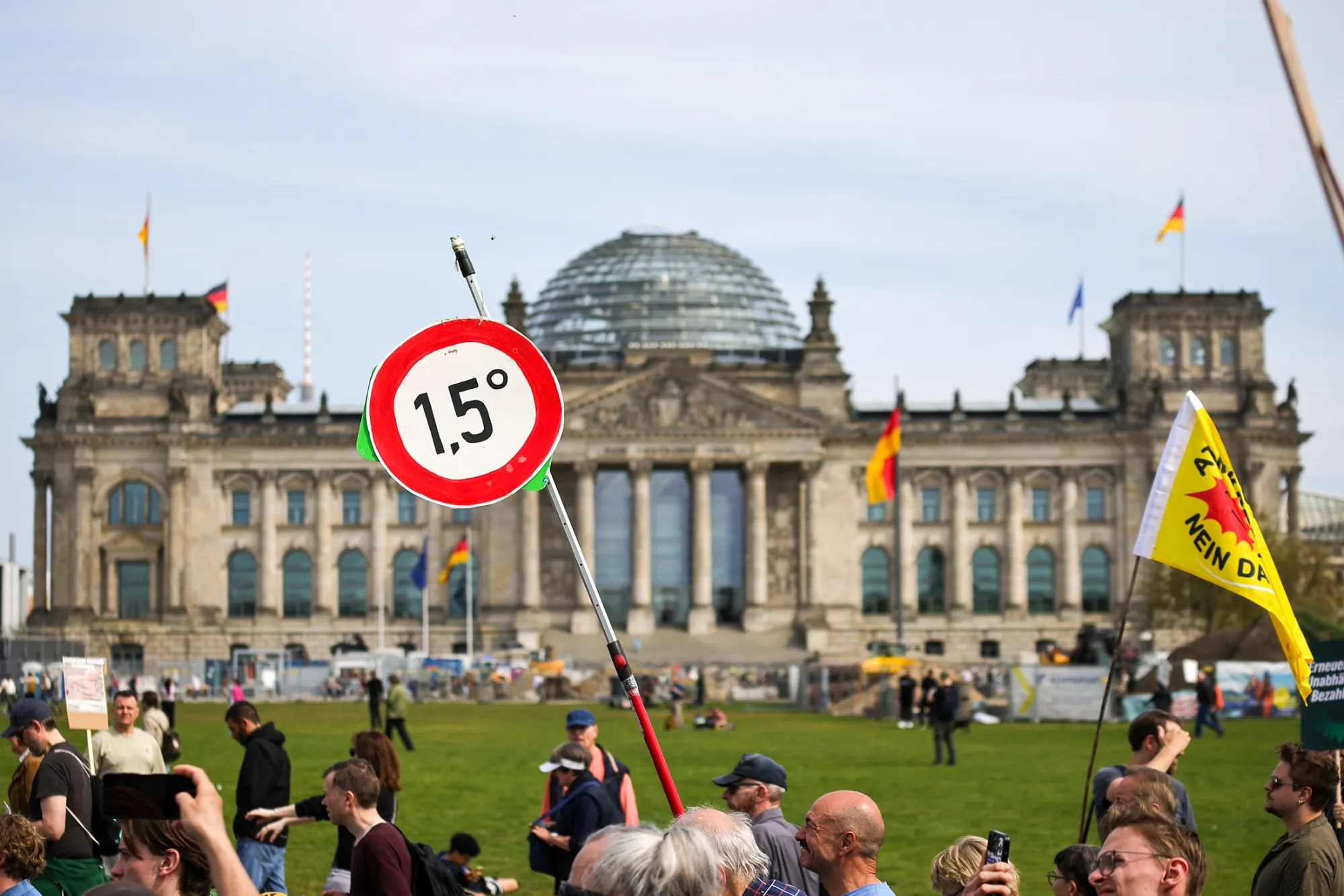
Climate protesters in Berlin in April. At a time when conflict in the Middle East has upended confidence in fossil-fuel supplies, robust systems around green alternatives are all the more important. Photographer: Omer Messinger/Getty Images
Auditor Paper Trail
In some corners of the UER market, the distinction between developers and auditors has become blurred.
Over the course of 2020, Jing Wang, also known as Robin Wang, was employed as both an auditor for Verico and a manager at Beijing Karbon, a Chinese consultancy that developed UER projects, according to documents seen by Bloomberg. He was one of the 17 verification officials who were under investigation in Germany until January, before the case was dropped due to lack of evidence, according to people familiar with the matter. Wang no longer works for Verico and Bloomberg was unable to contact him.
Wang was still working for Beijing Karbon in July 2020, according to Germany’s probe, by which time the consultancy was already working on at least one carbon-credit project audited by Verico. Wang visited that project for Verico in February 2022, when he signed a list of attendees seen by Bloomberg. Between 2020 and 2024, Wang audited more than 20 projects developed by Beijing Karbon that sold credits into Germany, official documents show.
Wang also audited at least two projects that sold carbon credits into Austria, Cyprus, Estonia and Hungary, according to Bloomberg’s analysis. It is unclear whether Beijing Karbon was involved in developing those projects. There is no evidence that Wang — who, according to Verico, left the organization in 2024 — acted as both developer and auditor on any single project batch.
Beijing Karbon itself has attracted the attention of German authorities, according to people with knowledge of the situation. At least 30 projects that were found to have been “suspicious” were developed by the consultancy or its system of shell companies, according to the documents and a person familiar. Shaanxi LY, the Chanqing oilfield developer, was part of that system, according to people familiar with the situation. (Beijing Karbon does not have a German office and has never faced a formal investigation there. The company did not respond to requests for comment.)
In one case, Beijing Karbon registered at least five UER projects producing credits for the German market on Chinese property that it didn’t actually own, Caixin reported in 2024. The real owner only learned of the situation when contacted by a whistleblower. The company told Caixin it had been unaware of how Beijing Karbon had used its information and didn’t respond to Bloomberg’s requests for comment.
One of the projects was initially registered at a location that auditors from TÜV Rheinland and Verico said they had visited in 2021 and 2022, according to documentation seen by Bloomberg. However, the relevant coordinates correspond to an empty patch of sandy desert, satellite imagery shows. In 2023, a whistleblower alerted German authorities to the situation. When investigators made inquiries, Verico directed them to a new location, documents show. That second location appears to have been a facility that it did not own, which in any case did not meet German regulatory requirements for carbon-credit generation.
The lead auditor on the projects, documents show, was Robin Wang.
New Rules
While the Fuel Quality Directive has been mothballed, the EU is now preparing to let international carbon credits play a role in its post-2030 climate architecture. A public consultation period, aimed at considering “how the limited use of up to 5% of high-quality international carbon credits can best support the achievement of the 2040 target,” closed earlier this month.
The EU’s ambitious climate goal could create a bigger market for dubious carbon credits, said Federico Terreni, climate policy manager at Transport & Environment.
“Without rigorous safeguarding, it risks creating a paper tiger of Europe’s climate efforts,” he said. “There is ample evidence that most offsetting and carbon credit schemes used today are a scam.”
Here’s what the companies that buy carbon credits mentioned in our story had to say about the upstream emissions reduction scheme.
BP Plc The German regulator reviewed the projects. Where BP was the lead partner, none of the UER certificates were revoked.
Électricité de France SA EDF Trading Europe purchased UER certificates relating to a project located in China which, at the time of EDF Trading Europe’s involvement (January 2023), had received all the necessary validations, approvals and verifications under the UER scheme.
EDF Trading Europe has fully co-operated with the German authorities throughout their review process. The relevant UER certificates and the project have since been annulled and cancelled. EDF Trading Europe has had no further involvement in this market since.
Exxon Mobil Corp. ExxonMobil always acts in accordance with all legal requirements and does not generally comment on investigations.
MOL Group MOL Group is taking all necessary measures to achieve the European and national climate protection targets. All its UER projects are audited by independent external parties and handled by accredited verification and validation bodies in accordance with international and European standards.
OMV AG OMV acts in full compliance with the applicable laws and regulations and expects the same from its business partners. OMV has completely discontinued the use of upstream emission reductions (UER) in Germany as of 2022. In Austria, since 2023, we have primarily focused on UER projects linked to OMV‑owned facilities.
All projects submitted by OMV complied with the ISO 14064 standards and were assessed by ISO 14065‑accredited companies (validation and verification by two separate external auditors). They were subsequently submitted to the Austrian Environment Agency, reviewed and confirmed.
TotalEnergies SE As a fuel supplier and market participant, TotalEnergies uses the compliance instruments made available under applicable regulations. In addition, the company does not disclose commercially sensitive information such as prices or specific trading terms.
MB Energy Did not provide a comment.
Rosneft PJSC’s subsidiary, Shell Plc, Vitol Group Declined to comment.
Here’s what the authorities in countries mentioned in our story had to say.
Austria Austria already made legislative changes before the allegations became known. In 2023, the crediting of upstream emission reductions was capped at a maximum of 1% and since 2024, upstream emission reductions can no longer be credited at all.
Neither the former climate ministry nor the environment agency has the legal authority to conduct criminal investigations. The government has reached out to all individuals known to have been involved in the projects in question to help clarify the situation.
The former climate ministry has sent a statement of fact related to the suspicion of fraud in connection with UER projects from China to the public prosecutor. No official charges are known to have been filed in this matter.
Cyprus Documentation was accepted as the relevant certificates had been issued by an accredited certification body.
Estonia The Estonian authorities relied on the accreditation and verification reports provided by such independent bodies as required by the legislation in force at that time.
The country has since amended its national legislation to ensure the reliability and transparency of greenhouse-gas reduction measures by discontinuing the UER scheme.
Estonia supports in principle the limited use of international carbon credits for achieving the EU’s 2040 climate target, but only under clearly defined and stringent conditions as a well-regulated complement to EU-internal emission reductions.
Poland The country’s energy regulator obtained information from media reports that has been carefully analyzed in the course of individual settlements.
In terms of the UER projects highlighted in Bloomberg’s reporting, the regulator will analyze them to determine their potential use in individual settlements.
Luxembourg The country’s probe is ongoing.
UK Did not provide a comment.
Hungary, Italy Did not respond to emailed requests for comment.
Edited by Alyssa McDonaldMichael Ovaska Photos edited by Maria Wood With assistance from Martin RitchieAkshat RathiKarin MatussekEwa KrukowskaFrancois de BeaupuyAlberto Brambilla Stills and video: Bloomberg