
The true number of pests removed is understood to be higher, as many more would have been removed with toxins.
“It’s a privilege to collate the data for all the groups and projects linked into the Kiwi Coast network. One million-plus pests removed is a phenomenal achievement and our forests, wetlands and coastal areas are so much healthier as a result,” she said.
The figures reflect the work of 279 groups covering about 301,000 hectares – roughly a quarter of Northland – through locally led conservation efforts.
Across the region, the long-term impact of that work is beginning to show. On the Purerua-Mataroa peninsula in the Bay of Islands, possums have been reduced to “functional extinction” after years of sustained control supported by monitoring technology, including AI traps and trail cameras.
“Possums seeking to reinvade the area find it a very lonely place, and they don’t last long,” Kiwi Coast Mid North co-ordinator Andy Mentor said.
Mentor’s workshop presentation highlighted work on the peninsula by the Kiwi Coast and Ngāti Torehina partnership, supported by the Northland Regional Council (NRC) Predator Free 2050.
Elsewhere, native wildlife is returning to areas where it had long been absent. At Glenbervie, a pest control project has recorded rare mainland sightings of kākāriki, with several successful nesting seasons in recent years.
At the workshop, Ethan Benney shared how a single female kākāriki, nicknamed Hope, returned the following year with a mate and produced seven chicks.
The birds returned as a flock of seven in 2025, with two pairs nesting successfully.
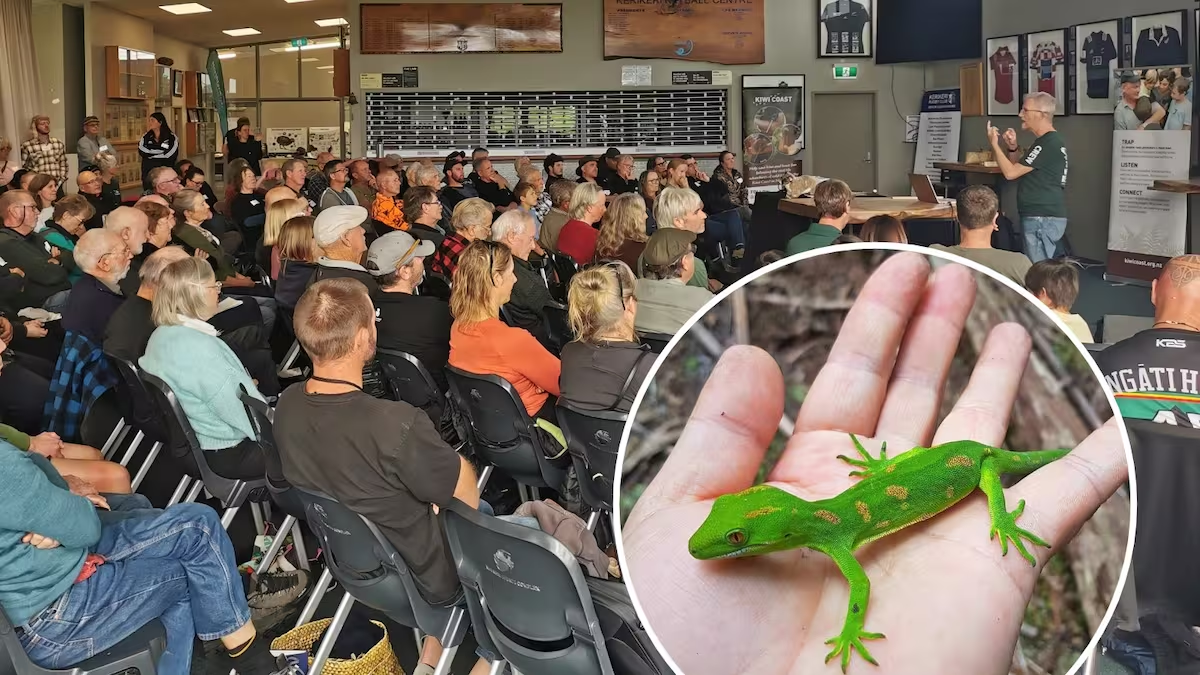
Fleur Corbett from Bay Bush Action shared success in Ōpua, where intensive trapping has revealed long-tailed bats and native geckos once thought lost from the area.
Bay Bush Action has since launched the Pekapeka-tou-roa Monitoring Project, using acoustic monitors to track the species’ presence.
Steve Allan shows off the latest version of his possum trap, designed especially to stop wild pigs from stealing it.
Steve Allan from SA2 & SA3 Traps showcased his new SA5 possum trap, which has already removed hundreds of possums during Northland farm trials.
Allan developed the SA5 to stop feral pigs running off with traps while taking caught possums.
Workshop attendees also heard about a rat-catching competition held for the first time this year by Te Hautū Kerikeri River Restoration Project, a volunteer group working to remove predators and restore native wildlife along a corridor from the Stone Store to State Highway 10.
About 200 trap boxes were gifted to students. Just over 70 traps were registered on the trap.nz network, and about 80 rats were caught.
Sullivan confirmed the biggest rat measured nearly 43cm – a vivid reminder of the pests communities face, she said.
A prize for the most creative bait went to a student who used possum with teriyaki sauce.
Kiwi Coast Trust boasts the achievements of its member groups over the past 13 years. Graphic / Kiwi Coast Trust
This year’s Kiwi Coast workshop drew 153 attendees, Sullivan said.
The annual event is a key part of the trust’s success, bringing project groups together with researchers, scientists and product suppliers to share knowledge and techniques, she said.
“Our goal is to help all the groups and projects involved carry out pest control successfully so they can achieve the conservation goals they are working so hard for,” Sullivan said.
“In many areas, projects have sustained their efforts over decades,” Sullivan said.
The million-pest milestone was a major achievement and a sign of what is still possible, she said.
“With effective trapping backed up with pulses of secondary toxin and dedicated dog control, Northland’s native wildlife can really flourish,” Sullivan said.
Kiwi Coast also runs trapping workshops to help groups build skills and learn to use a range of pest control tools effectively.
To find out more, visit www.kiwicoast.org.nz or contact support@kiwicoast.org.nz.
Sarah Curtis is a news reporter for the Northern Advocate, focusing on a wide range of issues. She has nearly 20 years’ experience in journalism, most of which she spent reporting on the courts in Gisborne and the East Coast.