
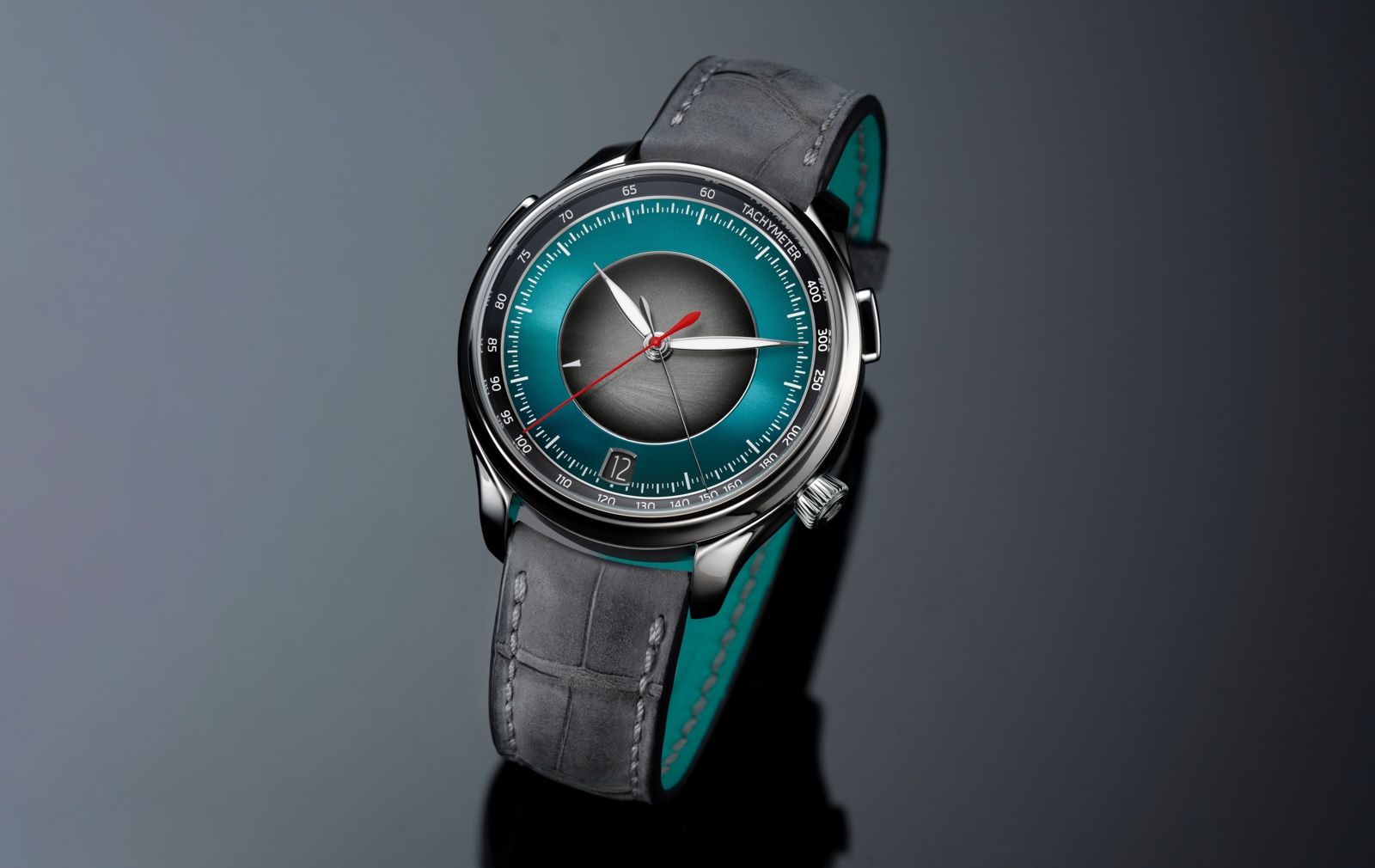
H. Moser & Cie. expands its selection of chronographs with the Endeavour Flyback Chronograph Dual Time Date, adding convenient complications to the impressive chronograph calibre found in the Streamliner collection.
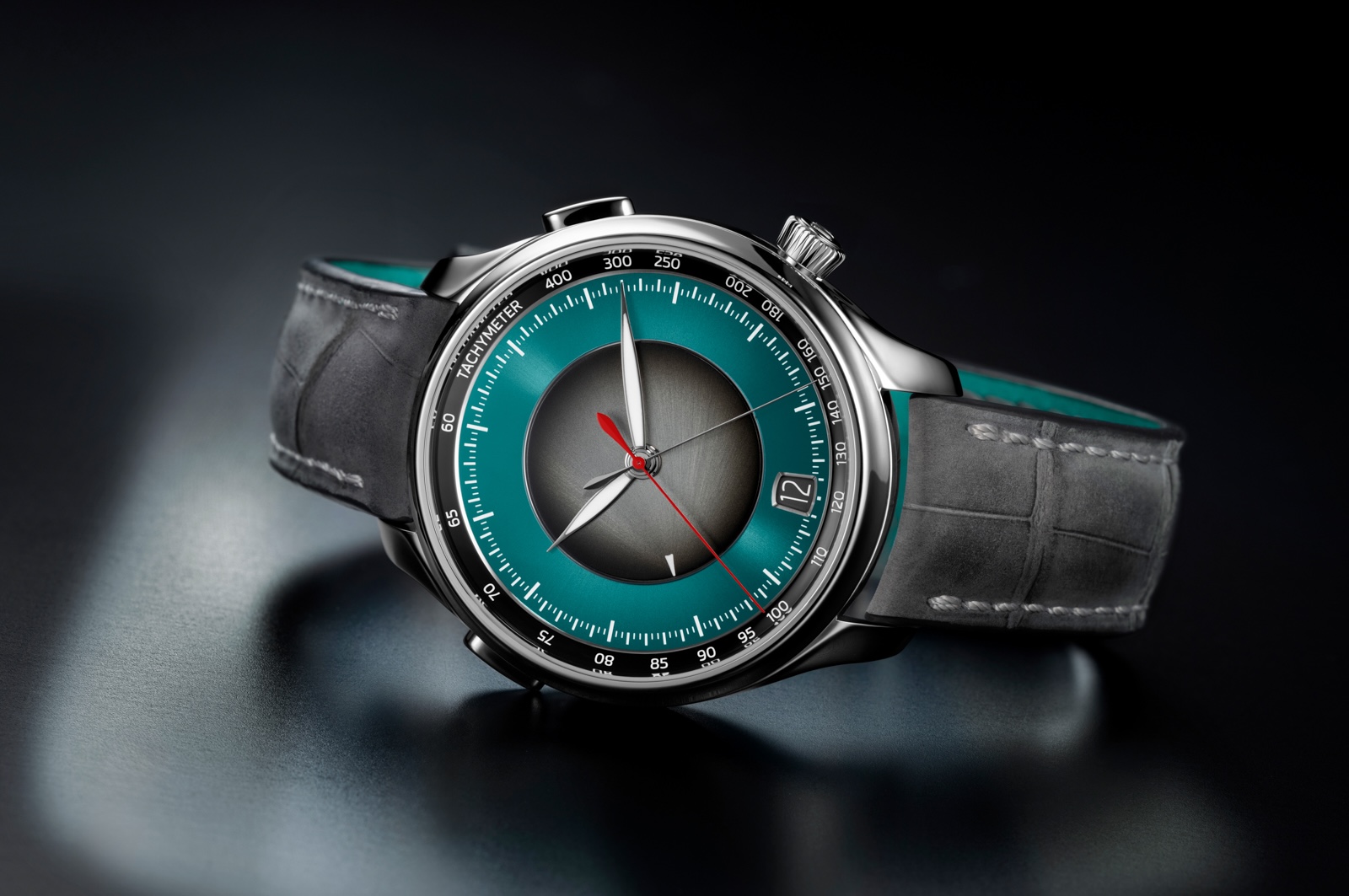
Despite the presence of a chronograph and a second time zone display, the Endeavour Flyback could easily pass for a time-only watch at a glance thanks to its central minutes counter and discreet dual-time disc.
Initial thoughts
The central-minutes chronograph is an inherently appealing format. Not only does it reduce dial clutter by eliminating a sub-dial, but it improves legibility by allowing the elapsed minutes to be read on the same 60-minute scale the eye is accustomed to from reading the time.
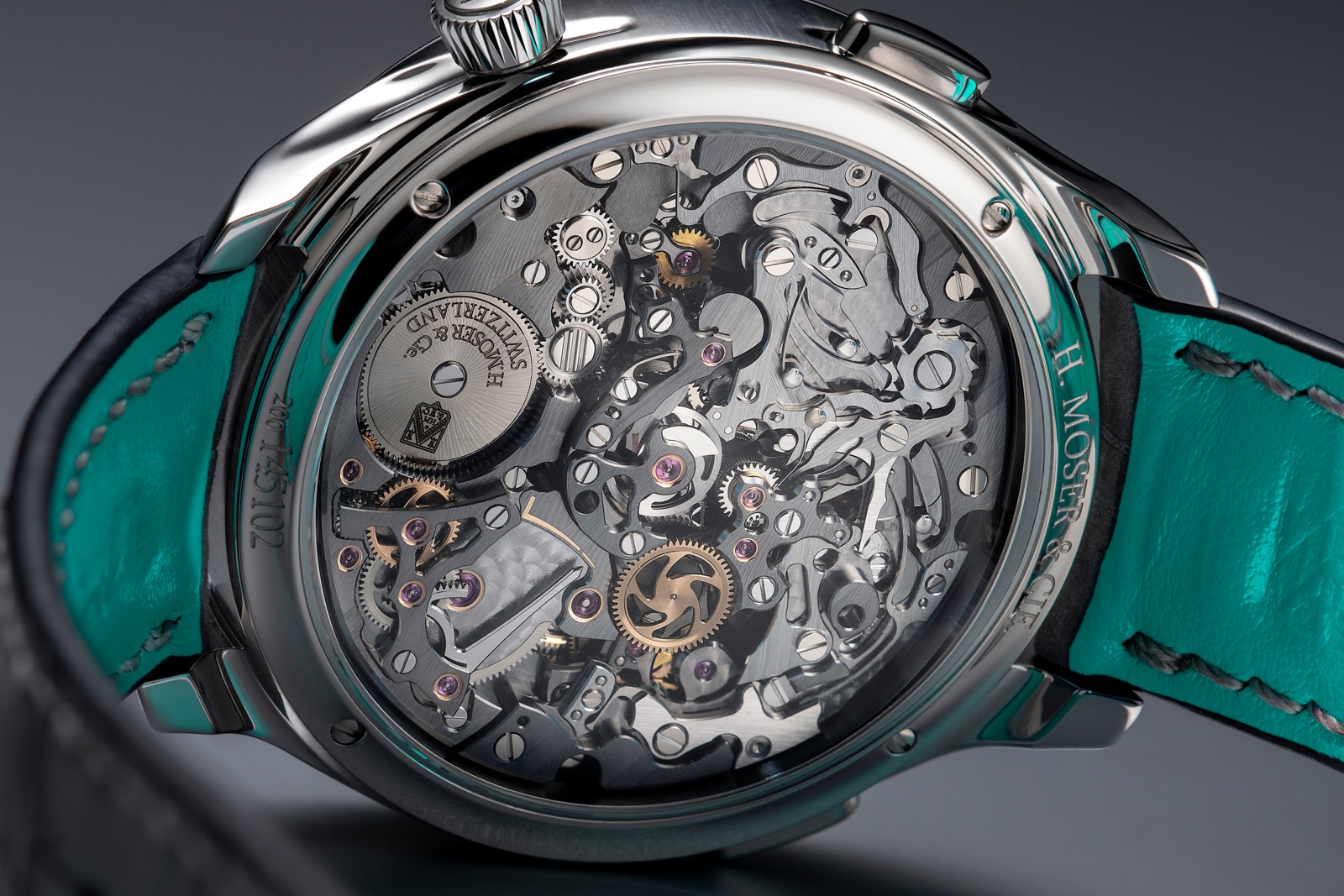
I’m also a fan of the AgenGraphe platform that underpins the HMC 730 movement. The movement architecture — which has now been around for almost a decade — reveals fresh thinking about how a horizontal clutch can work, and the visual layout is appropriately dynamic for a high-end watch with plenty of visible springs and levers, many of which are pleasingly thin in form.
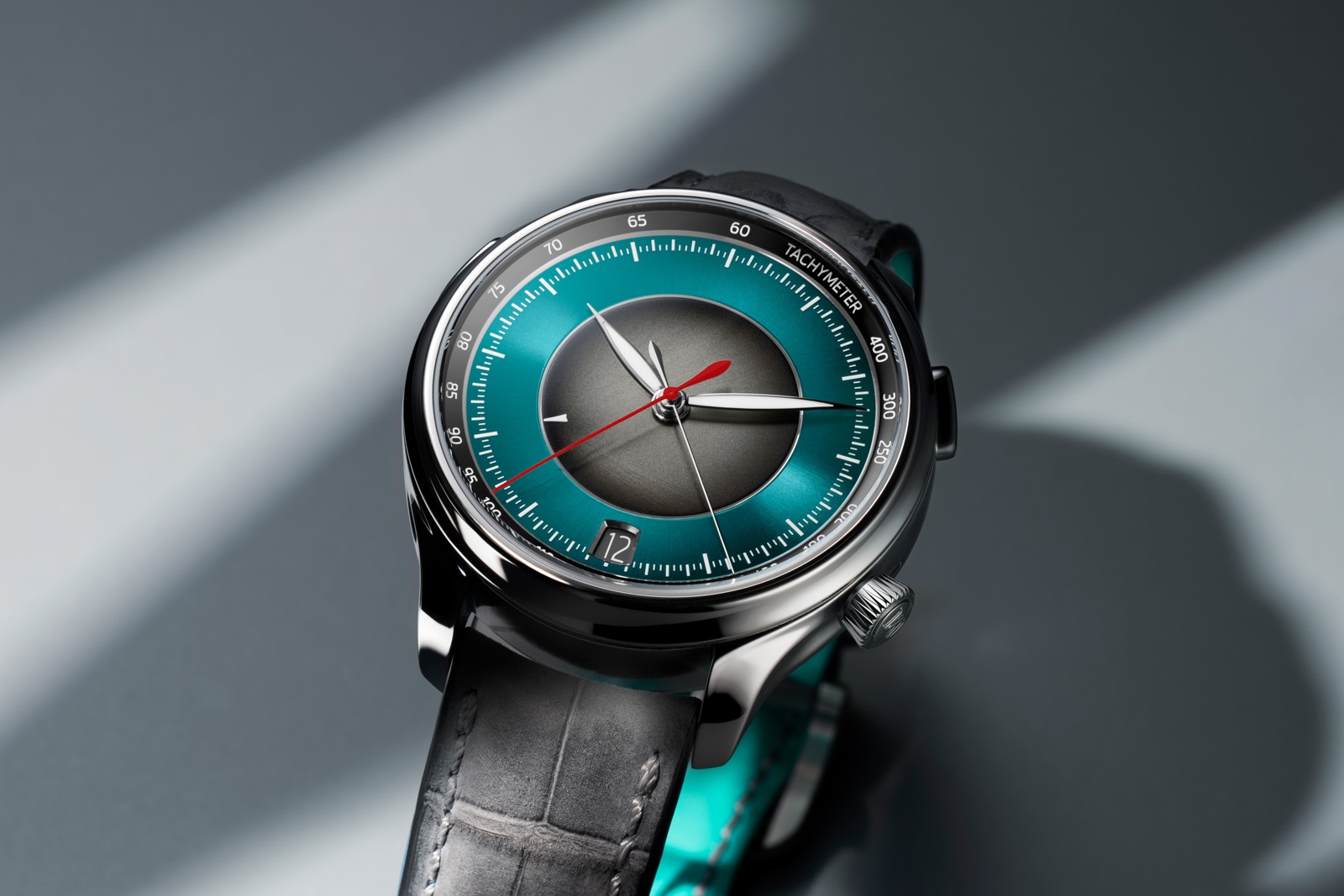
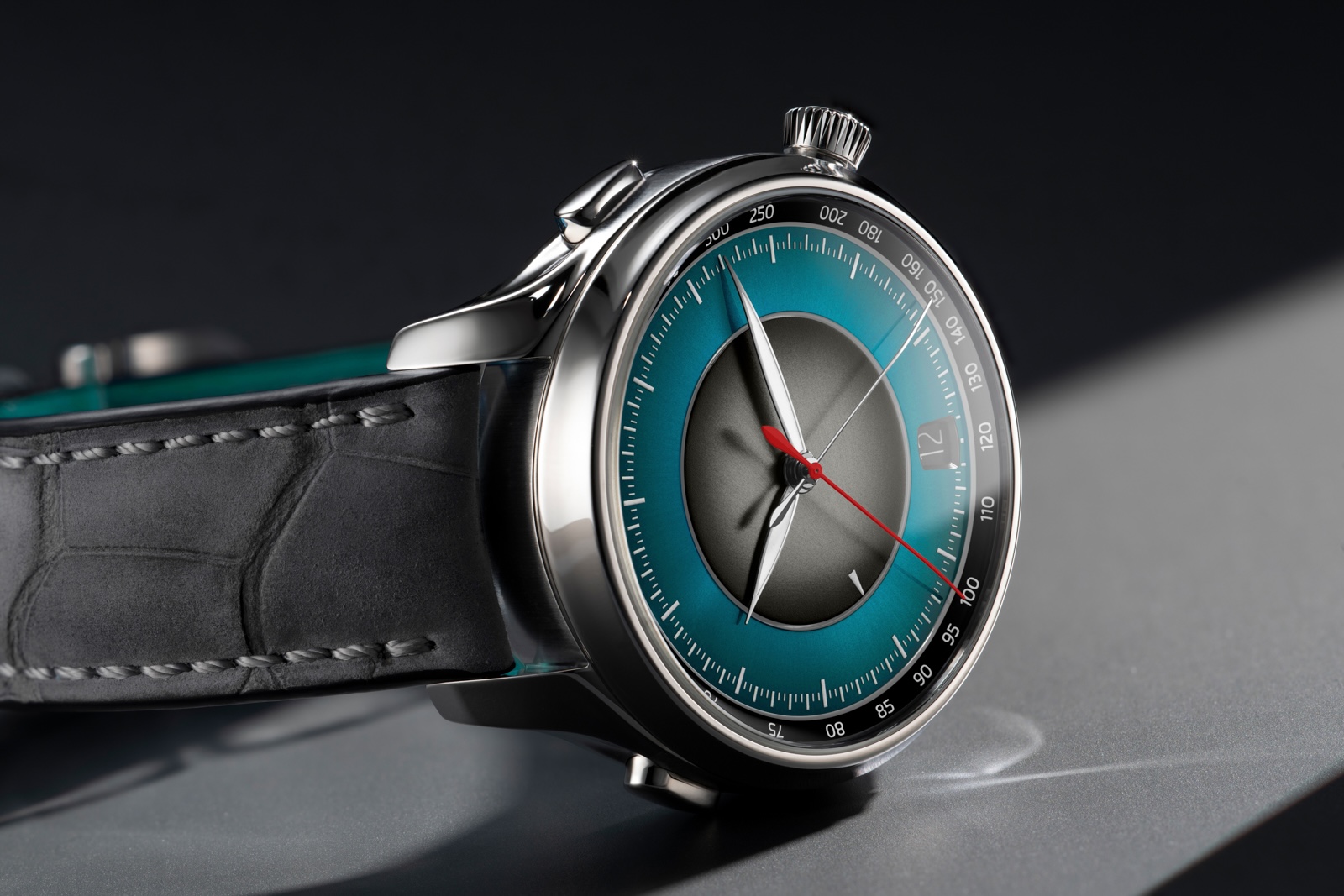
All that is to say the Endeavour Flyback has a lot going for it even before considering Moser’s minimalist aesthetic choices. As we’ve come to expect from the brand, the dial is sterile — lacking a brand logo or wordmark — and there’s a gradient fumé finish on the central disc that indicates the second time zone.
These details are enough to mark the watch as a Moser product, which speaks well of the brand’s ability to identify itself with colour and texture alone. When the brand launched its first sterile dial in 2015, it felt fresh but it was unclear at the time whether it was a flash in the pan or something with staying power. Now that Moser has staked its claim to this aesthetic, it will be very difficult for another brand to copy it.
The turquoise chapter ring around the outside — situated between the second time zone disc and the tachymeter flange — adds an ounce of chromatic variety. If the Endeavour Flyback is successful we’ll doubtless be treated to a variety of colours and textures on future dials.
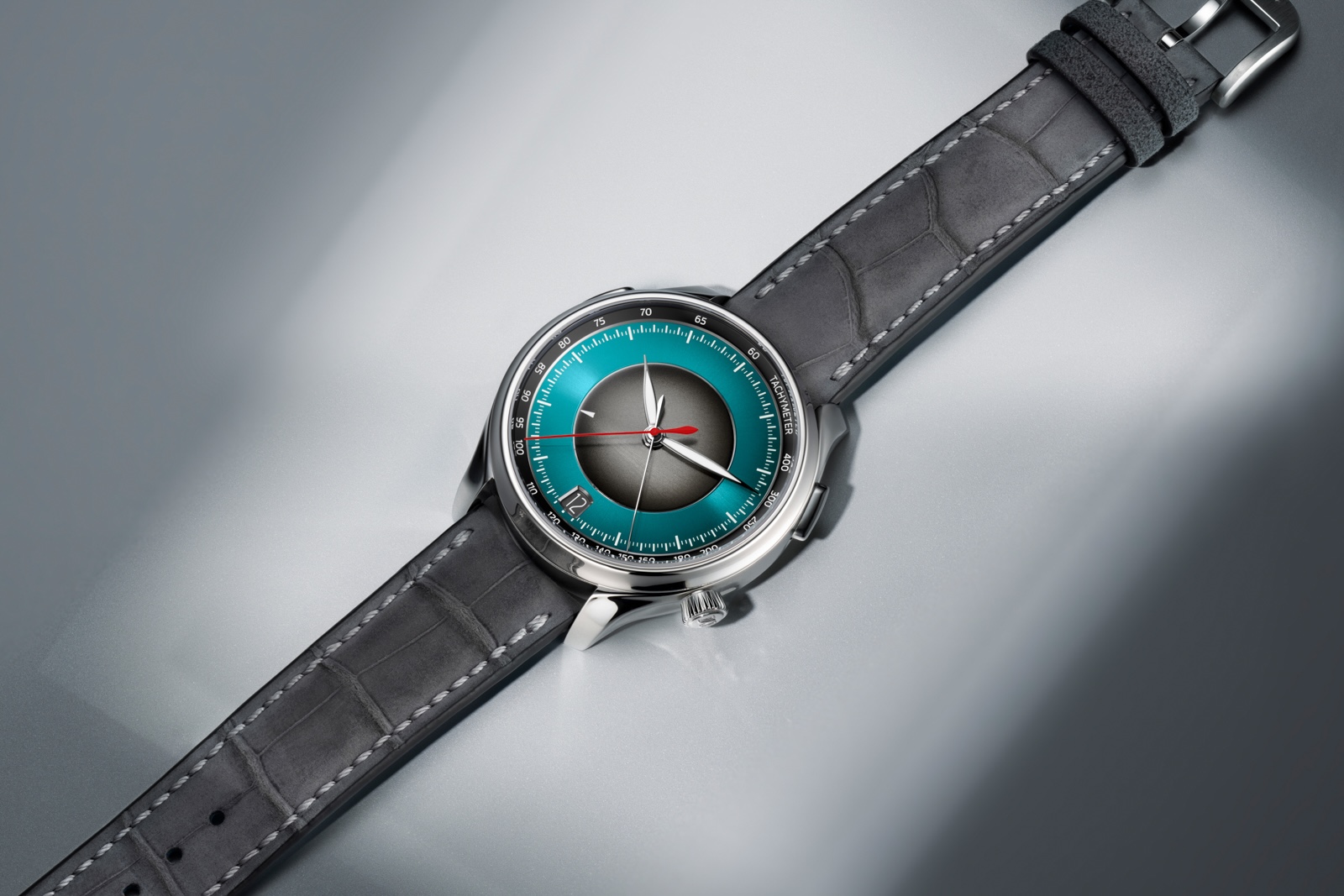
I say ‘if’ because the Endeavour Flyback is priced aggressively at CHF59,000, which makes it more than 30% more expensive than the brand’s own Streamliner Flyback chronograph. That feels like too much of an up-charge for a second time zone and date indicator, especially since the sporty Streamliner boasts automatic winding and a distinctive bracelet.
The Endeavour format
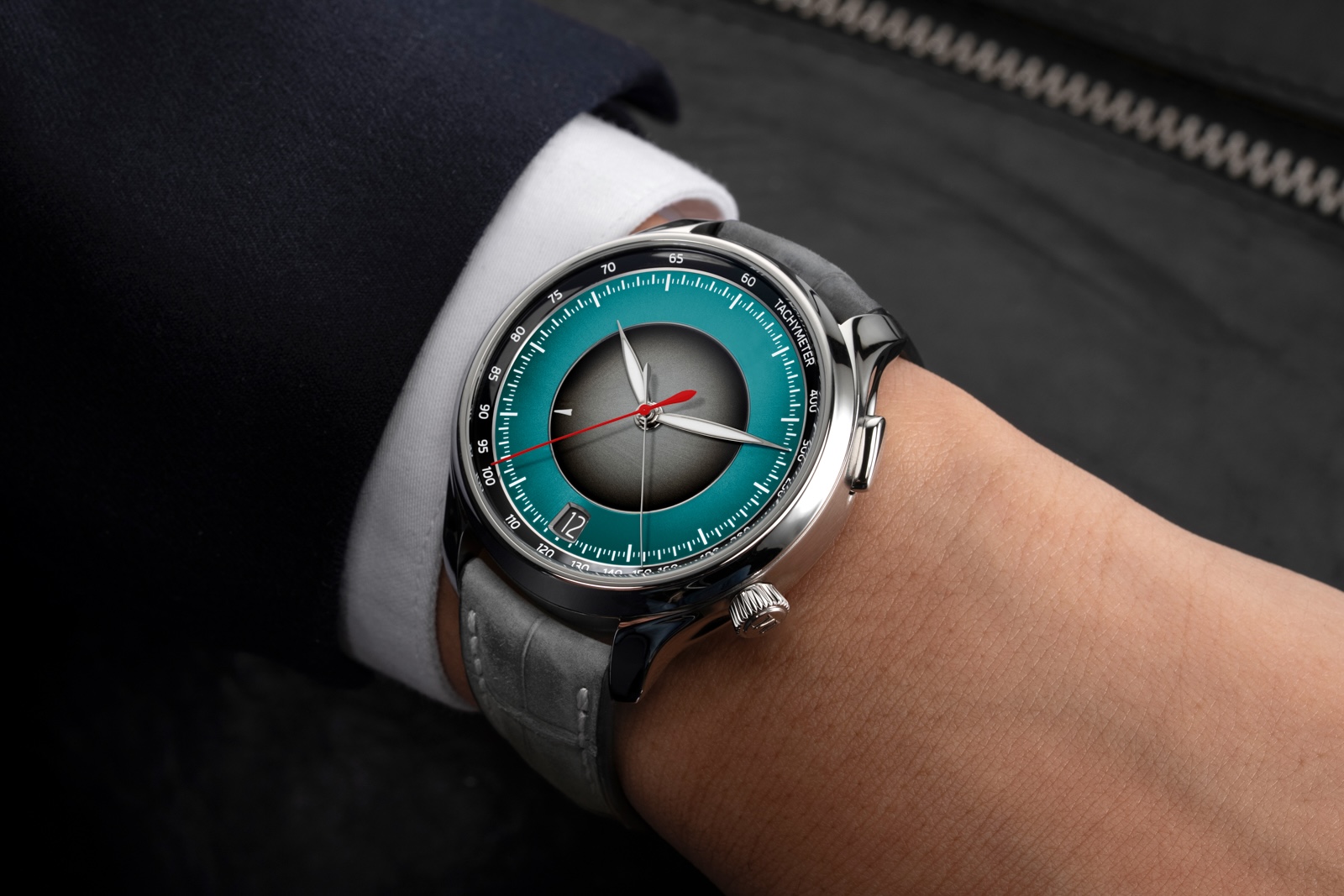
The Endeavour Flyback is packaged in a substantial 42 mm stainless steel case that — without the AgenGraphe’s modular automatic winding system — gets the thickness down to 13.2 mm.
It’s not a small watch, but diameter accentuates the minimalism of the dial, and the thickness is acceptable for a feature-packed chronograph with a stack of four hands — arguably five, counting the second time zone disc — in the centre of the dial.
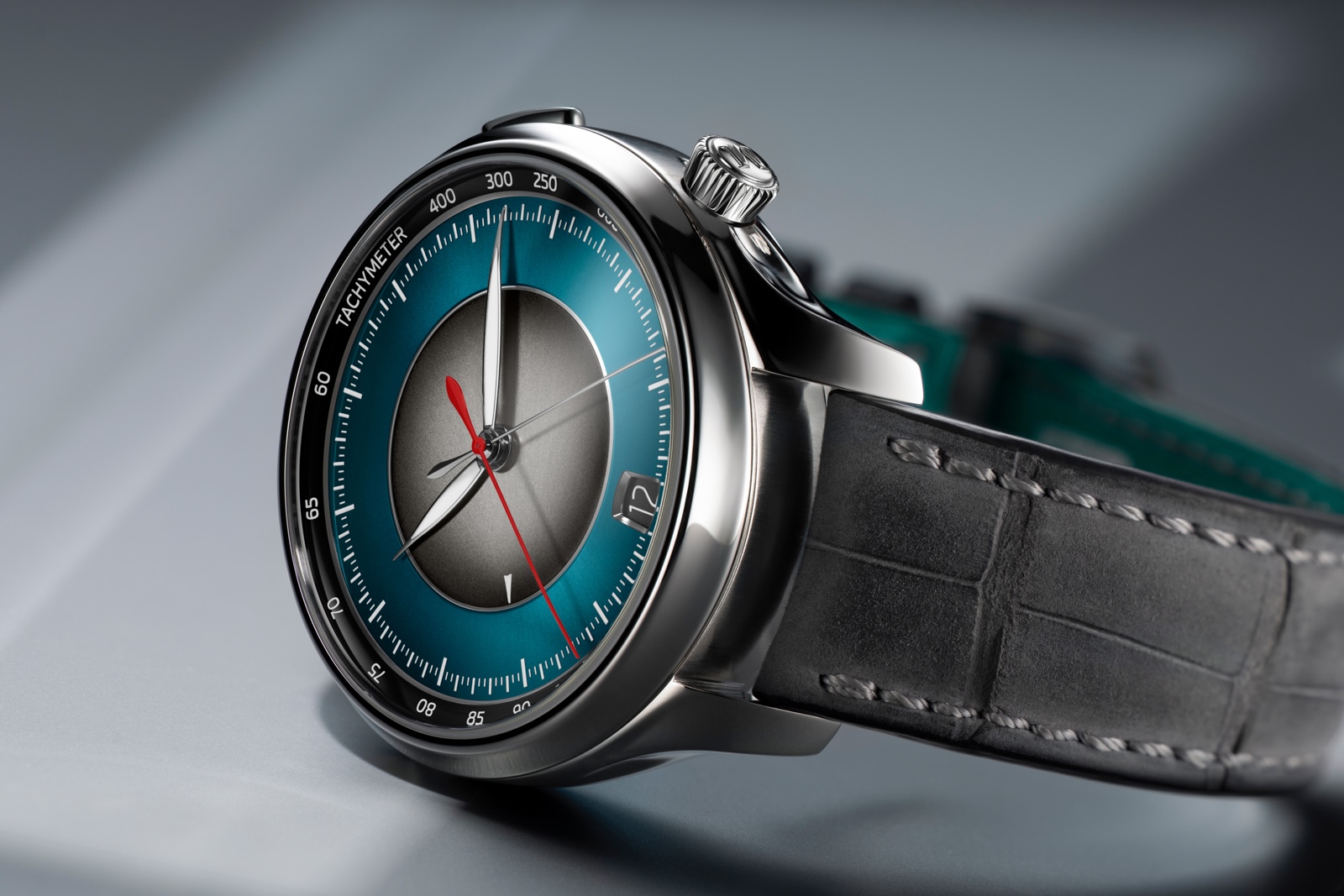
The case itself is sensuously sculpted, with polished concave channels in the flanks of each lug that contrast with the brushed finish of the mid-case. These details imbue the watch with critical individuality and help reduce the visual thickness of the case.
If anything lets the design down, it’s the hand set, which is painfully plain. I understand the desire for lumed hands on a sporty chronograph, but the resulting flat profile makes them seem like any other set of leaf-shaped hands, as opposed to the more distinctive ridged profile seen on the Endeavour Perpetual Calendar.
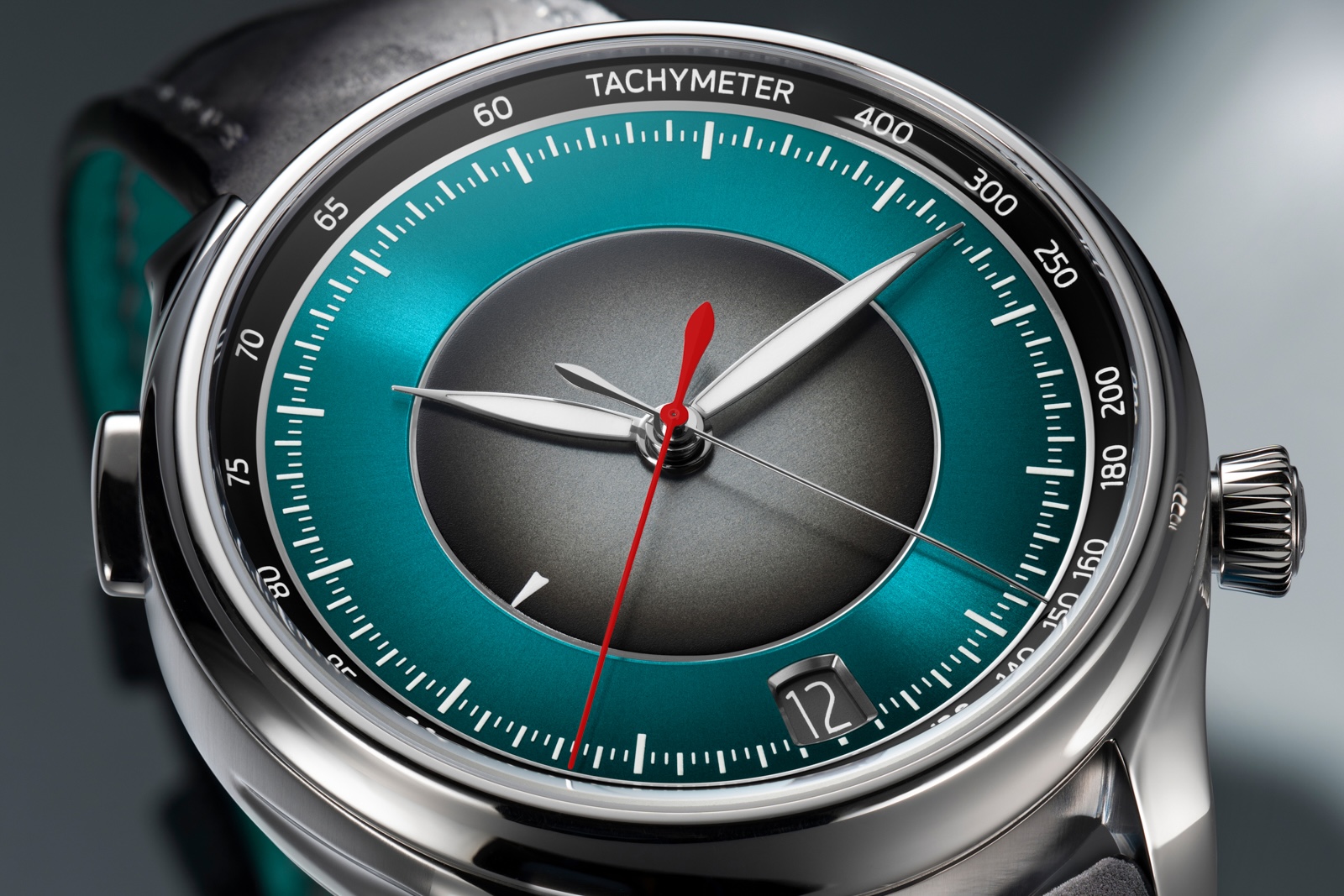
Even the second time zone pointer is a simple arrow. It’s a missed opportunity when something like an outline of the Moser crest would have been more original and distinctive while serving the same purpose — its pointy tip would indicate the second time zone as legibly as the simplistic arrow.
A clever calibre
The AgenGraphe platform — developed by Jean-Marc Wiederrecht — debuted in 2017 and since then has been used by a number of brands. Contemporaneous upstarts Fabergé and Singer were its first vessels, but it was later called up for service by Ming and Moser.
Beyond its native central minutes layout, the AgenGraphe is notable for its sandwich-style construction that puts the automatic winding rotor on the dial side of the movement, giving the case back the uninterrupted look of a manually wound calibre.
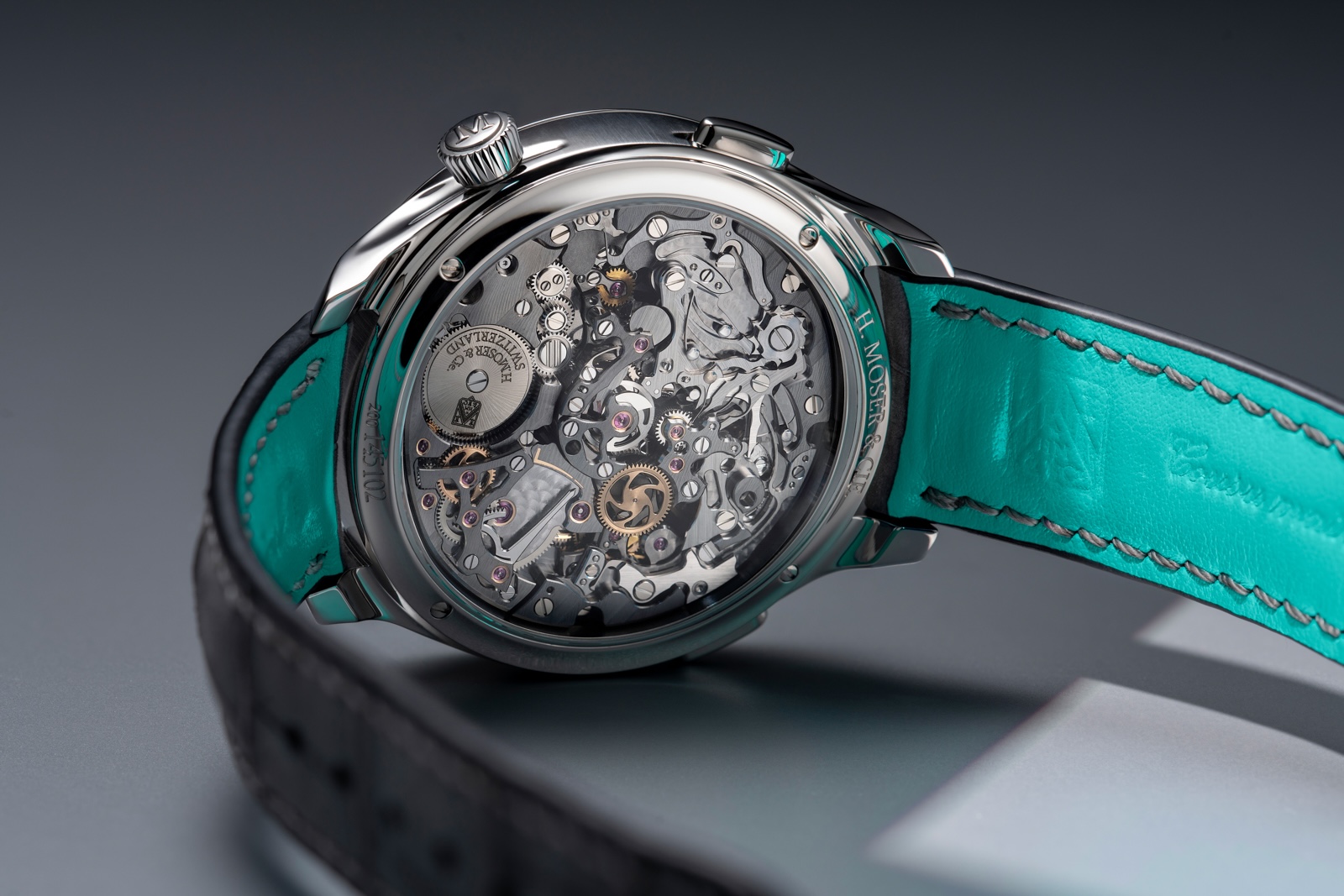
The Endeavour Flyback features a version of the movement without automatic winding, but it retains the all-important AgenClutch system that balances the charming visual layout of a horizontal clutch with the stutter-free start of a vertical clutch.
This is made possible by a friction interface between the driving wheels — a detail that prevents the head-on collisions between teeth that can result in the elapsed seconds hand jumping a few degrees forward or backward when starting the chronograph.
The layout of the column wheel and chronograph levers also results in a very pleasant pusher feel — the buttons have a short throw and crisp break. In addition, the elapsed minutes counter is instantly jumping, which differentiates it from historical central minutes calibres like the Lemania cal. 5100.
The approach to regulation is also unusual. The balance wheel is notably absent from the case back view, and is in fact hidden under the chronograph mechanism. The oscillator features a smooth ring balance, but instead of a typical curb-pin regulator, the rate is adjusted by means of a mobile clamp that adjusts the active length of the hairspring.
Unlike an Etachron or Triovis system, this apparatus holds the inactive length between screw-locked plates. It’s unclear whether this setup fully realises the even-breathing benefits of a free-sprung balance, but it’s a novel solution nonetheless.
This construction does introduce one issue, which is that there’s nothing — front or back — to indicate whether the watch is running. That makes the power reserve indicator even more practical than it would otherwise be, because without it the user must either start the chronograph or hold it up to the ear to discern its running state.
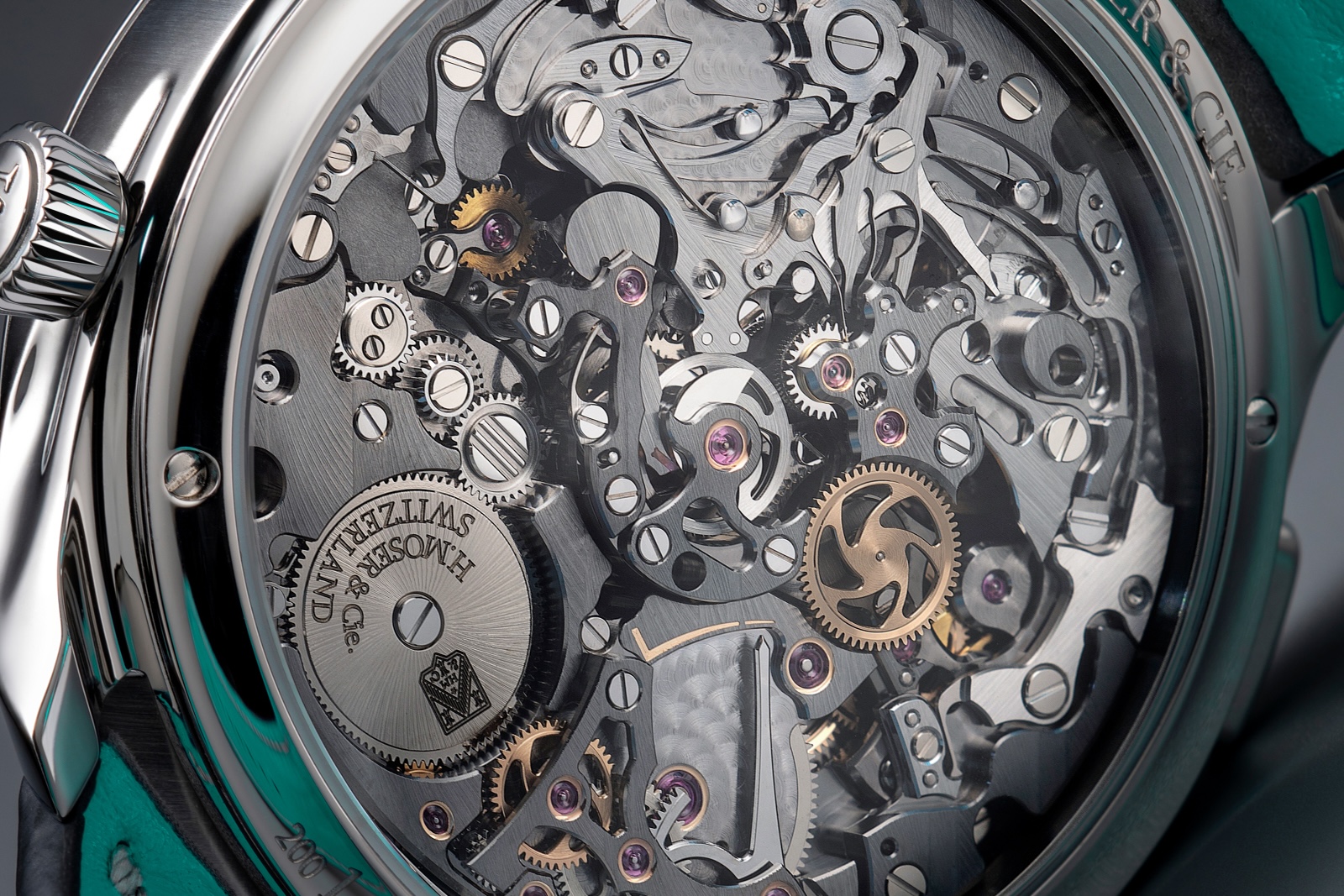
Moser’s version of this movement, the HMC 730, dresses up this architecture with grey-coated bridges that give it a purposeful look. What at first appear to be gold chatons around the visible jewels reveal themselves to be gold-coloured countersinks at magnification. If this seems like cheating, it is, but Rolex does pretty much the same thing.
The finishing is clearly machine-applied, but the diamond-cut bevels are sharp, the steelwork is neatly grained, and the discreet power reserve hand is nicely faceted. In short, the combination of finishes and textures is clearly intentional and looks good.
Key facts and price
H. Moser & Cie. Endeavour Flyback Chronograph Dual Time Date
Ref. 1730-1200
Diameter: 42 mm
Height: 13.2 mm
Material: Stainless steel
Crystal: Sapphire
Water resistance: 30 m
Movement: HMC 730
Functions: Hours, minutes, second time zone, date, chronograph, power reserve
Frequency: 21,600 beats per hour (3 Hz)
Winding: Automatic
Power reserve: 72 hours
Strap: Alligator leather with matching pin buckle
Limited edition: No
Availability: At H. Moser & Cie. boutiques and retailers
Price: CHF59,000 before taxes
For more information, visit h-moser.com.