
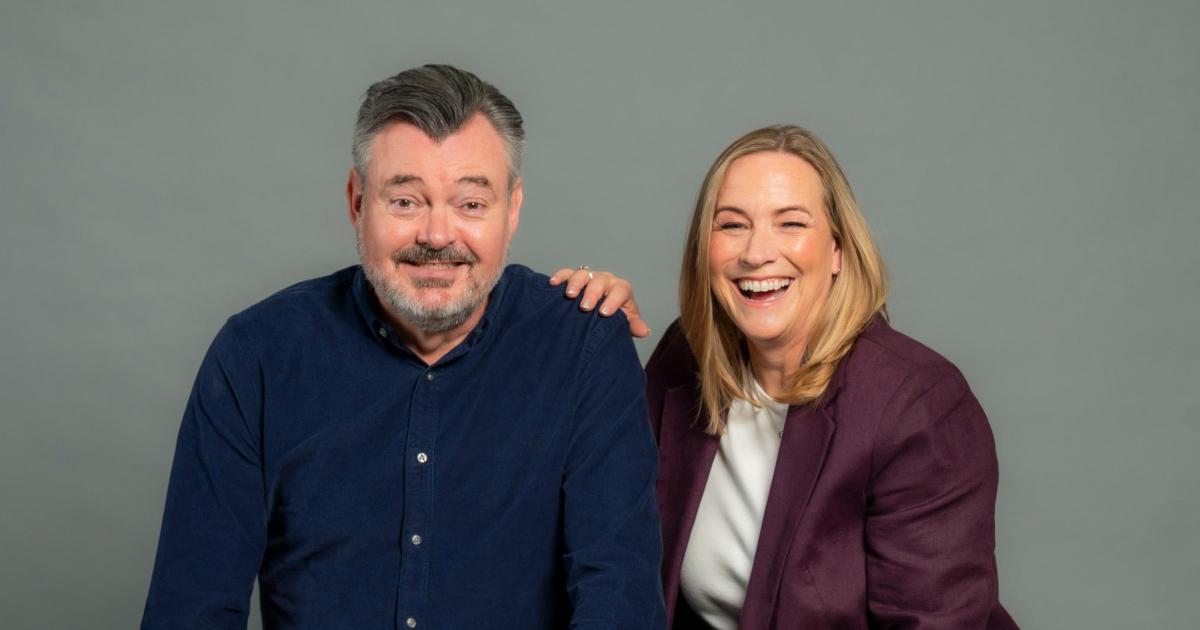
“Him from the panto?” asked the physio when I told her the news earlier. “I won’t bother then. Why did they get rid of Michelle McManus?”
Good question. After audience protests over the sacking of big names including Billy Sloan and Iain Anderson, the ousting of three women for one man (plus Arlene Stuart on Friday afternoon) is the latest move to raise eyebrows inside and outside the BBC’s Pacific Quay HQ.
Critics say it is part of a shift towards commercialisation of the state-funded broadcaster by new boss Victoria Easton Riley, herself an import from radio giant Bauer after spells at the BBC.
The brief for the new Radio Scotland Afternoons (named after the similarly rebooted and rebranded Radio Scotland Breakfast) is to bring audiences “a lively mix of music, chat, and big interviews, with a focus on the vibrant arts, culture and entertainment scene in Scotland and beyond”.
If it sounds a lot like the old afternoon show, that’s probably because it is. McManus had big interviews – chief among them Robbie Williams. She was becoming well-known as a presenter, making a documentary about going to Rome to sing for the Pope. And as a young, working-class Glaswegian woman, she was that rarity on Radio Scotland – a presenter who sounded like the city she called home.
Read more
Despite the chat about first-day nerves when he opened Monday’s show, Stott has done afternoons before. I was a film and television reviewer on the programme, mostly working with the peerless Janice Forsyth but sometimes with Stott. With a 36-year career in broadcasting, he’s as safe a pair of hands as it gets.
But the question remains: why oust McManus, Pennie and Meighan, one of Scotland’s most well-regarded arts journalists, to make way for someone who has done a similar show before?
Only one way to find out.
Michelle McManus attracted big names to her show, among them Robbie Williams (Image: BBC)
After some banter with Lunchtime Live’s Laura Maxwell about first-day nerves, came the all-important choice of an opening track. Aztec Camera’s Somewhere in My Heart, followed by Robbie Williams’ Let Me Entertain You, positioned Stott as unashamedly crowd-pleasing with a nod to local likes. That will have gone down well with the Bauer crowd.
The first impression was one of relentless noise. Stott talked over the start and end of tracks. When a song finished he started gabbing again, this time with some generic track pumping in the background. All fine if you’re after an afternoon wake-up, deeply irritating if you dislike DJs talking over the music. Frankly, it left me with a bit of a headache.
The only time the music stopped was for the chat, first with Stott’s fellow River City actor Jenny Hulse, then with Kiefer Sutherland. Both were down-the-line interviews rather than in-person.
Sutherland was given a lot of time to talk about his latest album, Grey, but he played the game and also spoke about his acting, including his stint on 24.
The big draw was yet to come – Outlander’s Sam Heughan no less, as Stott had promised at the top of the show.
Unfortunately, Heughan wasn’t in the studio either. But he was on the red carpet for Outlander in Concert: Echoes Through the Highlands, which had its debut at the Usher Hall in Edinburgh on Sunday. A reporter from Radio Scotland, not Stott, went to talk to him.
Stott, who acted in two episodes of Outlander, did get a shout-out from Heughan. “You should be here,” teased Heughan, and he had a point.
That’s the trouble with afternoon shows of any stripe – there is so much to cover and so few staff, if any, to get out and see it all.
Stott had burned through most of his guests before the three o’clock news, leaving an hour to fill with more talking over the tracks. And there was, oh dear, that old familiar, a “dive into the archive” for a guess-the-year just for fun competition. Stott was so keen to get going on that one, he pressed the button on a creaky door sound effect a whole record too early, crashing a-ha’s Take on Me.
Just in time came an interview with Finn Mannion, BBC Radio Scotland Young Classical Musician of the Year. Too bad if you were expecting to hear him play the cello, though: they couldn’t get it in the studio.
Another look at the clock showed two and a half hours were almost up. It seemed longer. Had Stott reinvented the afternoon show for Radio Scotland? Hardly. This could have been any afternoon on any mainstream station, albeit with slightly more chat.
Chat, however, is what rivals on STV Radio are increasingly using to boost ratings. Another reason, perhaps, for BBC Radio Scotland to go its own way and not follow the commercial crowd into the middle of the road.