
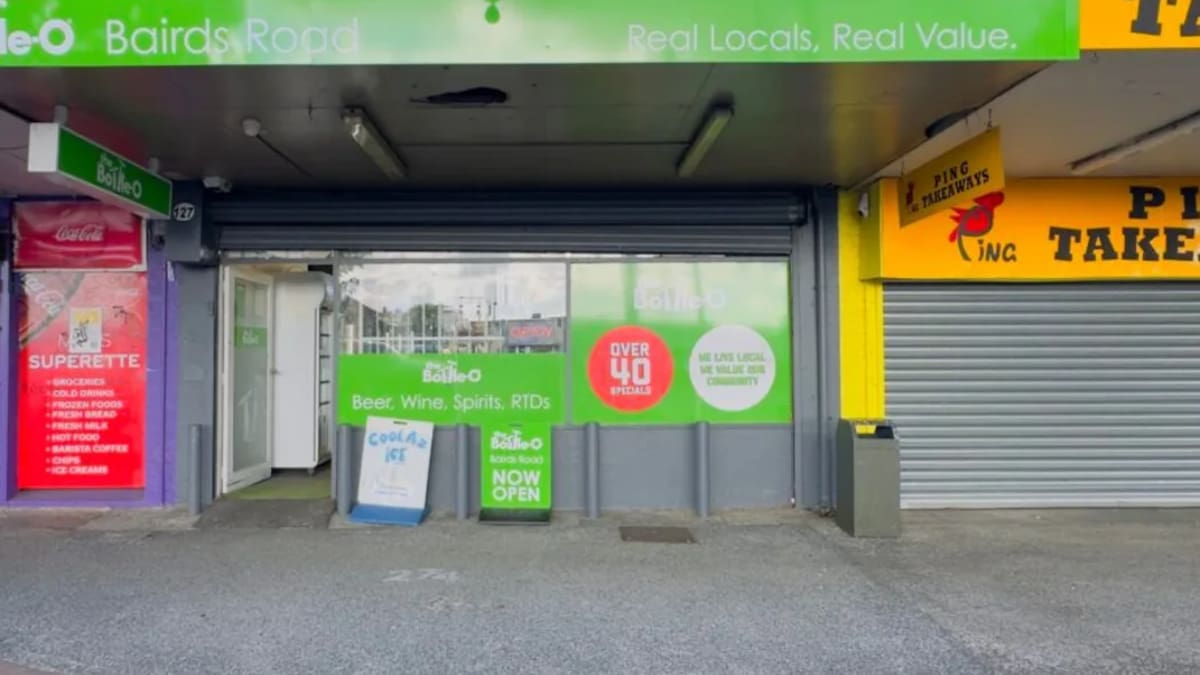
Sergeant Richard Bracey claimed 80% of the issues in the area were because of the bottle shop.
Despite a 24/7 alcohol ban, he said his community policing team consistently dealt with drinkers outside the bottle shop.
“There is a benched seat seconds away from the store where we have arrested many persons drinking, and seized alcohol and disposed of it,” Bracey said.
The town centre’s playground and a seating area was removed earlier this year to deter anti-social behaviour and public drinking.
The closure of the liquor store would be a huge improvement for the area, Bracey said.
“We can’t afford to lose a town centre, but the way it’s going with this sort of behaviour, the fear and how scared people are, it’s going to close this place down.”
He said his team, formerly called neighbourhood policing, were only supposed to be in Ōtara for two years.
“We have no leaving date for Ōtara town centre.
“We have the community saying we don’t want you to leave, that’s how bad the problem is. We aren’t monitoring any other area for alcohol.”
The bottle shop has never failed an off-licence renewal and has passed several controlled-purchase operations by police.
In his evidence, company director Jagpreet Singh Oberoi stated his team were doing all they could to deter anti-social behaviour outside his shop.
He said many of the “problematic people” loitering in the town centre seemed to be attracted to a nearby horse-racing betting outlet.
Oberoi acknowledged some drank in public, but said these people were banned from his shop.
“Overall, I feel that the store is valued by the wider community and we are part of that community. I think it is a small part of the community that abuse alcohol or cause problems. Most of our customers are good, hard-working.”
Oberoi said he was involved in the community, supported some sports clubs and the business associations, and and would continue to work with authorities to address public drinking.
“What is needed is for people to work together to minimise and discourage this type of behaviour. I will continue to play my part in this.”
In her report, licensing inspector Melany Aiono stated the DLC should apply a stricter criterion in assessing the applicant’s suitability, because of the vulnerability of the area.
She was concerned with the applicant’s lack of duty of care to a vulnerable community.
Aiono stated the removal of the playground area and public seating highlighted the severe issues relating to public drinking.
“In my opinion, the applicant’s premises is likely responsible for these problems since it is the only off-licence in the Ōtara town centre and other off-licences are further away and physically separated.
“Based on my inquiries, I believe the amenity and good order of the locality would likely be increased, by more than a minor extent, by the effects of a refusal to renew the licence.”
The DLC is expected to release its decision later.